Search every volume:
?
How to search
sten gun- pages with both words
"sten gun"- the words together, as a phrase
sten OR sterling- either one (
|works too) sten -replica- leave out pages that mention “replica”
Without quotes, the last word also matches longer words that start with it (sten finds Stenophylla), and close word forms count (rifle finds rifles). Tick Exact words to match whole words only.
Whole deep dives are listed first, then the pages inside them.
Volumes
-
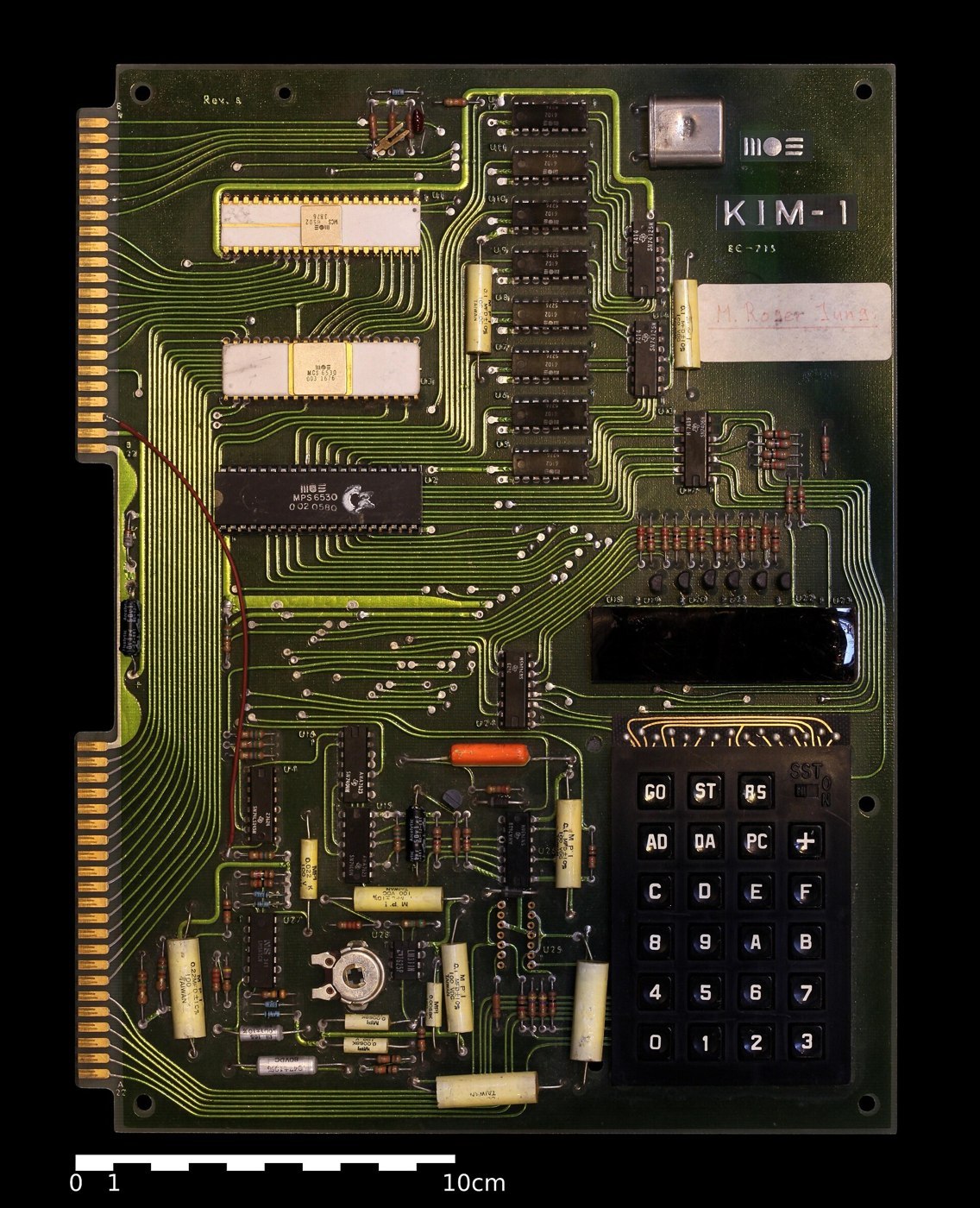 Vol 1 KIM-1 — Volume 1 — The Board That Taught a Generation Machine Code A bare green circuit board with a calculator keypad and six red digits, sold for $245 in 1976 to show engineers what a $25 microprocessor could do, and how it became the machine on which thousands of people learned to program a computer one hexadecimal byte at a time — the orientation volume for the eleven-part series
-
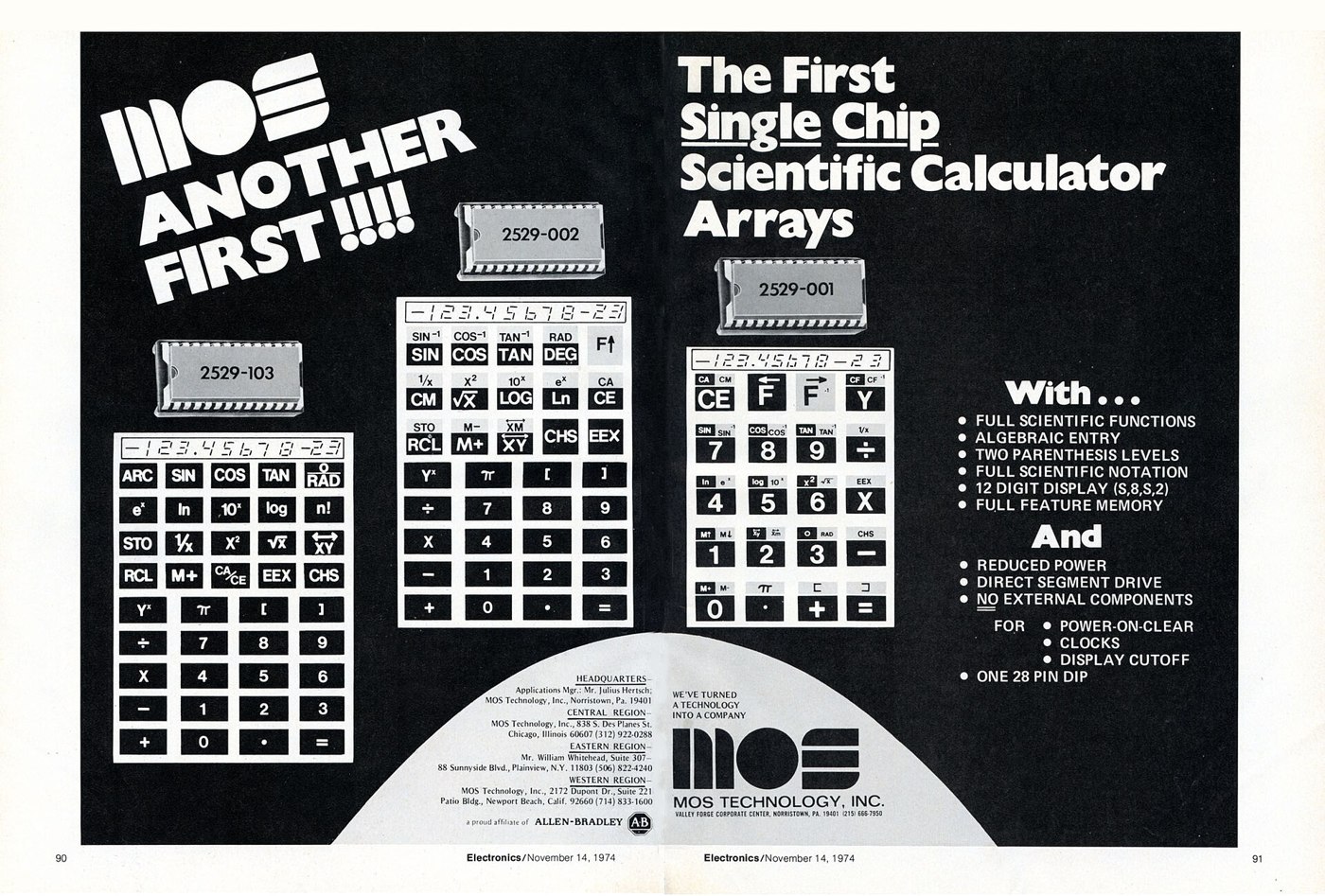 Vol 2 KIM-1 — Volume 2 — MOS Technology and the $25 Microprocessor — Peddle, the 6800 Team and the 6502 How a group of Motorola engineers walked out to build a microprocessor cheap enough to replace ordinary logic, how a Pennsylvania calculator-chip maker learned to make it, how it went on sale for $25 from a San Francisco hotel suite, and why the company then needed a little computer on a board to show people what to do with it
-
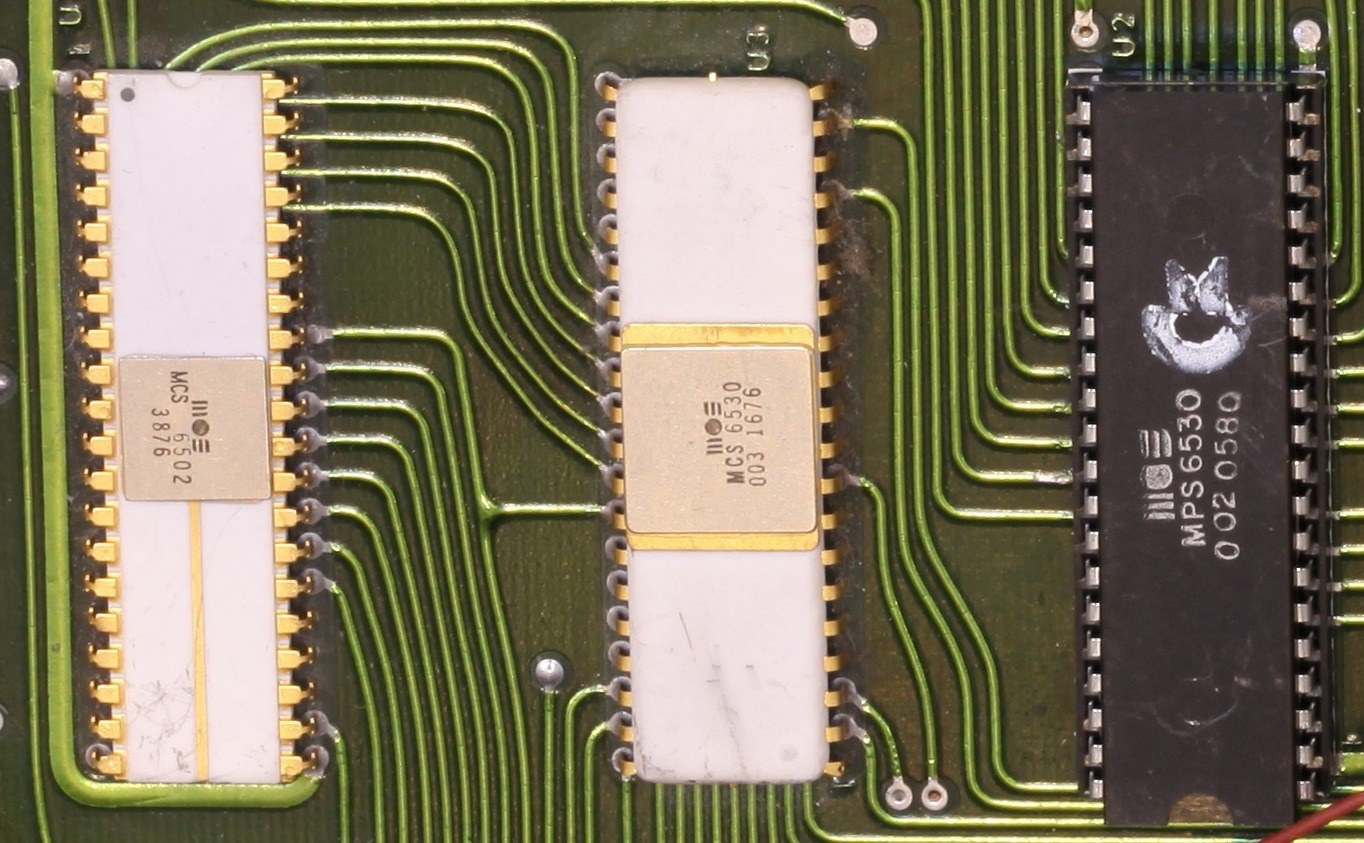 Vol 3 KIM-1 — Volume 3 — The Board — 6502, Two 6530 RIOTs, a Keypad, Six LEDs, Cassette and Teletype The KIM-1 chip by chip: a 6502 and its crystal, two custom 6530 combination chips that hold the monitor and do all the input and output, eight one-bit memory chips, one decoder that carves up the address space, and the trick by which seven port lines both light six digits and read twenty-three keys
-
 Vol 4 KIM-1 — Volume 4 — The KIM Monitor — Keying In, Stepping and Saving Programs The two kilobytes of ROM that turned a bare board into a usable computer: how an owner entered a program byte by byte with AD, DA and +, ran and stopped it, read the registers, stepped through it one instruction at a time, borrowed the monitor's own routines, and saved the result on cassette or punched paper tape — with every example run in the series' simulator
-
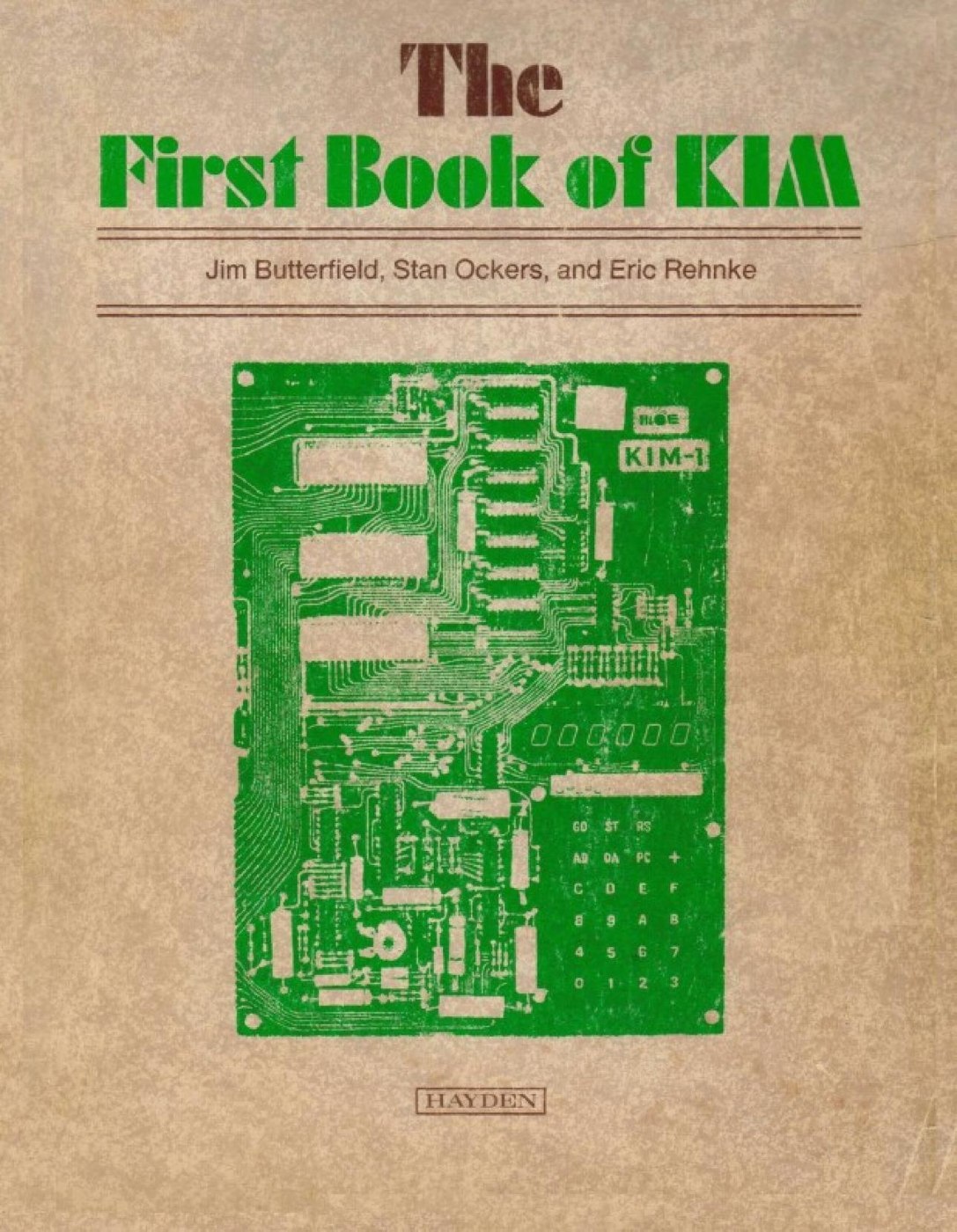 Vol 5 KIM-1 — Volume 5 — The KIM Community — The First Book of KIM, User Notes, Microchess and Focal A newsletter born at a Cleveland computer show, a Toronto programmer who explained the KIM to everyone, a book of games for six red digits, a chess program in 1,118 bytes that started a software business, and the languages, clubs and courses that grew up around one identical board
-
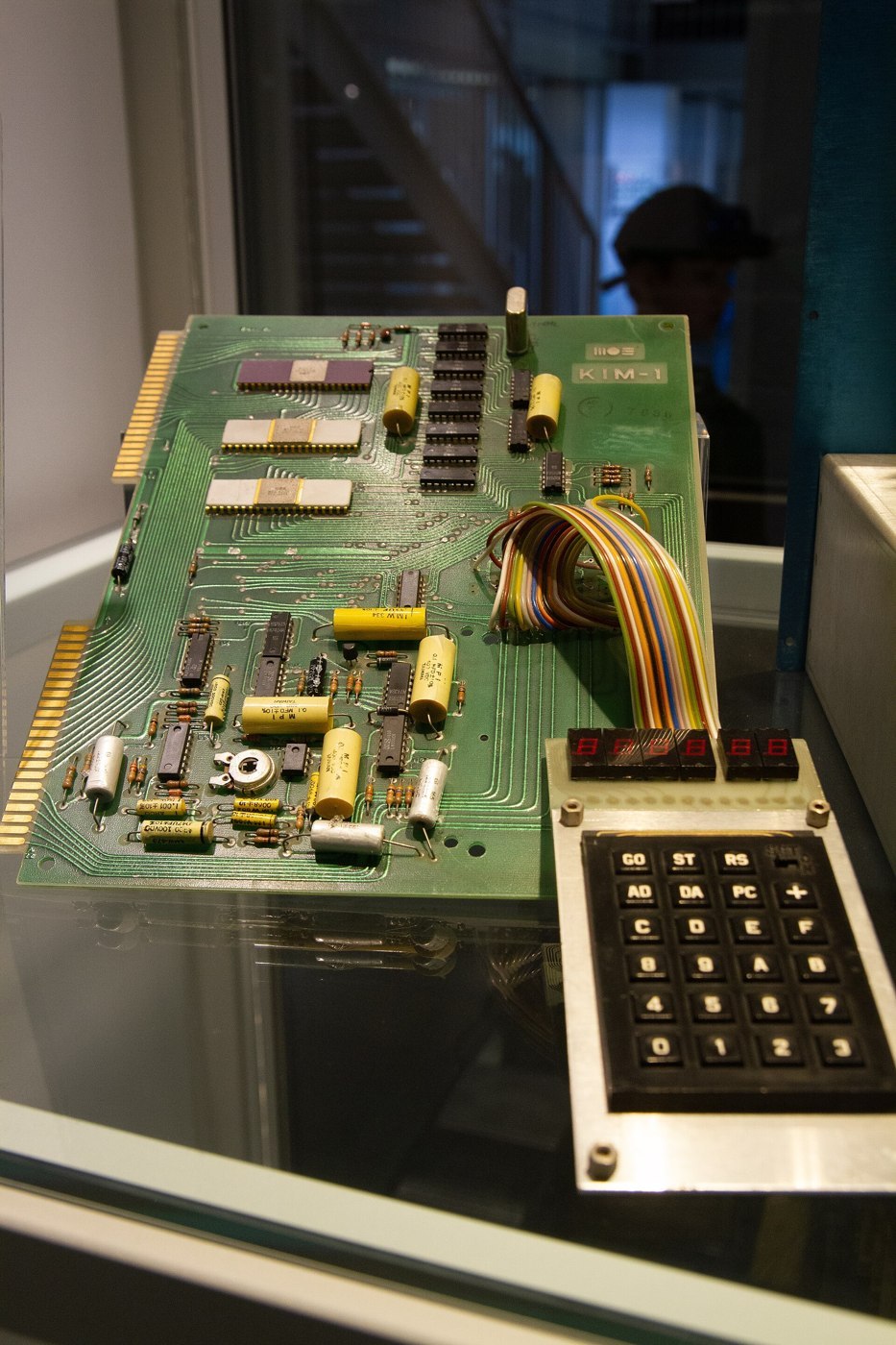 Vol 6 KIM-1 — Volume 6 — The KIM as a Brain — Robots, Controllers and Mike/Microtron Fifteen spare input/output lines and a hardware timer: why a demonstration board for a $25 chip ended up inside aircraft navigation experiments, radio stations, organs, typewriters and model railways, and how a teenager in New Jersey made one the brain of a robot
-
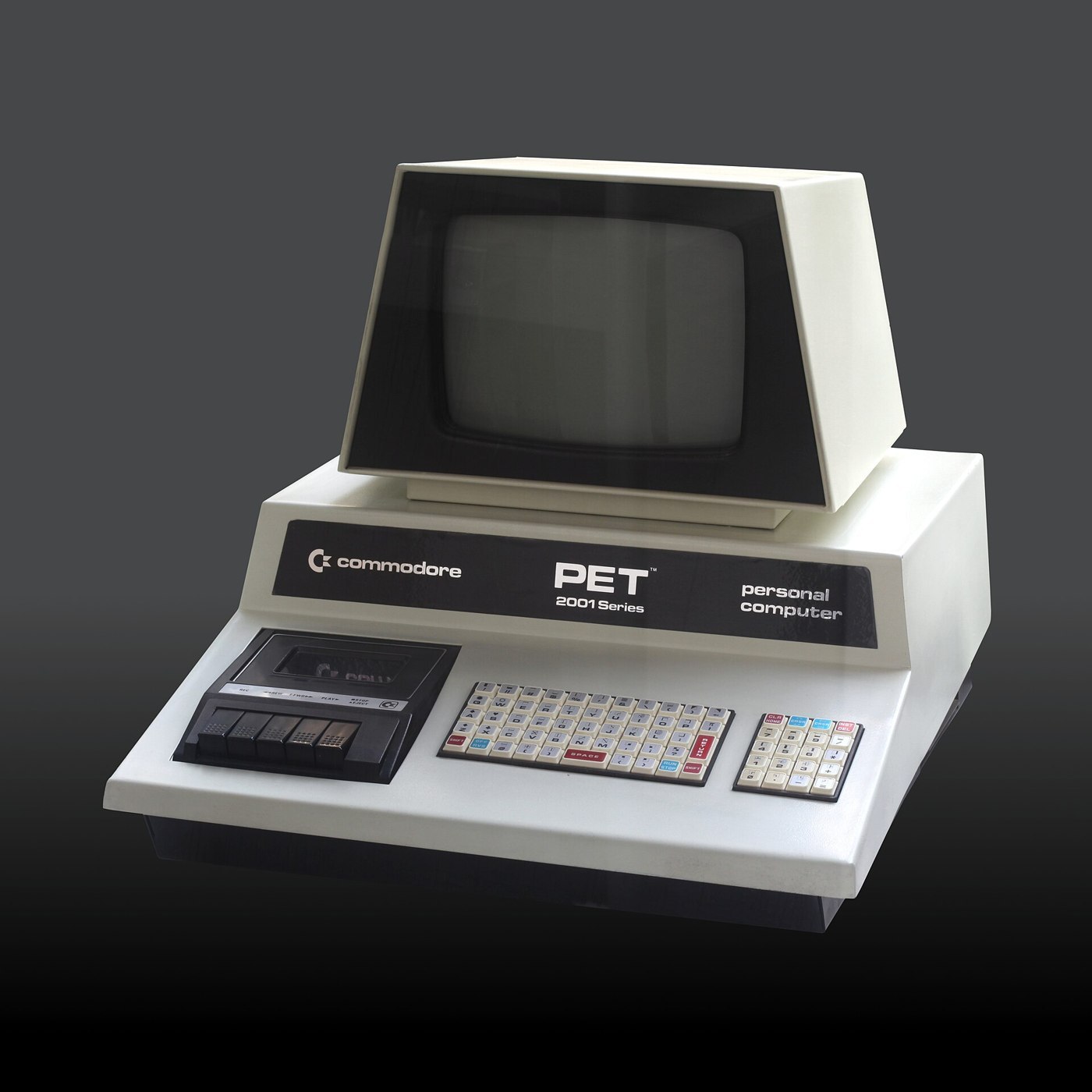 Vol 7 KIM-1 — Volume 7 — Commodore, the PET and the KIM's Legacy A calculator maker buys a chip maker for stock, the KIM-1 gets a Commodore logo, Chuck Peddle turns the lessons of a single-board computer into the PET 2001, Rockwell, Synertek and Elektor build their own KIMs, and the 6502 goes on to outlive them all
-
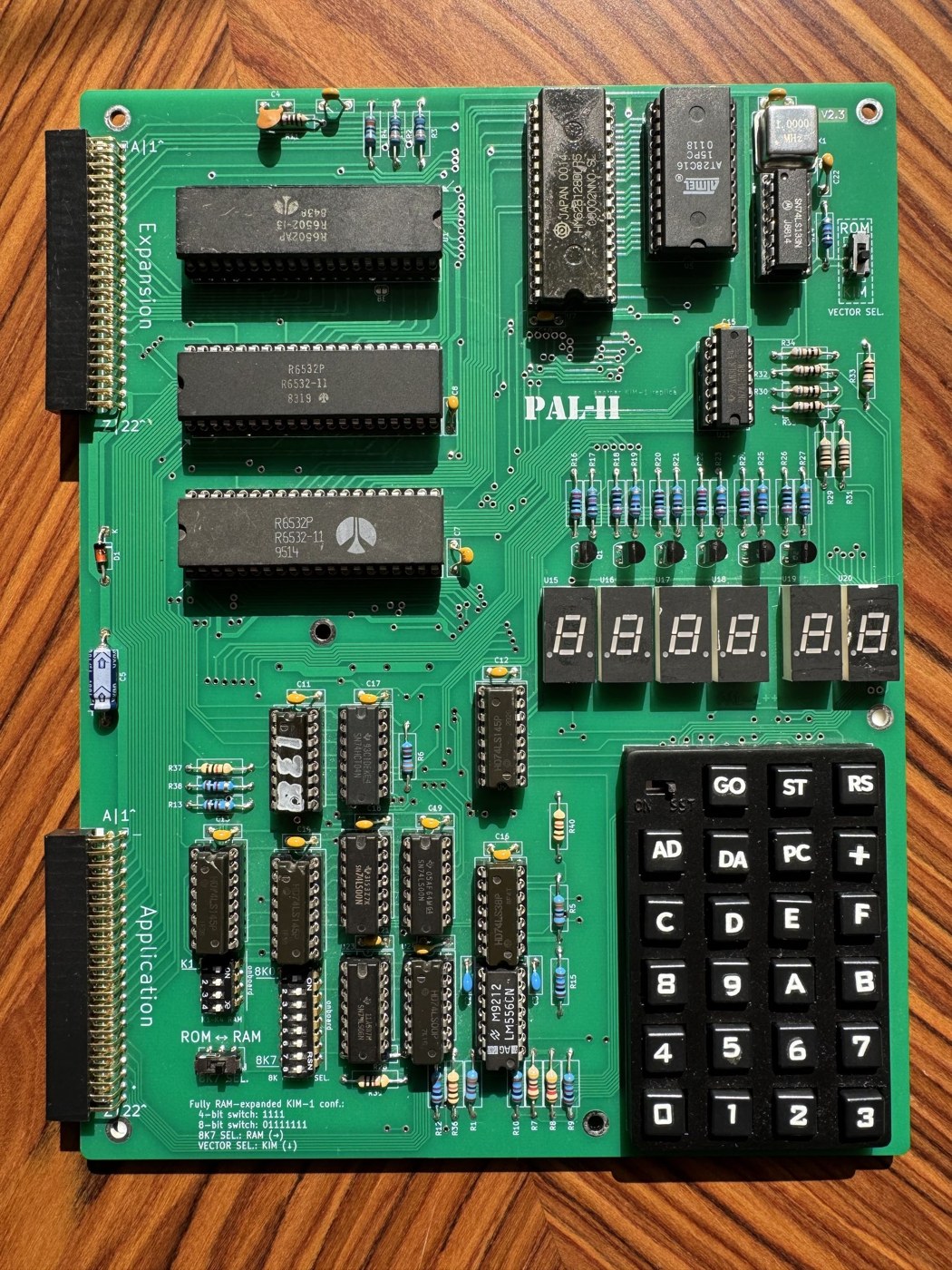 Vol 8 KIM-1 — Volume 8 — The Replicas — Re-Making the KIM-1 Why no one can build a KIM-1 from new parts, the one workaround every replica uses, and a dated survey of what was actually available in October 2026: exact copies of the 1976 board, working clones with modern memory, a microcontroller emulator for the price of a meal, and software that runs the original monitor
-
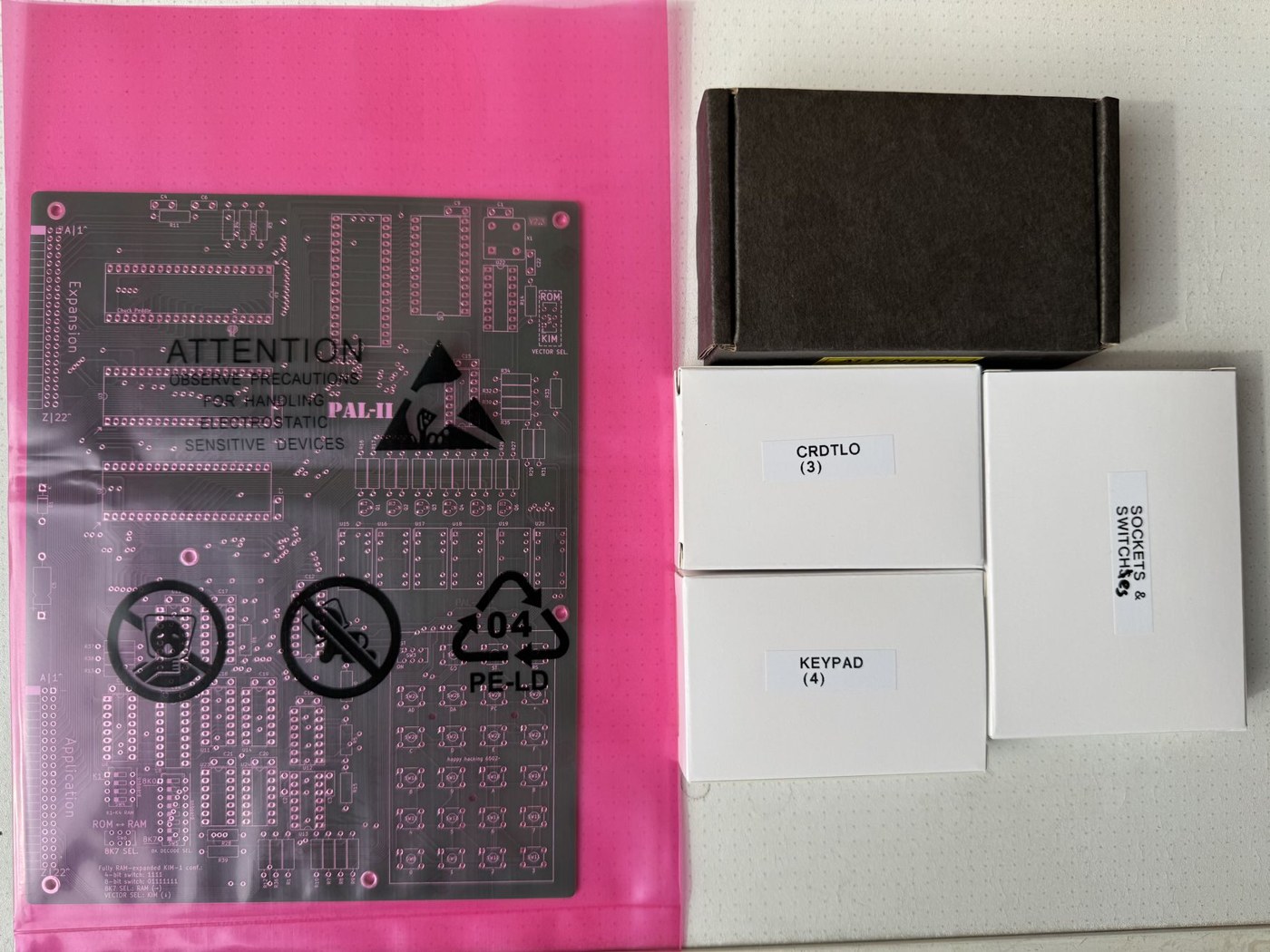 Vol 9 KIM-1 — Volume 9 — Building a KIM-1 Replica The PAL-2 kit from four small boxes to a KIM prompt: the parts and what each replaces on the 1976 board, the soldering order, the switch settings, the first press of RS, the User Manual's first program and a teleprinter session over USB, how to give the replica back its cassette interface, and the purist's alternative
-
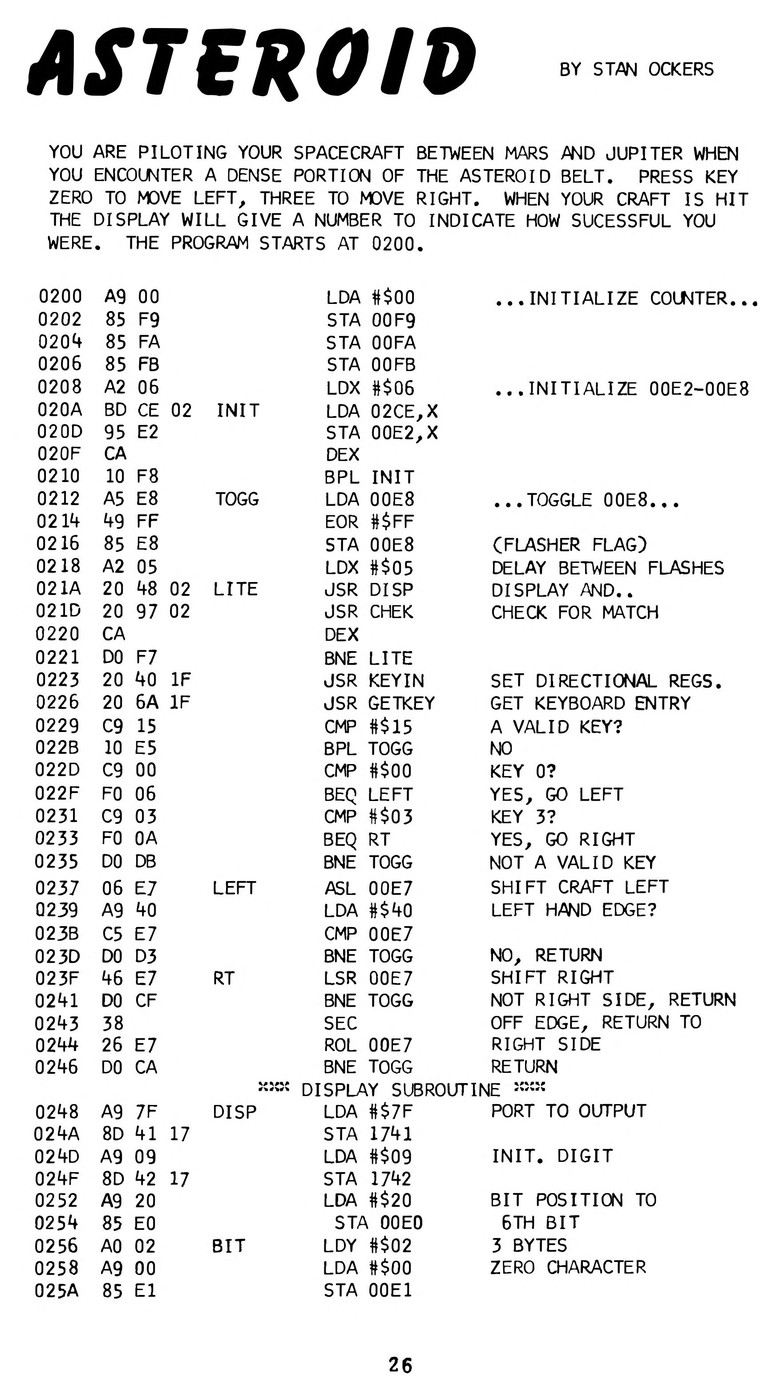 Vol 10 KIM-1 — Volume 10 — Programming the KIM-1 — From Lit Segments to Games Five programs that climb from the hardware upwards: spelling a word by switching segments on and off, a decimal counter on the monitor's display routine, a clock kept by the 6530's interval timer and an interrupt, Jim Butterfield's adding machine on the keypad, and a complete number-guessing game, each assembled and run in the series' simulator with its display shown
-
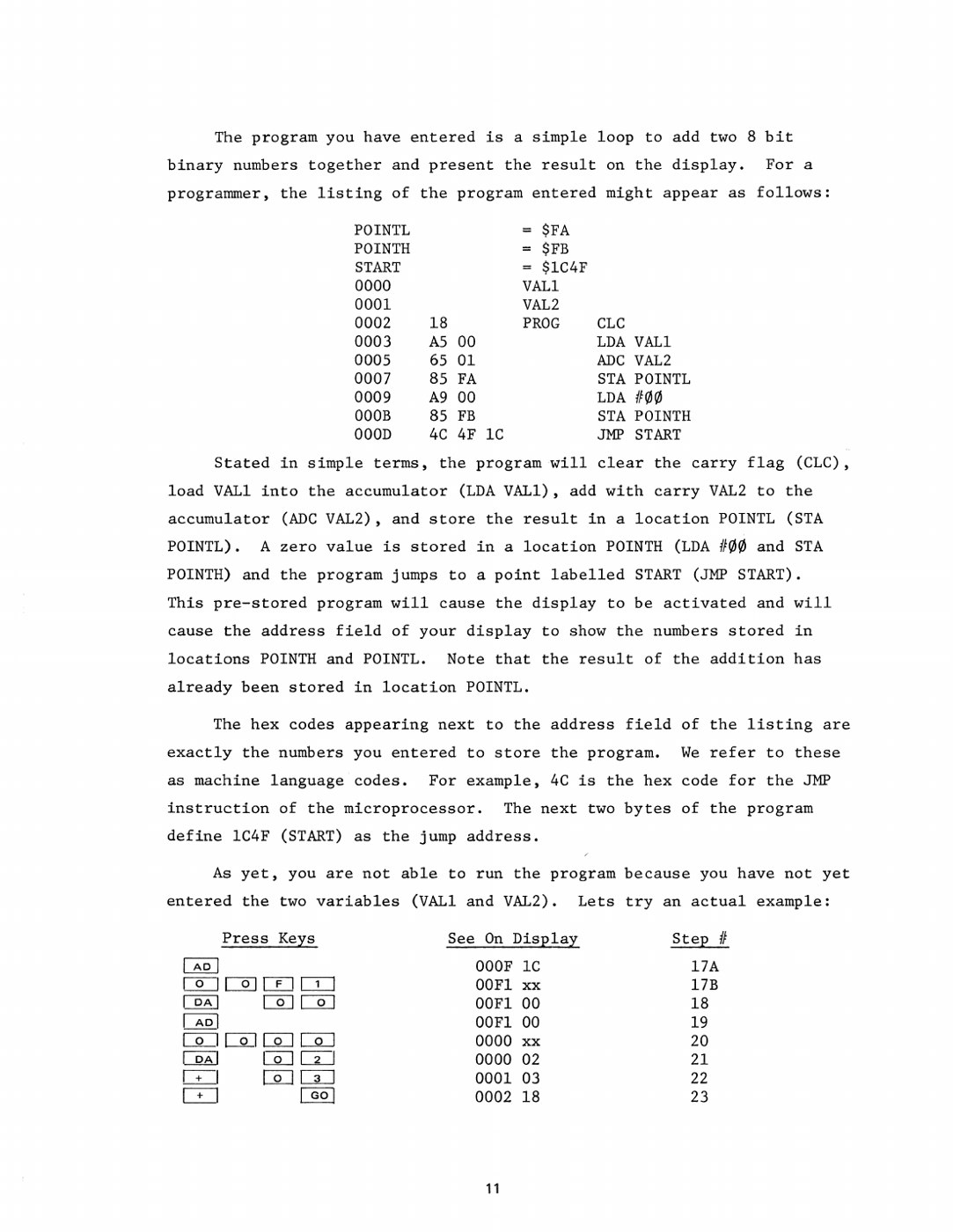 Vol 11 KIM-1 — Volume 11 — Learning Machine Code on a KIM-1 Where I first learned machine code and assembly, what a KIM-1 asked of anyone learning that way — hexadecimal, opcodes looked up by hand, branch offsets counted on paper, single-stepping through a program one instruction at a time — and how it led on to a Heathkit trainer, the family Apple-1 and a robot