SIGABA · Volume 2
SIGABA — Volume 2 — From the M-134 to the ECM — Friedman, Rowlett, Safford and the Navy
How a tape-driven Army cipher machine, a junior cryptanalyst's revolt against punching tapes, and a Navy that kept its own counsel produced the ECM Mark II — and how two rival services came to share one cipher machine before Pearl Harbor
2.1 About This Volume
Volume 1 called the SIGABA a machine that was invented twice. This volume tells that story properly. It begins in the 1920s with Edward Hebern’s rotor machines, which the US Navy bought and William Friedman broke, and with the lesson Friedman drew from them: a rotor machine that steps its own rotors in a regular way is giving away its secret. It follows Friedman’s answer — the tape-driven Converter M-134 — and the young cryptanalyst, Frank Rowlett, who was given the job of making the tapes and found a way to abolish them. It then crosses the footbridge between the Munitions Building and the Navy Building in Washington, where the Navy’s cryptologists heard the Army’s idea in 1935, said little, and spent the next four years turning it into the Electric Cipher Machine Mark II without telling the Army. It ends with the machine in mass production, the rotors being wired by hand by hundreds of women, and the question of who invented it still unsettled.
The mechanism is described only as far as the story needs; Volumes 3 and 4 explain it fully.
2.2 Hebern’s Wheel
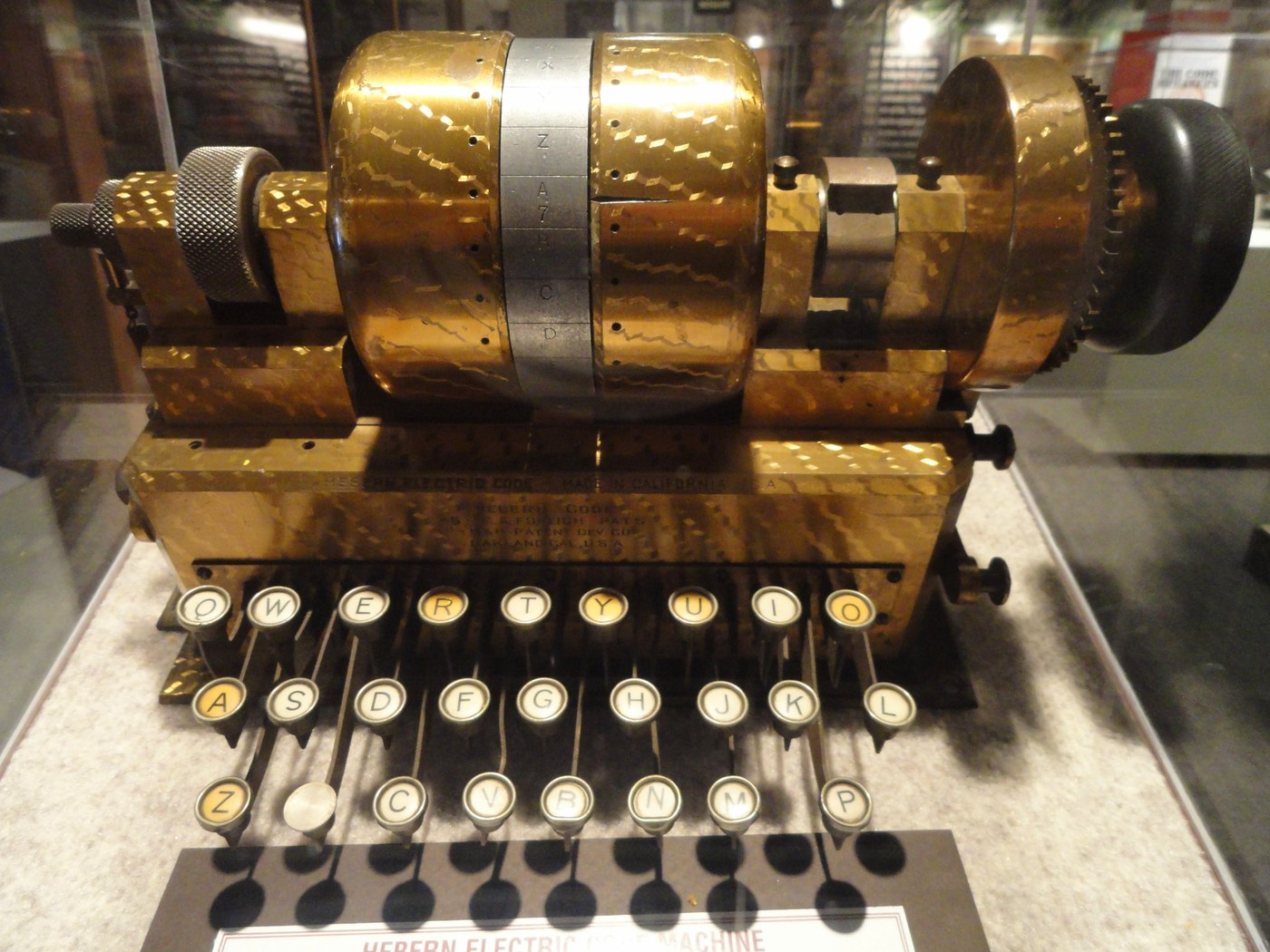
The rotor itself was an American invention, or at least one of several near-simultaneous inventions. Edward H. Hebern of Madera, California, is generally credited with the first American electromechanical rotor cipher machine. According to a story he never denied, the idea came to him around 1912 while he was serving a prison sentence for horse theft; by the end of 1915 he had a working model and a patent application, and he was knocking on doors (Mucklow 2015, p. 2). His basic rotor patent was granted in 1924. The US Navy was interested from early on and over the following years bought and tested a succession of Hebern machines. One of Hebern’s early employees, Agnes Meyer, later Agnes Meyer Driscoll, went on to become one of the Navy’s leading cryptanalysts.
The Navy’s cryptologists asked the Army’s chief cryptanalyst, William F. Friedman, what he thought of the machine’s security. Rowlett, who heard the story from Friedman, recorded what happened next:
Navy cryptographers asked [William] Friedman for his assessment of the security it afforded … [T]he Navy [supplied] a set of messages prepared exactly in accordance with the procedures which they had proposed, but using a set of cipher wheels whose wiring was to be unknown to Friedman … Friedman was successful in his attack on the system.
— Frank B. Rowlett, The Story of Magic (1998), p. 69, quoted in Mucklow 2015, p. 2
Friedman’s method was statistical and “divide and conquer”. Because the Hebern machine’s cipher wheel stepped regularly and predictably, he could treat the rest of the machine as a constant and analyse the components one at a time. The conclusion he took from the exercise shaped the next fifteen years of American machine design: the regular advance of the rotors was an intrinsic, mathematically exploitable weakness, and a secure machine needed some way of moving its rotors that the enemy could not predict (Mucklow 2015, p. 2).
2.3 Friedman’s Key Tape
2.3.1 The Signal Intelligence Service
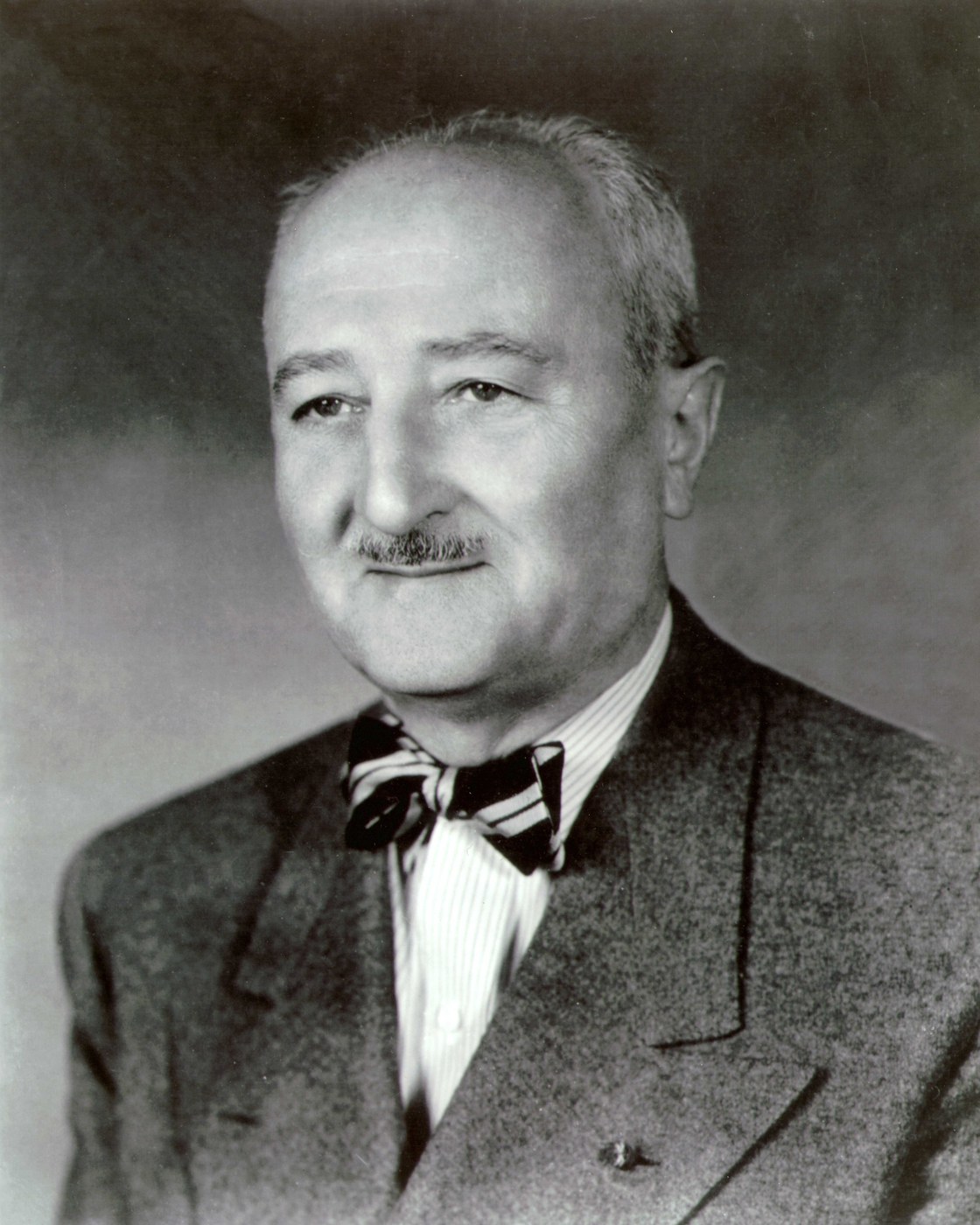
In 1930 the US Army consolidated its code-making and code-breaking under a new Signal Intelligence Service (SIS), with Friedman as its chief cryptanalyst. He hired three junior cryptanalysts that year — Frank B. Rowlett, a Virginia schoolteacher, and the New York mathematicians Abraham Sinkov and Solomon Kullback. For the next several years these four men were, in Mucklow’s phrase, “the bulk of the U.S. Army’s cryptanalytic organization”. They trained by solving historical ciphers, compiled the Army’s codes and, increasingly, attacked Japanese diplomatic traffic.
2.3.2 The idea, 1932
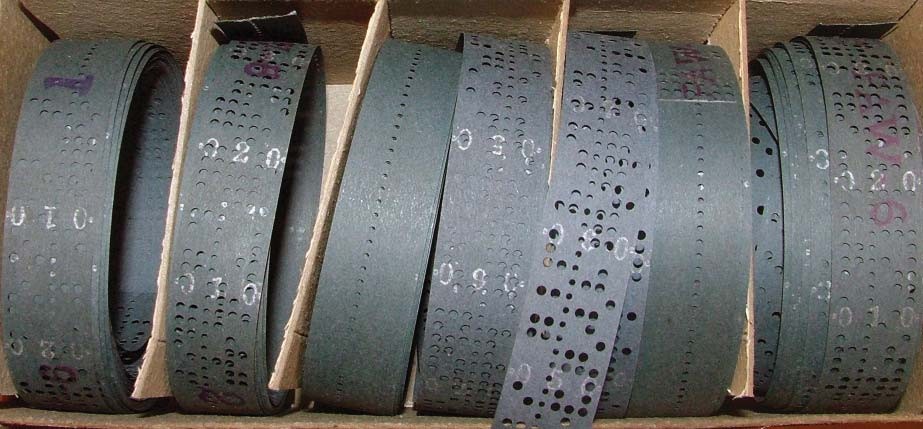
Friedman’s solution to the Hebern problem came to him, by his own account, around 1926, and it borrowed from the telegraph office. Paper tape punched with five rows of holes was already standard equipment for teleprinters. Friedman reasoned that a tape punched with random holes could be read by feeler contacts, and that each hole or no-hole could switch a current that stepped a cipher rotor. With every keystroke, the next row of the tape would decide which of the rotors moved. The tapes could be manufactured in a secure facility, distributed like any other key and replaced on a schedule (Mucklow 2015, pp. 3–4).
On 23 April 1932 Friedman explained the idea to Rowlett, Kullback and Sinkov, drawing rough sketches of a cipher machine with a “key tape transmitter”. The point, he said, was to remove “the inherent weakness of all such devices” — that “the keying mechanism is a part of the device itself” (Friedman Collection, quoted in Mucklow 2015, p. 5). Separating the keying element from the machine was, in his view, simply Kerckhoffs’s second principle applied to machinery: the design should not need to be secret; the key should carry the security.
On 25 July 1933 the Chief Signal Officer filed a secret patent application on Friedman’s behalf, Serial No. 682,096. In a statement written after the war Friedman described it as “the first invention and disclosure covering Electrical control (as distinguished from mechanical control) of a set of cipher rotors in cascade, permitting a departure from the regular and periodic or metric angular displacements of such cipher rotors” (Friedman, c. 1946; Library copy). The Patent Office was not persuaded. In June 1934 it rejected his claims “on Heburn [sic]”, and Friedman spent years writing patiently furious letters explaining the difference between a machine whose movements were “controlled by ratchet mechanisms internal to the device itself” and one whose movements were “controlled by the cipher key transmitter in an aperiodic manner” (letters of 3 April and 5 December 1934, quoted in Mucklow 2015, pp. 5–6). The application was placed in the secret category on 9 September 1936.
2.3.3 The M-134
The design passed through a series of names — M-134, M-134-A, M-134-T1, M-134-T2 — as it matured. In production form the converter consisted of a chassis, an assembly of five cipher rotors drawn from a set of ten, a 26-wire plugboard and a punched-tape reader. Two service-test models of the M-134-T2 were built by the Signal Corps Laboratories at Fort Monmouth, New Jersey, in 1936, and tested in November that year by exchanging cryptograms between the War Department in Washington and the Panama Canal Department at Balboa. The machine worked at 30–35 words a minute and, in Friedman’s words, “afforded the highest degree of security yet attained by any cryptographic machine for cryptonet communication” (Friedman, c. 1946).
The Army approved the military characteristics of Converter M-134 on 19 February 1937 and soon afterwards ordered twelve machines from Wallace & Tiernan of Belleville, New Jersey. They were delivered to Washington on 2 August 1938, and in October 1938 the first were shipped, two each, to the headquarters of the Ninth Corps Area in San Francisco and the Panama Canal, Hawaiian and Philippine Departments. Only 75 were ever built, but for three years they carried the Army’s most secret administrative traffic. In 1940 two were sent by officer courier to the US Military Attaché in London, and later two more; on 29 November 1941 the War Department lent four to the State Department for Washington and the London embassy; in January 1942 an M-134-A carried direct communications between President Roosevelt and Prime Minister Churchill for some months; and when the Army retired the machines, 29 or 30 went to the Office of Strategic Services (Friedman, c. 1946).
2.4 Rowlett’s Rotors
2.4.1 The tape problem
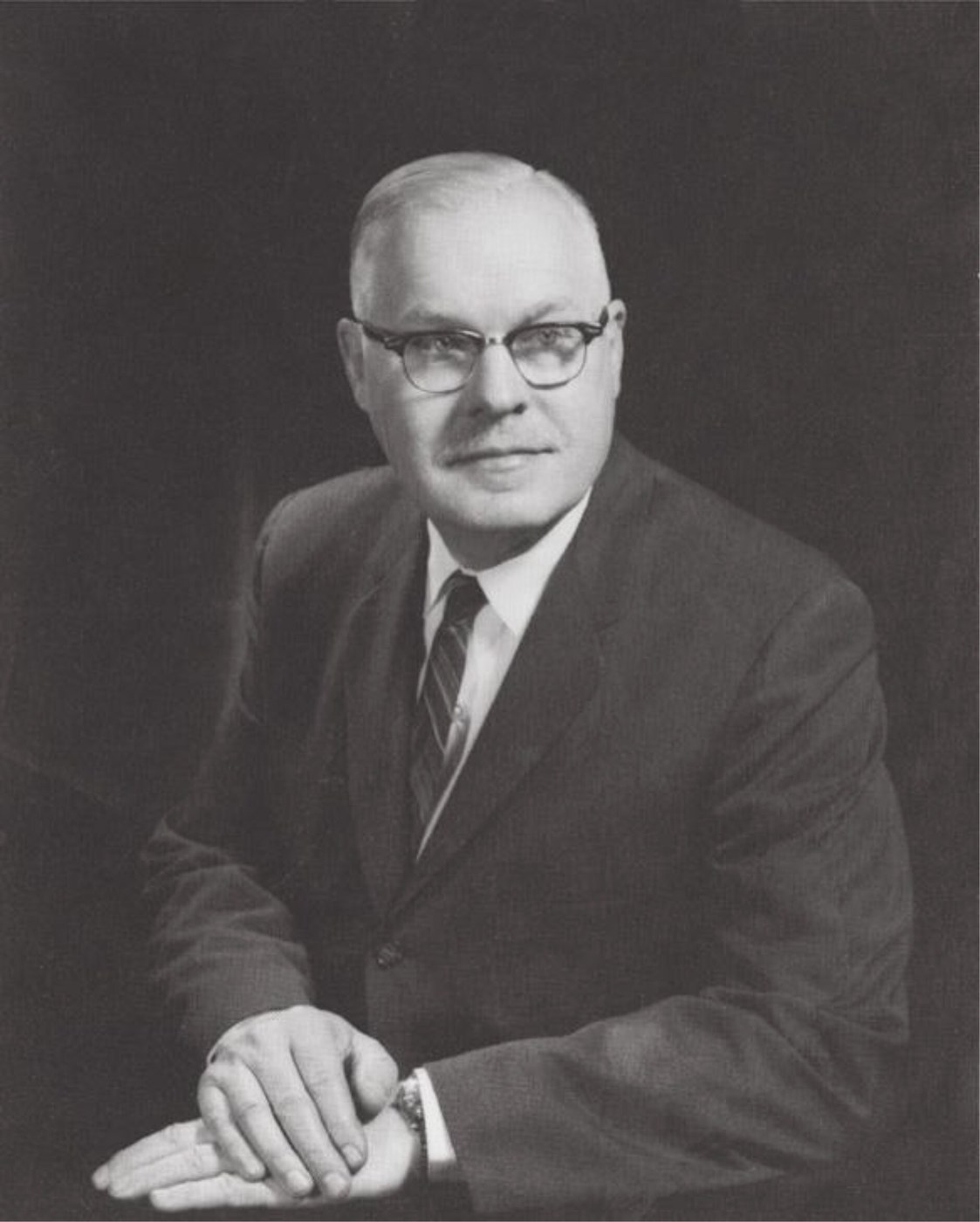
Somebody had to make the tapes, and in 1934 the job fell to Rowlett. “I got stuck with the job of making the tapes,” he said in a 1974 oral history, “because I had a little bit more practice in mechanical things than the rest of the group and I think they were smarter than I because they didn’t let it be known” (quoted in Mucklow 2015, p. 7). The machine Friedman had designed to punch random tape did not work well, and Rowlett spent much of his time trying to make it work.
He soon came to doubt the whole scheme. Producing long loops of genuinely random tape was laborious and probably error-prone. Operators under stress would tear tapes, misuse them, and be tempted to reuse them and their starting places. Every holder on a network needed the same large inventory of tape, which had to be distributed, accounted for and guarded. “I don’t know that I ever was confronted with a more hopeless task than making these devices work and do what was needed,” he recalled, “and I soon became desperate” (Mucklow 2015, p. 8).
2.4.2 The idea, 1935
The way out came to him, by Friedman’s later dating, about 15 June 1935:
I thought it would be a helluva good idea if we replaced these key tapes with a second set of rotors which in effect would generate five screens of impulses equivalent to the holes and no holes in the five levels of the tape and use this assembly of five additional rotors instead of the tapes. Well, I thought this was a pretty powerful thing and I just was so enthusiastic about it because it looked like I was getting out of this impossible task, I went to tell Friedman about it.
— Frank Rowlett, oral history interview OH-1974-01, quoted in Mucklow 2015, p. 8
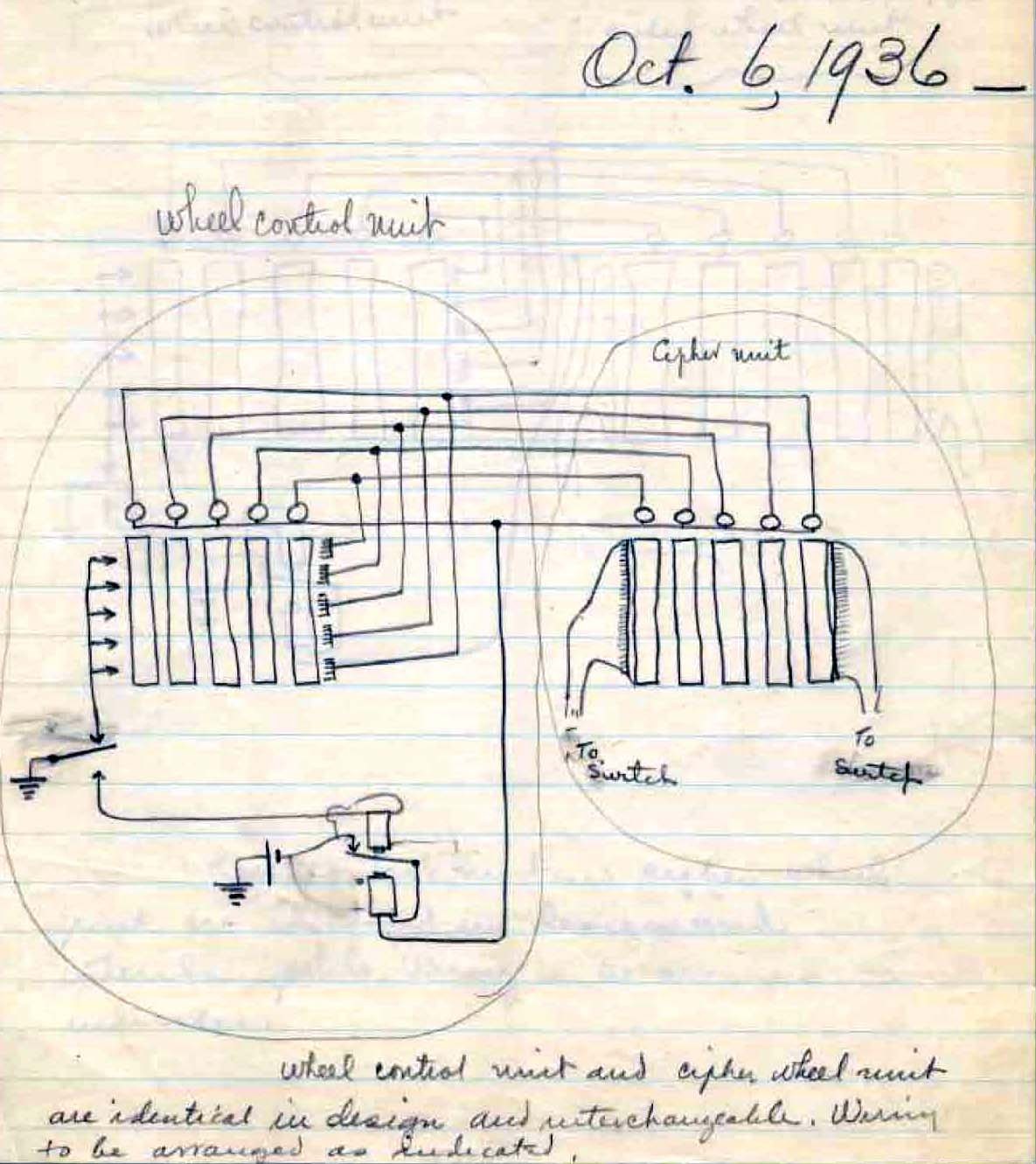
A set of rotors stepping in a regular, odometer-like way is a poor cipher, but it is a good generator of long, complicated sequences of on-and-off signals. Feed a few currents through such a set and take the outputs as the “holes” of a virtual tape, and the tape is no longer needed. The keying sequence would be set by the rotors’ wirings, order and starting positions — a key that could be written on a sheet of paper and changed daily.
Friedman would not hear of it. His case for the key tape, and for his patent, rested on the claim that any machine that generated its own stepping was keying itself, and was therefore vulnerable. Rowlett, by his own account, raised the subject repeatedly over a long period and was rebuffed more coldly each time, until he told Friedman that either he did not know what he was talking about or Friedman did not understand him, that he would have to quit the tape job, and that he would take the idea to the Chief Signal Officer if Friedman would not give it a hearing. It was a risky thing for a family man to say in the depths of the Depression (Mucklow 2015, p. 9).
Friedman gave him the hearing. At the end of it there was a long silence, and Rowlett was dismissed without a word; he spent the afternoon mentally clearing out his desk. “Well, next morning he came in, eyes shining, just all excited and he says, we’re going to do this.” Friedman called it a “beautiful idea”, went to the Chief Signal Officer “with stars in his eyes”, and told Rowlett to start drafting patent specifications at once: “I will work directly with you in developing these new principles into their most advantageous form” (Rowlett, oral history and The Story of Magic, pp. 97–98, quoted in Mucklow 2015, p. 10). The phrase gave Mucklow’s history its title.
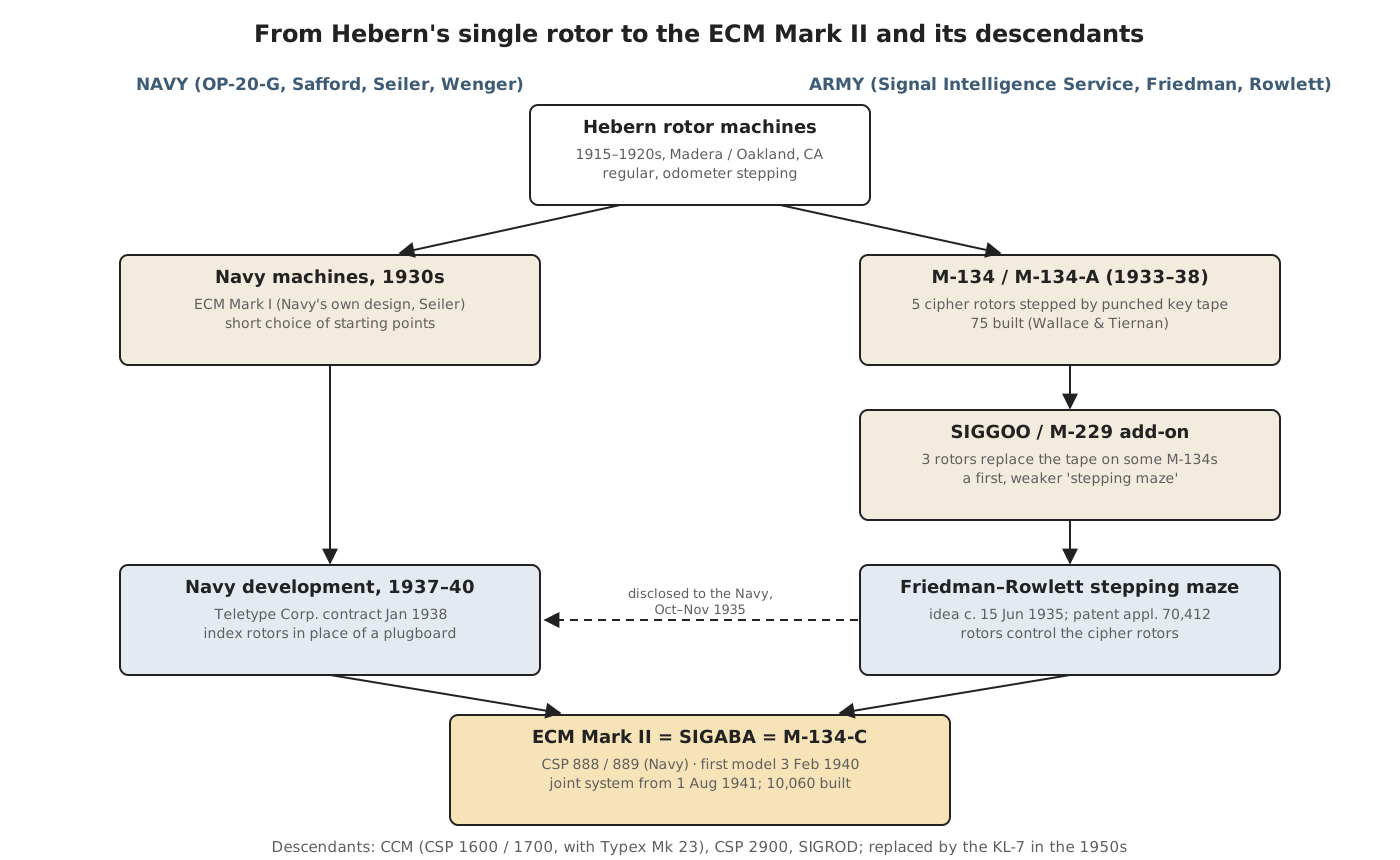
By the end of the summer of 1935 the two men had refined the details of a new machine, the M-134-C, combining Rowlett’s “stepping maze” with Friedman’s M-134, and drafted a patent. The joint application, Serial No. 70,412, was filed on 23 March 1936 and assigned to the Secretary of War on 2 April; like Friedman’s earlier one, it was placed in the secret category, where it was still sitting a decade later (Friedman, c. 1946).
2.4.3 SIGGOO: a stopgap
There was no money to build it. The Army’s small budget for cryptographic development had been spent on the M-134, and in the depths of the Depression there was no prospect of a new machine. What could be found was a small sum for retrofitting existing M-134s, and with it the Army built an add-on, the SIGGOO (M-229), which replaced the tape reader on some machines with a three-rotor version of the stepping maze. Five of its inputs were energised at once; its outputs were gathered into five groups, one for each cipher rotor, so that the rotors could be keyed from a daily setting instead of a tape. Not every M-134 could be converted, and since converted and unconverted machines could not talk to each other they were used on separate networks (Mucklow 2015, pp. 11–13). Mucklow calls the result “hardly elegant in appearance” — a Rube Goldberg device — but still stronger than anything the British or the Axis had.
2.5 Enter the Navy
2.5.1 Across the footbridge
The Navy’s cryptologic section, OP-20-G, had its own problems. It had relied on Hebern machines and lost faith in them; it had developed its own ECM Mark I, an “in-house” machine based on Hebern principles and heavily modified by the engineer Donald W. Seiler and the Navy’s senior cryptologist, Laurance F. Safford. Mucklow’s notes, drawing on Safford’s own wartime history, describe the Mark I as the Navy’s primary cipher machine from May 1936 to January 1942 — cryptographically formidable, but mechanically unreliable and in need of constant maintenance. Friedman’s assessment was harsher: although the Mark I generated a long keying sequence, “the number of available starting points in that sequence was so limited that considerable ‘depth’ … could be expected every day” (Friedman, c. 1946).
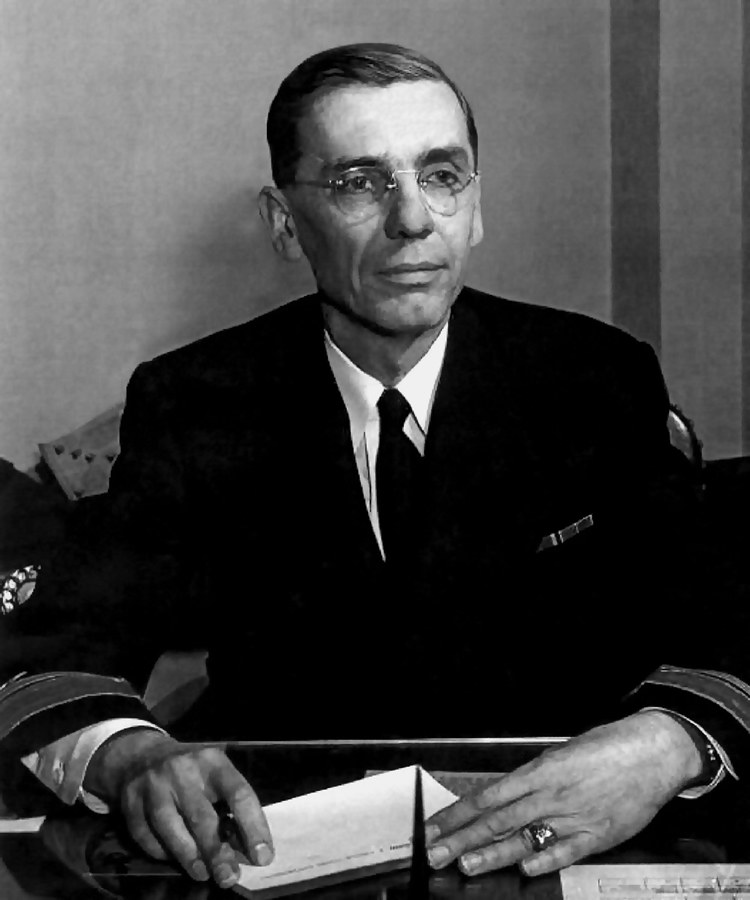
Early in October 1935 the acting head of OP-20-G, Lieutenant Joseph N. Wenger, walked across the little-used pedestrian bridge that joined the Navy and Munitions buildings on the Mall and called on Friedman. Rowlett remembered the conversation, as Friedman relayed it: the Navy had been disappointed with its existing contract, Hebern’s new machine was unsatisfactory too, and the Navy “now had a lot of development money but didn’t have any ideas to invest the money in and for goodness sakes did the Army have something … any good ideas at all” (Rowlett, oral history, quoted in Mucklow 2015, p. 12).
Friedman had something, and with his superiors’ permission he shared it. On 21 October 1935 Wenger and John W. McClaran met Friedman and Rowlett in the Munitions Building and were shown the plans. On 31 October Wenger, McClaran and John Harper came back for a second briefing, and the next day a larger group of naval officers gathered in Friedman’s office. The Navy men were polite and seemed unmoved. When Rowlett, months later, pressed Friedman for news, Friedman told him Wenger had reported “certain … operational difficulties” and that the Navy “just weren’t sure the idea would work”. “Well,” said Rowlett, “I thought the doggone thing would work and maybe they weren’t as smart as they thought they were” (Mucklow 2015, pp. 12–13).
2.5.2 Four years of silence
The Navy was smarter than it let on. According to the history of the machine that Richard Pekelney compiled from the Army’s three-volume History of Converter M-134-C and Safford’s 1943 History of Invention and Development of the Mark II ECM (SRH-360), little was done by either service until Wenger discussed the Army’s patent with Commander Safford in the winter of 1936–37. Safford — just back from sea duty — recognised its potential, and the Navy began to sponsor and finance a new machine built around the stepping maze (Pekelney).
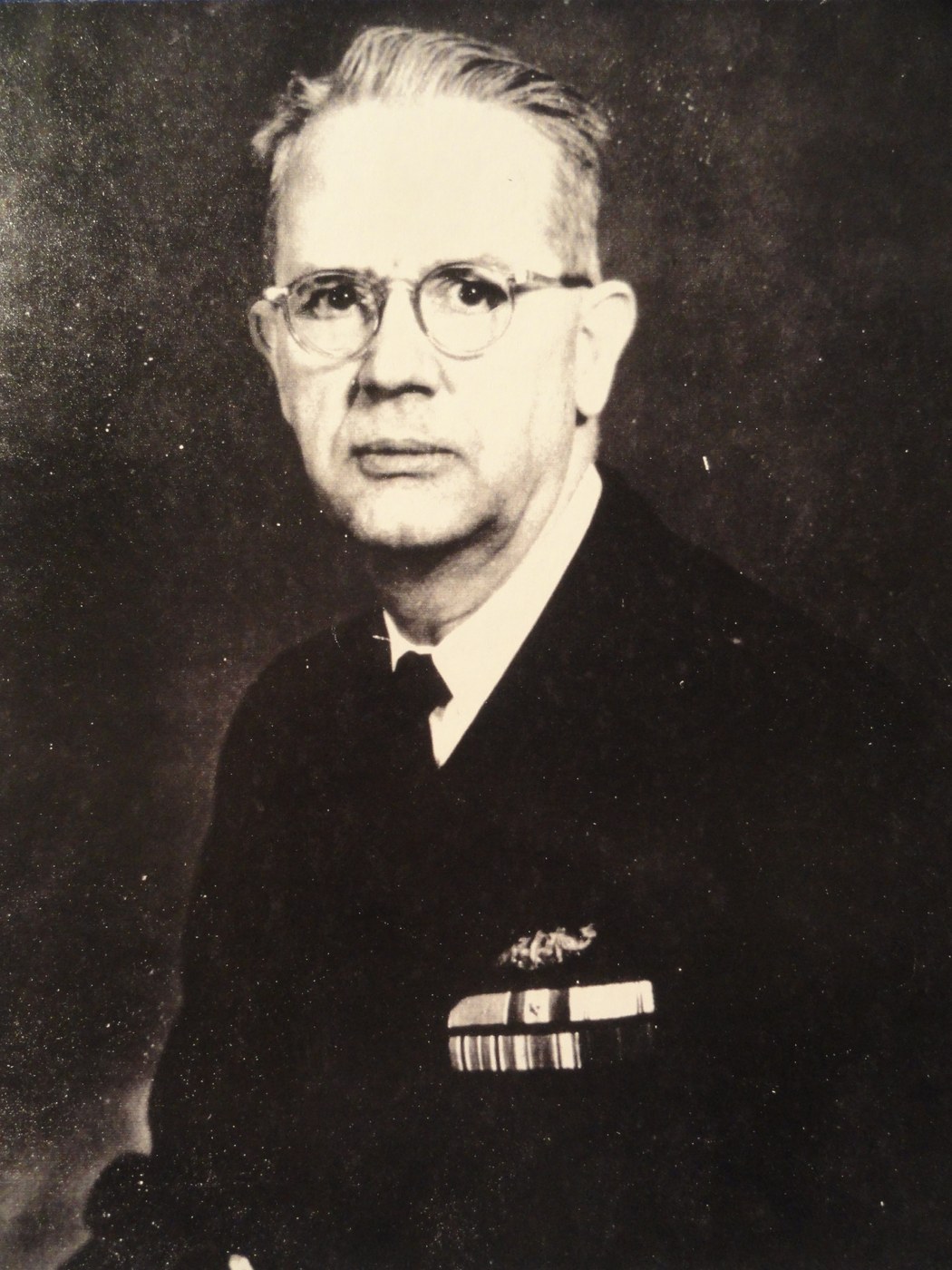
The Navy’s development contract with the Teletype Corporation of Chicago began in January 1938 (Friedman, c. 1946). The engineering problems were real. Mucklow describes a series of prototypes built between late 1936 and January 1941, the early ones prone to failure from heat, humidity and vibration, each smaller, lighter, faster and more reliable than the last. Pekelney credits Safford, Seiler and Teletype’s engineers — he names a Mr Reiber and a Mr Zenner — with innovations in security, reliability and ease of manufacture.
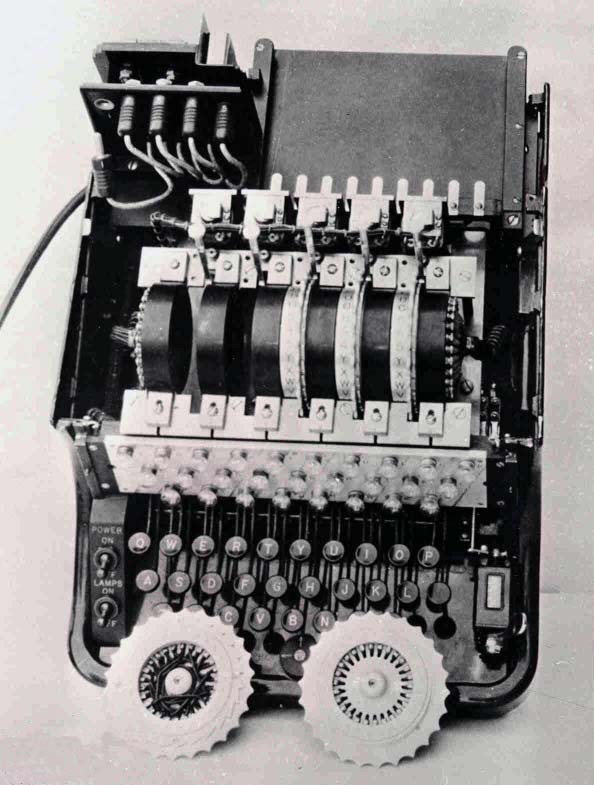
The most visible change was Seiler’s. The Army’s design had used a plugboard, like the Enigma’s, as one element of the key. Seiler rejected plugboards before the Mark II reached the drawing board: they were awkward for the operator, plugging errors had compromised keys in the past, and plugboards had not prevented the Navy from solving six different machines it had tested. In their place he put a bank of small index rotors, which, Safford argued, offered 49 times more stepping combinations than a plugboard (Safford, SRH-360, p. 28, cited in Mucklow 2015, note 39). The three-bank machine of Volume 1 — cipher, control and index — was the result.
Nobody told the Army. Friedman’s account is that the Navy proceeded “without advising us or anybody else in the Signal Corps until March 1939, when the Teletype Corporation engineers brought to Washington the first completed set of drawings of the Mark II E C M”, and that at a conference with the engineers “it was brought out and acknowledged that the Navy had based the cryptographic features of the new machine upon the Army’s disclosure” (Friedman, c. 1946).
Rowlett’s own memoir tells a different, more personal story, which Mucklow places in 1939. Rowlett was working on the Japanese PURPLE machine with a Navy officer, Lieutenant Commander Wesley A. “Ham” Wright. Speculating about what mechanism the Japanese might be using, Wright said: “Maybe they’re using something like what we’re planning to use in our new Navy cipher machine. Let me explain it to you, and you can give me your opinion of it.” He sketched the circuitry, and Rowlett recognised his own invention. Asked whose idea it was, Wright said he believed it was Wenger’s. Rowlett went straight to the head of the SIS, Major William Reeder — and found that Reeder already knew about the Navy’s work (Rowlett, The Story of Magic, pp. 143–144, quoted in Mucklow 2015, p. 14). The Japanese machine, as the PURPLE shelf in this collection describes, turned out to be built on telephone stepping switches, not rotors; Rowlett’s team broke it in September 1940.
2.5.3 February 1940
Months later Reeder brought Rowlett some better news: the Navy was about to take delivery of a working model and he was invited to help test it. On 3 February 1940 the Chief Signal Officer, Major General Joseph Mauborgne, Friedman, Rowlett, Sinkov and Kullback were received at the Navy Building by Rear Admiral Leigh Noyes and Captain Safford to see the prototype of the Electric Cipher Machine Mark II. Friedman recorded that Safford “acknowledged, in the presence of all those witnessing the demonstration, the fact that the Navy had used the Friedman-Rowlett invention” (Friedman, c. 1946). Rowlett remembered something simpler:
… it was the most beautiful thing to look at from where I stood and I couldn’t keep my hands off it and of course the Navy was delighted to find somebody as enthusiastic about it as I appeared to be.
— Frank Rowlett, oral history OH-1974-01, p. 46, quoted in Mucklow 2015, p. 15
He was curious about the details of the circuitry — “the association of the contacts on the in-plates of the control maze with the stepping magnets of both mazes” — and puzzled at first by the extra bank of rotors: “We preferred the plugboard. The Navy for some reason didn’t like plugboards but this was not a point … to quibble about” (Mucklow 2015, p. 15).
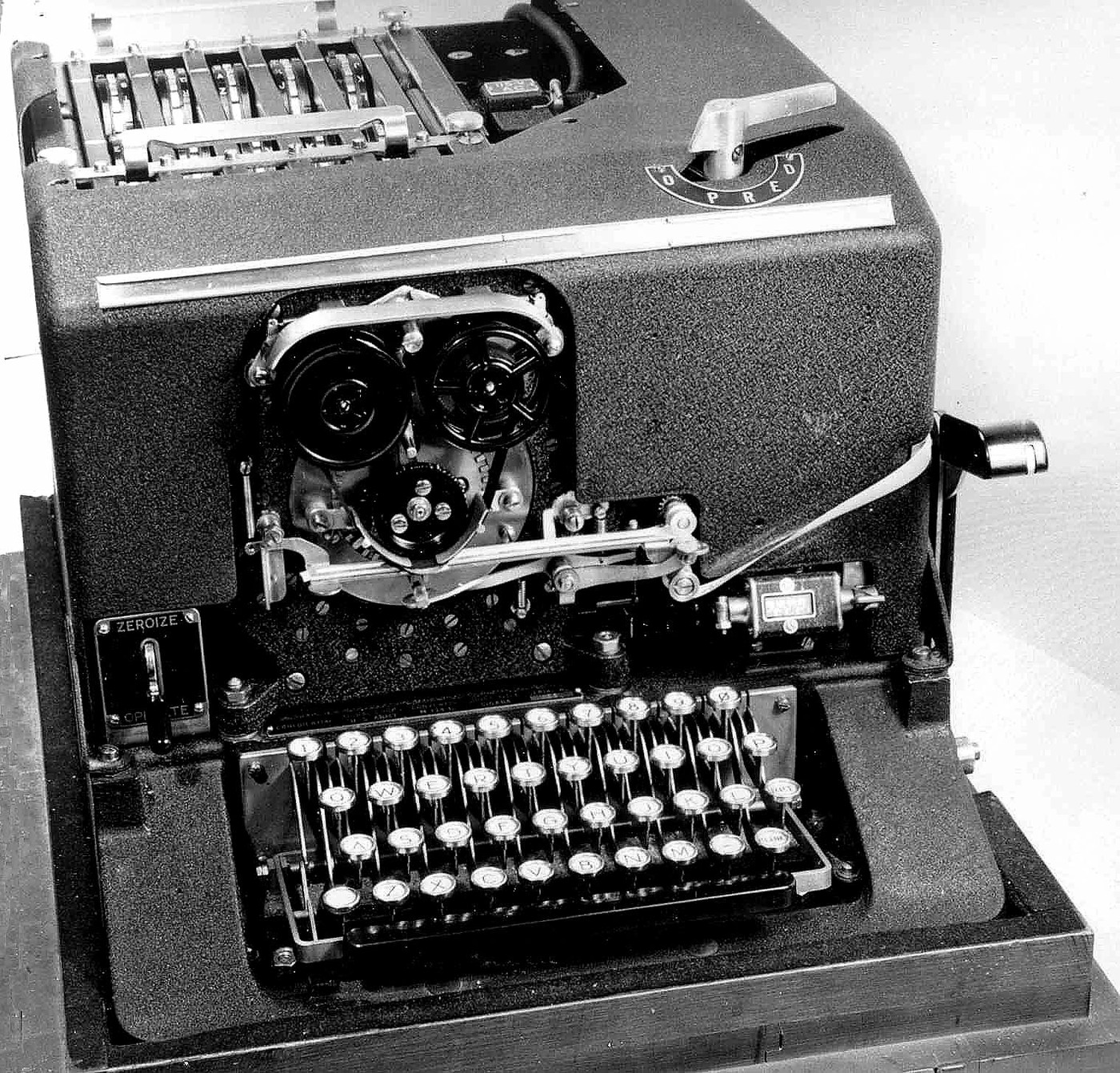
2.6 One Machine for Two Services
From then on development was joint. On 19 June 1940 the Signal Corps added an order for an initial 85 machines to the Navy’s, at $1,856.90 each; on 4 October 1940 it moved to buy 149 more; on 17 March 1941 the first ten were delivered to the Army and passed a prompt service test (Friedman, c. 1946). The Army called the combination Converter M-134-C, the same designation it had given the paper design of 1935, and gave it the short title SIGABA. The Army adopted it, Friedman stressed, not because it was more secure than the tape-driven M-134-A but because it was “a much more rugged, reliable and rapid machine” and “dispensed with perforated tapes”.
The joint Army–Navy ECM system took effect on 1 August 1941. The two services agreed at the same time not to share any information about the machine with any outside person or organisation (Mucklow 2015, note 37). The machine they adopted ran on 115 volts AC or on 24 volts DC from batteries, as the two services’ installations required; Navy engineers added an emergency hand drive, which, Mucklow says, saw almost no use (Volume 6 covers the other emergency accessory, the thermite bomb).
The Navy’s confidence was set out by Safford in six points, which Mucklow paraphrases: the five-wheel cipher maze gave 11,881,376 (26⁵) alphabets for each wheel arrangement, against the Enigma’s 17,576; a set of ten reversible wheels gave 9,667,680 possible wheel orders; the aperiodic stepping “precluded all known analytical solutions” and short-cuts with captured wheels; the stepping was controlled independently, by the index and control rotors; there were 5,855 different stepping actions, dependent on the key alone; and duplicate wheel sets, effective and reserve, allowed a prompt change in case of compromise (Mucklow 2015, p. 18). Volume 8 examines those numbers.
2.7 Ten Thousand Machines and Half a Million Rotors
2.7.1 Getting them to the fleet
With war in the Pacific likely, the Army found money to help the Navy procure machines in numbers. The Navy was fitting the ECM Mark II to the capital ships of the Pacific Fleet when Pearl Harbor was attacked. According to Mucklow, 96 had been issued to ships, 100 more were in storage awaiting distribution to capital ships, and 25 were ashore in depot maintenance; the machines intended for the ships sunk at Pearl Harbor were still in the warehouse and survived, and 100 of them were transferred to the Army and later used in North Africa (Mucklow 2015, p. 19). Sensitive stations — Corregidor, Guam, Pearl Harbor — had machines early.
Army deliveries, in Friedman’s figures, reached 373 by 31 August 1942, with 364 in service and a scheduled rate of 150 a month; by 30 April 1943, 1,867 had been ordered and 862 delivered; by March 1944 about 1,800 had been delivered to the Army. The Army procured 3,392 in all, and the Navy more. Contracts were let with additional manufacturers to meet demand, and by 1943, on Mucklow’s figures, 5,730 machines were in service and more than 300 a month were being delivered. The two services’ machines were identical except for the name plates. When production ended the inventory stood at 10,060 machines (Mucklow 2015, pp. 19–20). The first 651 Navy machines were built as the CSP 888, which lacked the sockets for linking two machines in tandem; the rest were CSP 889s (Pekelney).
2.7.2 Wiring the rotors
The rotors were the secret, and they were made in-house. Navy personnel and civilian workers fabricated them from stock at the Washington Navy Yard and, from June 1943, at the new Naval Code and Signal Laboratory at the Naval Communications Annex on Nebraska Avenue. The wiring itself was done by more than 200 WAVES (Women Accepted for Volunteer Emergency Service); at Arlington Hall, members of the Women’s Army Corps did the same for the Army. Every machine needed at least two complete sets of fifteen rotors, and with heavy use a rotor lasted between six months and two years.
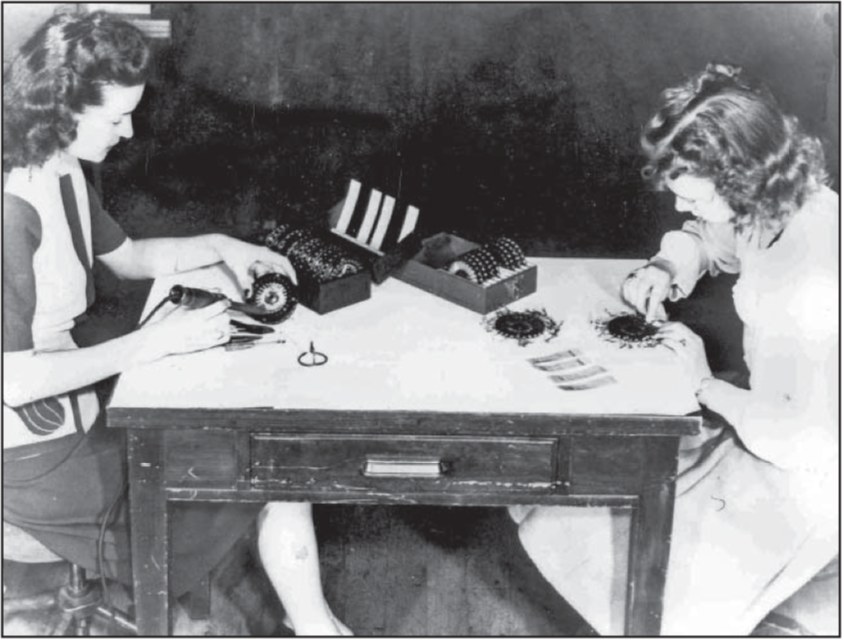
The figures Mucklow gives, from Safford and from R. A. Ratcliff’s Delusions of Intelligence, are striking. In 1943 the average WAVE soldered the connections of fourteen rotors a day, and one set a record of twenty-two; the male shipyard electricians who had done the work before averaged seven, and were reassigned. By the middle of the war the Navy’s women had wired more than 150,000 rotors with, it was reported, not a single wiring error and only one mislabelled wheel. Each rotor went through more than 2,800 operations before it was certified, and when production ended there were more than 450,000 rotors in the inventory (Mucklow 2015, p. 20). The Naval Code and Signal Laboratory’s director, Seiler, later put the laboratory’s wartime total at more than a million rotors of all kinds (Seiler, 1950; Library copy).
2.7.3 The paperwork
The Army, as was its habit, gave every component its own short title. Mucklow lists them: SIGABA for the chassis without rotors; SIGIVI for the cipher basket; SIGKKK for the maintenance instructions; SIGQZF for the crypto-operating instructions; SIGBRE for the general instructions; and separate titles for the rotor set and the keying data. The Navy’s equivalents were CSP numbers: CSP 887 for the cipher unit, CSP 888/889 for the machine, CSP 1100 for the operating instructions. Volume 5 reads those manuals.
2.8 Who Invented It?
The question would follow the machine for sixty years, and the sources give different answers depending on whose papers they come from.
- The Army’s case is Friedman’s. His 1933 application (682,096) covered electrical, tape-driven control of cascaded rotors; the stepping maze was Rowlett’s idea of about 15 June 1935, developed with Friedman and filed as application 70,412 on 23 March 1936; the Navy was shown it in October and November 1935 and, in Friedman’s account, acknowledged in 1939 and again in February 1940 that its machine was based on the Army’s disclosure. The Navy’s own History of the ECM, which Friedman quoted, said that “Electric control of the ECM by means of the Friedman-Rowlett ‘Stepping Maze’ is the essential feature that places the Mark II ECM in a class by itself as regards security.”
- The Navy’s case appears in Seiler’s 1950 history of the Naval Code and Signal Laboratory, which lists among the laboratory’s achievements that it “proposed first the use of rotor maze to control rotor stepping maze 21 June 1932, now used in ECM Mk.II”, and claims the “basic design and development of ECM Mk.II”, the index maze and the reverse stepping of rotors (Seiler 1950; Library copy). Seiler’s statement says it was checked against the files and with Safford and Wenger. No other source examined for this series supports the 1932 date, and it is recorded here as the Navy laboratory’s claim.
- The patent record reflects the Navy’s engineering. The only SIGABA patent ever issued — US 6,175,625, filed 15 December 1944 and granted in 2001 — names Safford and Seiler as inventors and covers the machine’s control circuits. The Friedman–Rowlett applications were never issued.
The modern consensus, reflected in the NSA’s own museum and in Mucklow’s history, credits Rowlett with the cryptographic idea, Friedman with the tape-driven precursor and with championing the stepping maze, and Safford, Seiler and Teletype with turning it into a reliable machine. The rewards followed the same pattern, and came in private: Congress voted $100,000 to Friedman in 1956, a similar sum to Safford in 1958, and $100,000 to Rowlett in 1964 — compensation for inventions that, being secret, could not earn royalties (Mucklow 2015, p. 27). Volume 9 returns to the patent.
Sources
- Timothy J. Mucklow, The SIGABA / ECM II Cipher Machine: “A Beautiful Idea” (NSA CCH, 2015; Library copy), pp. 1–21 and notes, govinfo.gov PDF.
- William F. Friedman, “Important Contributions to Communications Security, 1939–1945” and “Contributions in the Fields of Communications Security and Communications Intelligence” (c. 1946), NSA Friedman Collection, REF IDs A60534 and A60528, A60534 (Library copy), A60528 (Library copy).
- D. W. Seiler, “U.S. Naval Code and Signal Laboratory — History of”, 12 August 1950, NSA Friedman Collection REF ID A40422, via Crypto Cellar (Library copy).
- Richard Pekelney, “Electronic Cipher Machine (ECM) Mark II”, maritime.org (drawing on ASA, History of Converter M-134-C, 1946, and Safford, SRH-360, 1943).
- Frank B. Rowlett, The Story of Magic (Aegean Park Press, 1998), and oral history OH-1974-01 (NSA CCH), as quoted by Mucklow.
- NSA, “Navy Cryptology: The Early Days”, nsa.gov.
Next — Volume 3: How It Works I — The Cipher Bank, Keyboard and Printer. What is inside one of the 450,000 rotors; how a current crosses five of them; what happens when a rotor goes in backwards; how the keyboard, the controller and the printer turn the scrambler into a machine an operator can use at fifty words a minute — and why the space bar prints a Z.
Comments (0)