SIGABA · Volume 9
SIGABA — Volume 9 — After the War — Declassification, the 2001 Patent, Survivors and Museums
What became of the American Big Machine: postwar service, the CSP 2900 and ASAM 1, retirement in the 1950s and systematic destruction; private rewards for its inventors; declassification in 1996; a patent filed in 1944 and issued in 2001; and the handful of machines that survive
9.1 About This Volume
The war ended with 10,060 SIGABAs in American hands and every one of them, so far as anyone could tell, accounted for. This volume follows them through their afterlife. It describes their postwar service and modification, their replacement by the KL-7 in the 1950s, and their systematic destruction. It then follows the secret itself: the private rewards Congress voted to the inventors, the declassification of the machine in 1996, and the curious history of the only patent ever issued for it — filed in December 1944 and granted in January 2001. It ends with the survivors: where the few remaining machines are, how one of them came to be displayed aboard a submarine in San Francisco, and how the machine became an object of public study.
The previous volume, on the SIGABA’s cryptanalysis, explains why the secret was worth keeping; this one describes how it was kept, and then let go.
9.2 Postwar Service
9.2.1 Guarded harder than ever
As Volume 6 described, the end of the war made the services more protective of the SIGABA, not less. Postwar studies of German and Japanese cryptology persuaded them that the machine was further ahead of the rest of the world than they had realised, and their chief fear was that a rival might copy its principle to protect its own traffic. Every SIGABA was to be guarded 24 hours a day by armed military personnel; the machines were withdrawn from places where they might be lost and replaced there by the CCM-like SIGROD; and the remainder stayed at higher headquarters and in stockpiles held “against emergency situations when they might be needed again” (Mucklow 2015, p. 26).
They were needed in Korea. When the war broke out in 1950, Mucklow writes, “SIGABAs were used extensively at higher echelons because of their dependability and high degree of security”, and for the rest of the 1950s the machine could still be found in military higher headquarters and critical message centres around the world.
9.2.2 New names and a modification
The machine collected new designations. When the Armed Forces Security Agency took over cryptographic matters for all the services in 1949, the Army’s Converter M-134-C became ASAM 1, its cipher unit ASAM 1A; the Army’s new operating instructions, ASAM 1/1 of 1 October 1949, superseded the wartime SIGQZF-3 (ASAM 1/1). A single-row rotor unit, ASAM 1B, allowed the same machine to run a five-rotor system.
The Navy modified many of its machines. The CSP 2900 added one switch and a knob, so that a machine could work either compatibly with standard CSP 889s or, as a CSP 2900, with enhanced security. The machine that later went aboard USS Pampanito was built in June 1943 as a CSP 889 and converted to a CSP 889/2900 in about 1950 (Pekelney). The Naval Code and Signal Laboratory’s director, Donald Seiler, recorded in 1950 that the laboratory had “designed and developed CSP 2900 and CSP 2900A cipher machine. Manufactured 1,196 CSP 2900 and 10 CSP 2900A” (Seiler 1950; Library copy). What the modification did inside is not documented in the sources examined for this series.
9.2.3 Retirement
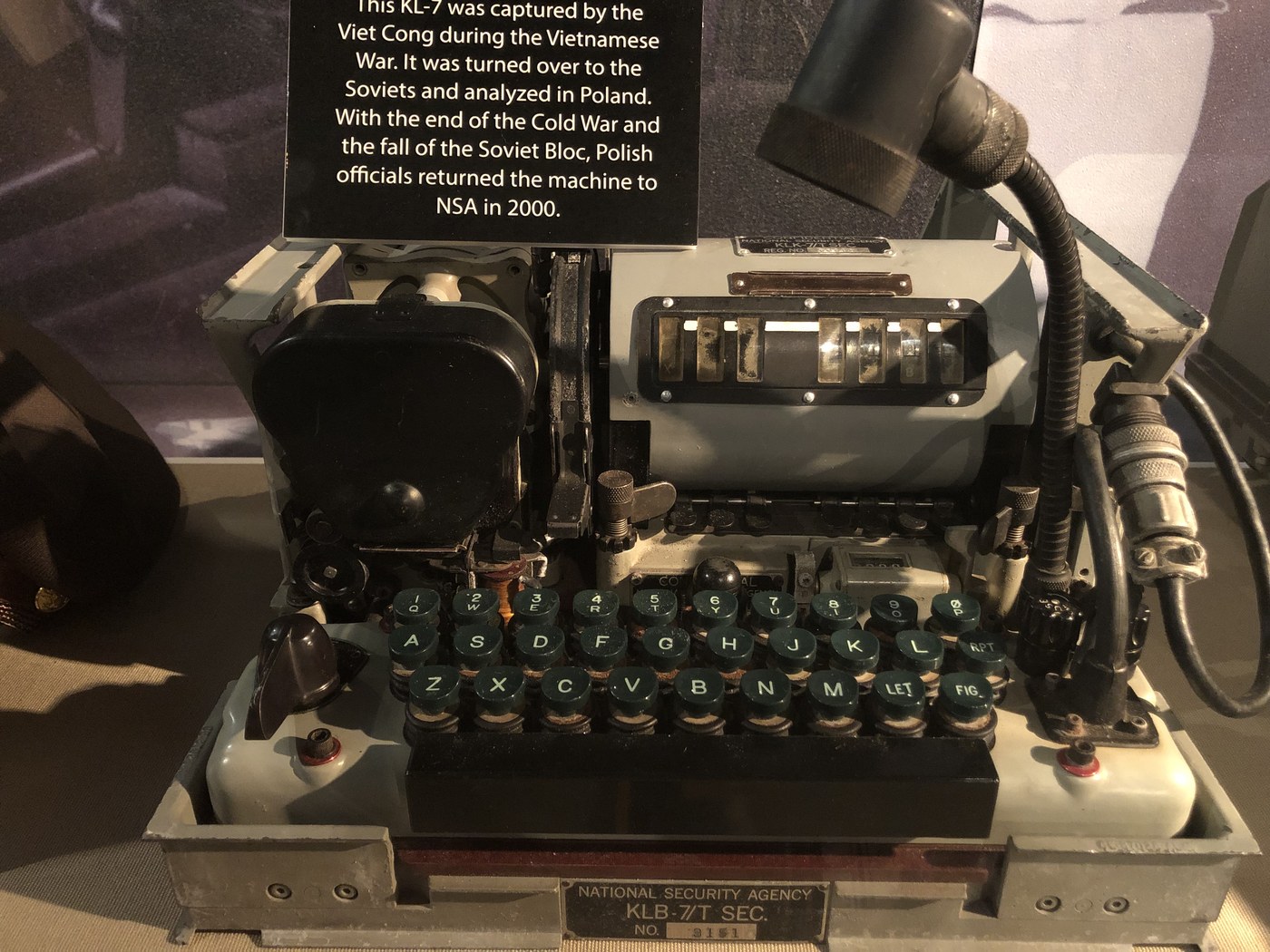
The SIGABA’s limitation was speed. It was a keyboard machine rated at 45 to 50 words a minute, and the communications of the 1950s ran on teleprinter circuits at much higher rates. The services replaced it, and its interim successor the SIGROD, during the 1950s with the TSEC/KL-7 (code-named ADONIS, with a variant POLLUX), an electromechanical machine with eight rotors of 36 contacts, vacuum-tube electronics and what Mucklow calls a “novel re-flexing principle”; the KL-7 itself served until the early 1980s (Mucklow 2015, note 78). The US Navy retired the ECM Mark II in 1959, “because it was too slow to meet the demands of modern naval communications” (Pekelney).
Mucklow adds a qualification. Historians had long assumed that the end came simply because the machine could not keep pace with modern high-speed communications; “research based on newly acquired information suggests that SIGABA was taken out of the inventory to keep the advanced technology out of the hands of the Soviets”. Because every machine and rotor had been accounted for, the services were confident that the secret had been kept (note 78).
9.2.4 Destruction
Then the machines were destroyed. “After newer, faster cryptographic systems replaced the ECM Mark II the machines were systematically destroyed to protect the secrets of their design,” Pekelney writes. Of more than ten thousand machines and nearly half a million rotors, only a handful were kept, by the NSA and the Navy, as historical artefacts. That is why the SIGABA is today far rarer than the Enigma, of which tens of thousands were made and many hundreds survive. Unlike the M-209 — the Army’s lower-grade machine, which was declared unclassified in 1949 because it was a commercial Hagelin design and sold as surplus — no SIGABA was ever sold.
9.3 Rewards in Private
The SIGABA’s inventors could not be rewarded in the usual way, because their patents were secret and could not earn royalties. Congress made up the difference privately. In 1956 it voted $100,000 to William Friedman for his contribution to the SIGABA and other cryptologic inventions; two years later a similar sum went to Laurance Safford; and in 1964 Frank Rowlett received $100,000 as compensation for his classified inventions (Mucklow 2015, p. 27; NSA biography of Frank Rowlett). Rowlett also received the President’s Award for Distinguished Federal Civilian Service in 1965. Donald Seiler, the Navy engineer, received no comparable award in the sources examined.
Edward Hebern, whose rotor started the story, sought compensation by other means. Documents in the NSA’s Friedman Collection show a suit brought in the US Court of Claims by Hebern’s executrix and Hebern Code, Inc., seeking compensation for the government’s manufacture and use of devices covered by five Hebern patents; a newspaper clipping in the same files describes claims against the armed forces totalling more than $50 million; and in November 1947 the Signal Corps forwarded the claim to the Department of Justice “for investigation and possible settlement” (NSA Friedman Collection, folder 116). A Navy memorandum in the same folder judged that the Hebern patents were probably invalid over prior art in at least one instance. The outcome of the claim has not been traced for this series.
9.4 Declassification, 1996
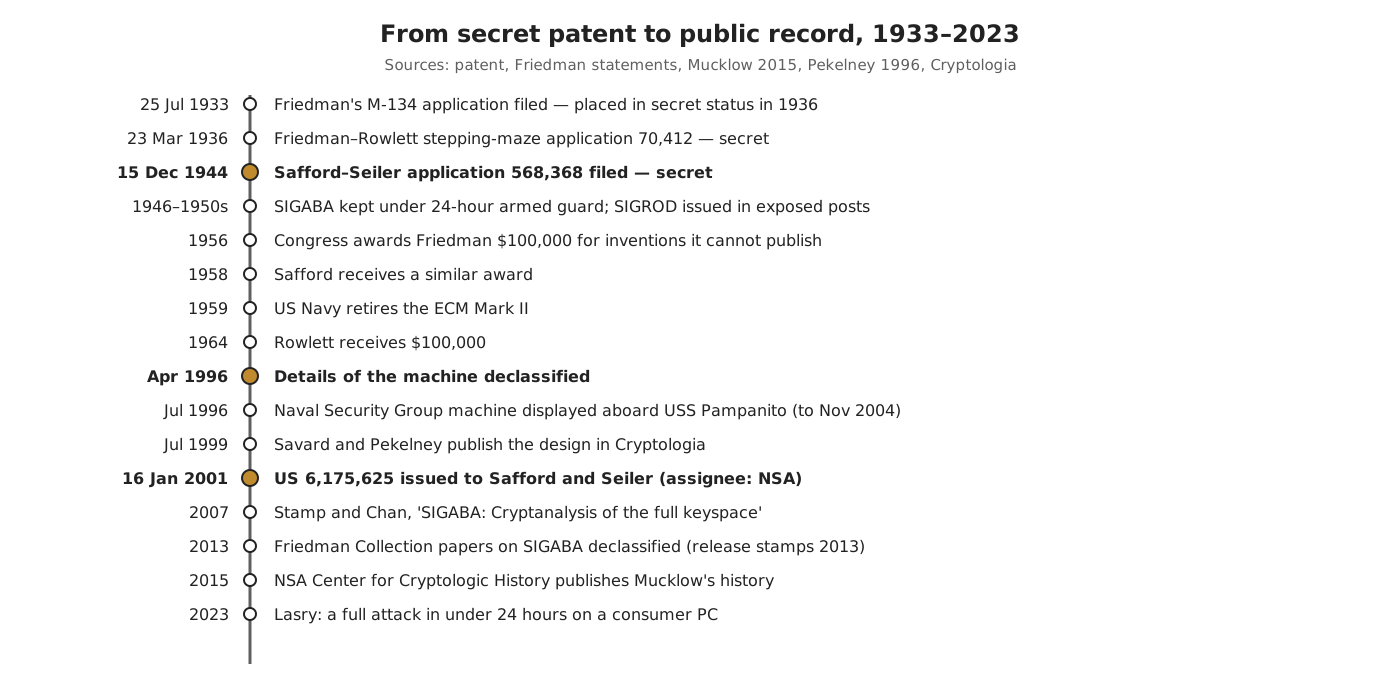
The machine stayed classified for half a century. The first public account of its details came only in 1996. On 18 July 1996, the security technologist Bruce Schneier forwarded to the cypherpunks mailing list a message from Richard Pekelney, a volunteer at the San Francisco Maritime National Park Association, announcing that the ECM Mark II would go on display aboard the museum submarine USS Pampanito that month. “The details of this machine were classified until April of this year,” Pekelney wrote (cypherpunks archive, 18 July 1996). The documents themselves bear the date: the copy of the Army’s 1949 operating instructions that Pekelney later published carries the stamp “DECLASSIFIED per SEC 3,4 E.O. 12958 by Director, NSA/Chief CSS … 4-15-96” (ASAM 1/1).
Pekelney had by then assembled about 2,000 pages of declassified documents on the machine and its context from the National Archives, where the NSA had deposited them in Record Group 457. Together with access to a real machine they let him write an algorithmic description, and he and the cipher-machine writer John J. G. Savard published the first full technical account of the SIGABA in the journal Cryptologia in July 1999: “The ECM Mark II: Design, History and Cryptology” (vol. 23, no. 3, pp. 211–228). Pekelney also wrote a computer simulation of the machine, in Java, which the Maritime Park Association still publishes for researchers (maritime.org).
The release of documents continued long after. Safford’s 1943 History of Invention and Development of the Mark II ECM (SRH-360) was redacted in the version at the National Archives in February 1996, and later fully declassified. The NSA’s Friedman Collection, released with declassification stamps dated 2013, includes Friedman’s own statements of his and Rowlett’s contributions, Seiler’s history of the Naval Code and Signal Laboratory and much other SIGABA material. In 2015 the NSA’s Center for Cryptologic History published Timothy Mucklow’s The SIGABA/ECM II Cipher Machine: “A Beautiful Idea” (Library copy), which remains the agency’s official history of the machine.
9.5 The Patent: Filed 1944, Issued 2001
9.5.1 Three applications
Three patent applications covered the SIGABA and its predecessor, all filed by the government and all placed in secret status:
Table 1 — Three patent applications covered the SIGABA and its predecessor, all filed by the government and all placed in secret status
| Application | Filed | Inventors | Subject | Fate |
|---|---|---|---|---|
| Serial No. 682,096 | 25 July 1933 | W. F. Friedman | Converter M-134: electrical, tape-controlled stepping of cascaded rotors | Rejected “on Hebern” in 1934; placed in secret category 9 September 1936 |
| Serial No. 70,412 | 23 March 1936 | W. F. Friedman and F. B. Rowlett | The stepping maze (Converter M-134-C) | Secret; still in secrecy status in 1949 |
| Serial No. 568,368 | 15 December 1944 | L. F. Safford and D. W. Seiler | Control circuits for electric coding machines | Issued as US 6,175,625 on 16 January 2001 |
Sources: Friedman c. 1946; Mucklow 2015; the patent. No issued patent from either of the Friedman applications has been traced for this series.
9.5.2 US 6,175,625
The Safford–Seiler application was finally issued as US Patent 6,175,625 B1 (Library copy), “Control Circuits for Electric Coding Machines”, on 16 January 2001, with the assignee given as “The United States of America as represented by the National Security Agency”. It has 21 claims and five sheets of drawings (US 6,175,625). It cites, among earlier patents, a 1925 patent by Arvid Damm — the Swedish cipher-machine pioneer whose company Boris Hagelin later took over (see the M-209 shelf).
The abstract describes the machine in the language of 1944:
The machine involves code wheels in cascade or in a maze with random or mixed circuits which operate a printing device to print the cipher conjugate of the letter on an operated key when the keyboard is connected to one end of the code wheel maze, and to print the plain conjugate of the letter in cipher when a key bearing such letter is operated with the keyboard connected to the other end of the code wheel maze.
— US Patent 6,175,625 (Library copy), abstract
The claims and description cover the machine’s control circuits: the controller that switches the keyboard and printer between the two ends of the maze for encipher and decipher, the zeroizer and its switch, the index maze, and the circuits that close the stepping magnets of the code wheels. The patent’s opening sentence carries the standard government formula: the invention “may be manufactured and used by or for the Government of the United States for governmental purposes without the payment of any royalties”.
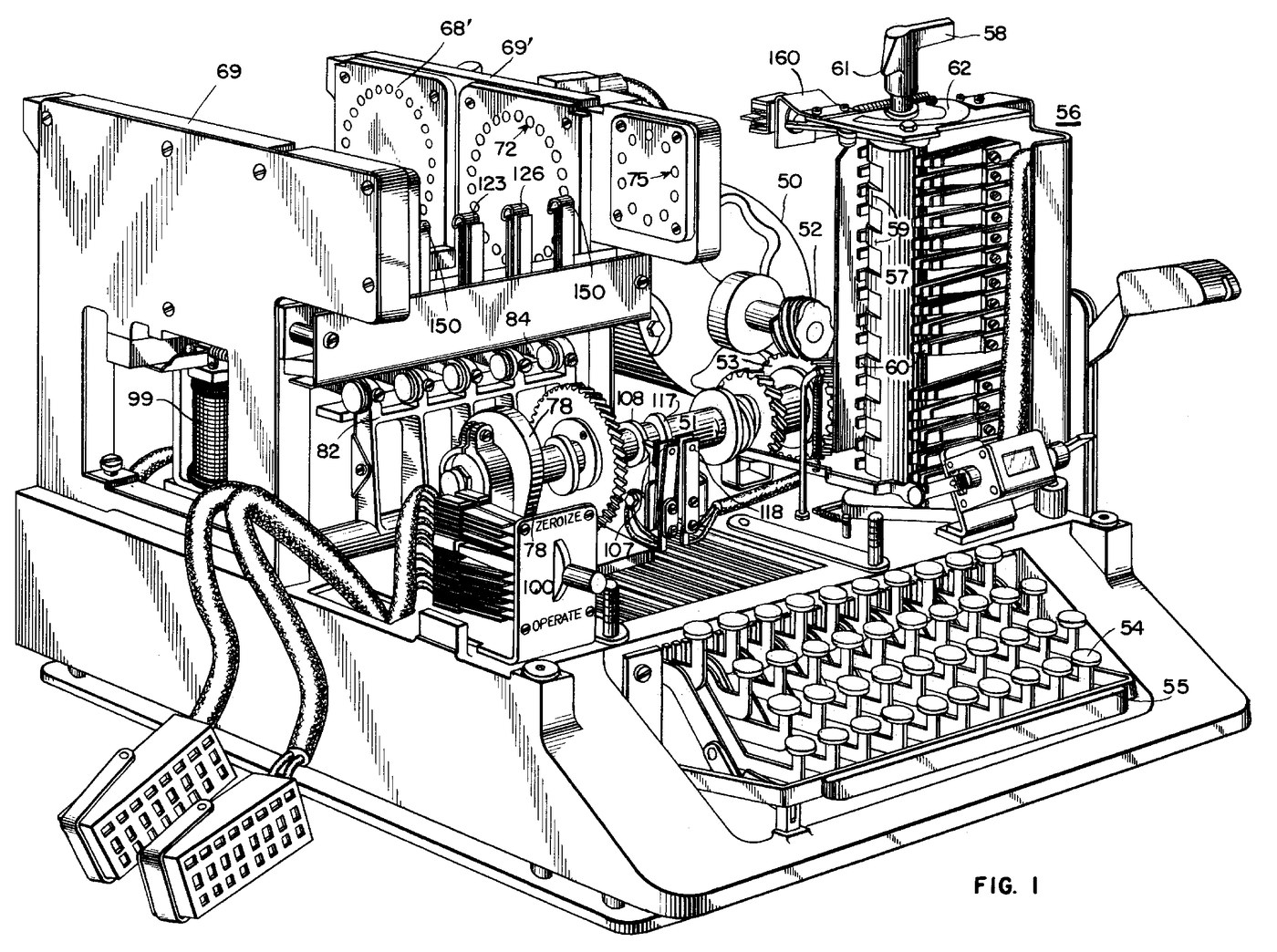
The delay — 56 years from filing to grant — was the product of the secrecy system. An application under a secrecy order is examined but not issued until the order is lifted; once the machine had been declassified, the application could proceed to grant. Mucklow called it “something of a bureaucratic parody” of the Patent Office’s treatment of Friedman in the 1930s: the office granted a patent for the SIGABA “some sixty-six years after its conception and thirty-two years after William Friedman’s death” — and, as the table shows, not to Friedman or Rowlett but to the two Navy officers whose engineering had turned their idea into a machine. Because a US patent of that era ran for 17 years from grant, US 6,175,625 expired in 2018.
9.6 The Survivors
9.6.1 How many are left?
Nobody has published a census, and the figures that exist are informal. In July 1996 Pekelney estimated that “Probably only a dozen or so ECMs still exist”: the NSA had six that it knew of, the Navy two, and the Army might have a couple, although US Army historians, when contacted, did not believe they held any (cypherpunks archive, 1996; Pekelney). The surviving CCM machines are rarer still.
9.6.2 Where to see one
The list below records what the sources say, with their dates. Displays change; anyone planning a visit should check with the institution first.
Table 2 — Where to see one
| Where | What | Source and date |
|---|---|---|
| National Cryptologic Museum, Annapolis Junction / Fort Meade, Maryland | SIGABA (M-134-C / CSP 888) on display; the NSA collection held several more | NSA museum exhibit page; Pekelney (machine count); press report of the renovated museum, September 2023 |
| Smithsonian National Museum of American History, Washington | One of the NSA’s machines on display, according to Pekelney | Pekelney, maritime.org (page last revised 2024; date of the Smithsonian loan not given) — unconfirmed |
| Pensacola, Florida | One of the Naval Security Group’s two machines on display | Pekelney — location within Pensacola not given; unconfirmed |
| National Museum of the US Air Force, Dayton, Ohio | A SIGABA in the cryptology exhibit of the World War II Gallery | Museum photo caption (date not established) — unconfirmed |
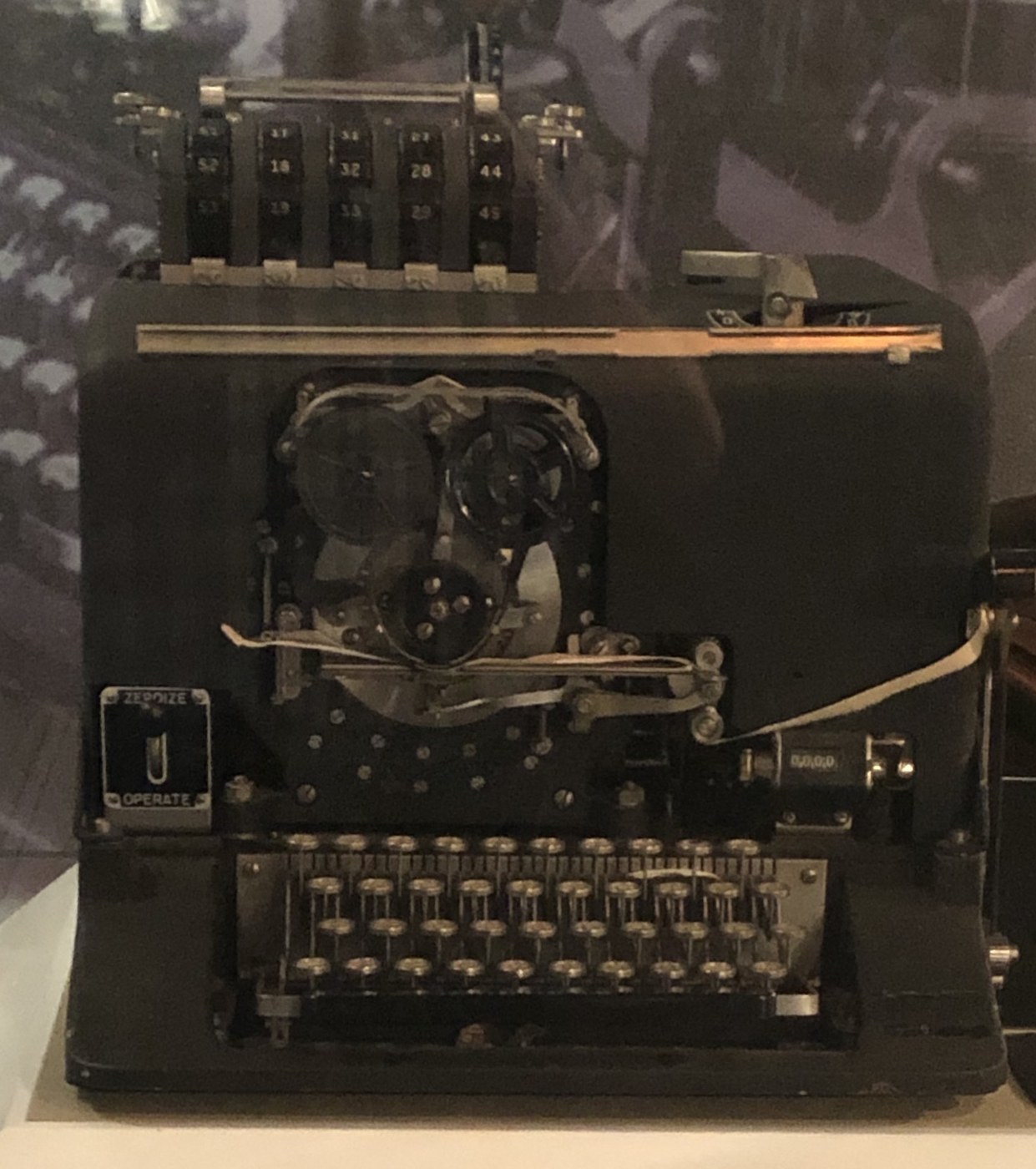
| USS Pampanito, San Francisco Maritime National Park Association | ECM Mark II (CSP 889/2900) on loan from the Naval Security Group, July 1996 – November 2004; returned to the Navy. In 2020 a visitor found an ordinary typewriter in the radio room in its place | Pekelney; Klaus Schmeh, Klausis Krypto Kolumne, 29 February 2020 |
| Crypto Museum (Netherlands) | CSP 1700, the CCM version, restored in 2012 | Crypto Museum, SIGABA page |
| Museum Jan Corver, Budel, Netherlands | A SIGABA shown in the “Secret Messages” exhibition, 1 October 2008 to the end of February 2009, said to be its first public display in the Netherlands | Crypto Museum events page, 2008 |
9.6.3 The machine aboard Pampanito
The Pampanito story is the best documented of any single survivor. The submarine, a Balao-class boat commissioned in November 1943, is famous for its third war patrol in September 1944, when it attacked a Japanese convoy whose route the Navy had learned by breaking Japanese codes, and then rescued 73 Australian and British prisoners of war who had been aboard the ships it sank. The routing reached the submarine as an ECM-enciphered message. Pekelney uses that episode to explain the SIGABA’s importance: the intelligence came from the enemy’s broken system and travelled to the boat under an unbroken one (Pekelney).
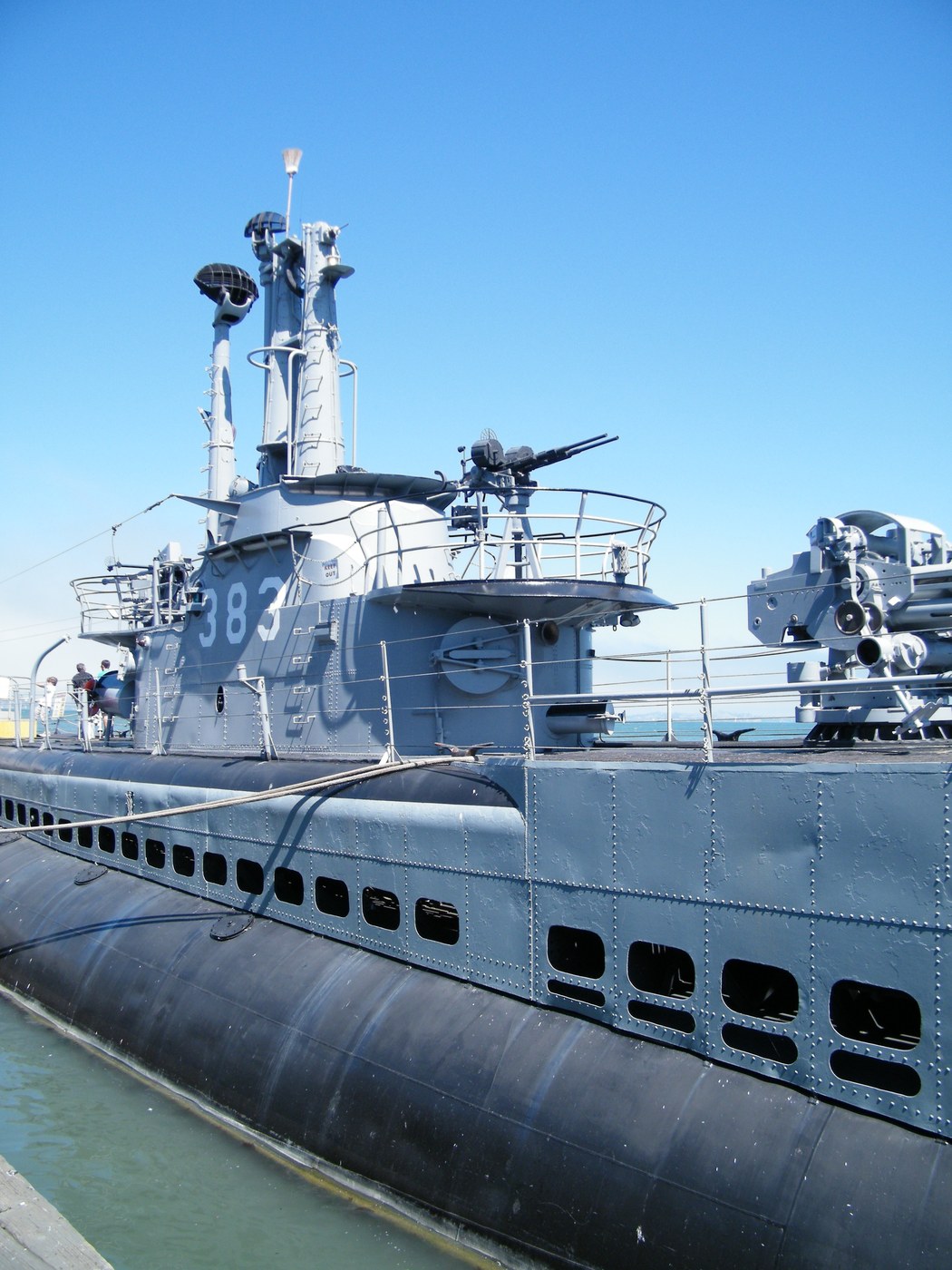
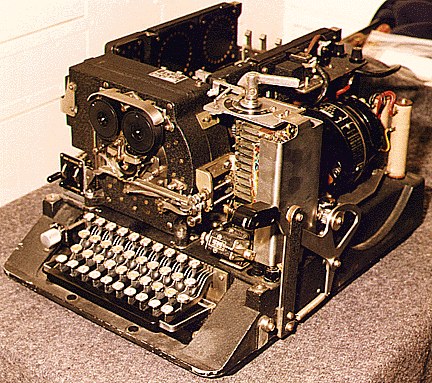
The machine that the Naval Security Group lent to the museum in 1996 was not the boat’s wartime ECM, but a machine of the same era. Pekelney’s curatorial report records what it showed: “12-29-43 BTS” stamped into the bottom, “ACCEPTED JUN 1943” in orange ink, and a printer, ENG-108, with serial number 999, “consistent with 1943 manufacture”; the name plates had been removed, though their screw holes remained. After cleaning, lubrication and minor repair it worked, and when it went back to the Navy in November 2004 it was, Pekelney believed, “the only fully operable ECM Mark II in existence” (Pekelney, “ECM Mark II Curatorial Report”).
What replaced it is a small cautionary tale. In February 2020 the German cryptology writer Klaus Schmeh visited the submarine. The audio guide still told visitors to “look to your left into the Radio Room. The device that looks like a typewriter … is an ECM Mark II.” It was an ordinary typewriter. Schmeh suggested a replica, with an accurate label (Klausis Krypto Kolumne, 29 February 2020).
9.6.4 The National Cryptologic Museum
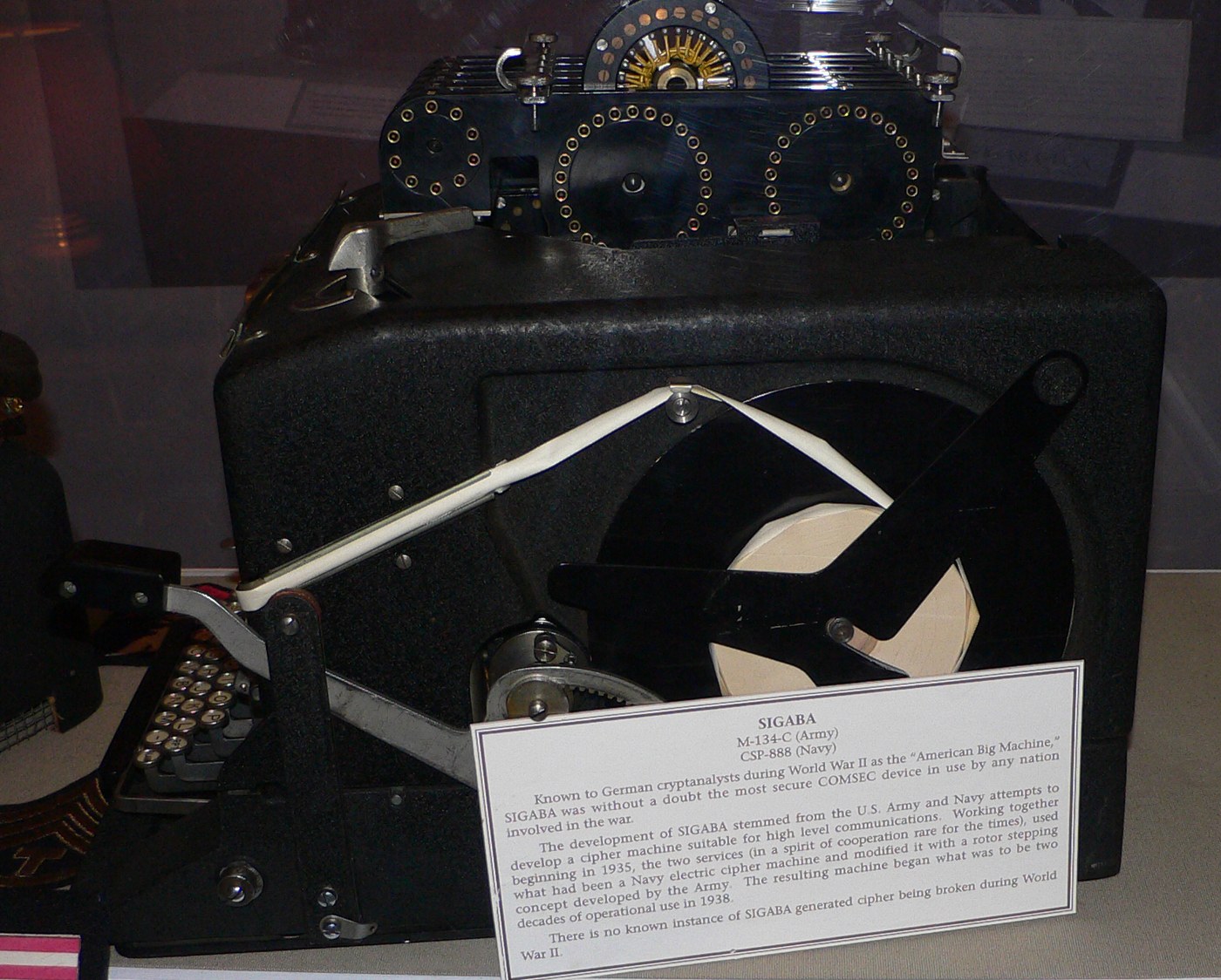
The machine most people will see is the one at the NSA’s National Cryptologic Museum, next to Fort Meade in Maryland, where the SIGABA sits among the Enigmas, the Typex and the KL-7. Its caption sums up the agency’s view: the SIGABA “was the only machine system used during World War II to remain completely unbroken by an enemy. The Germans referred to the U.S. machine, SIGABA, as the ‘Big’ machine … unlike the stepping motion of the Enigma, the SIGABA/ECM’s motion appeared to be random. It wasn’t, but it was so complicated, the German’s never broke it, and the Japanese gave up trying. Frank Rowlett of the Army’s Signal Intelligence Service developed the complicated stepping motion” (NSA, National Cryptologic Museum, “SIGABA/ECM”).
9.7 From Secret to Subject
Once declassified, the SIGABA became something it had never been: a subject of open research. Its afterlife in the literature runs in three strands.
- History. Savard and Pekelney’s 1999 article appeared a year after Rowlett’s own memoir, The Story of Magic (published 1998, the year of his death), and was followed by R. A. Ratcliff’s Delusions of Intelligence (2006), which placed the SIGABA in the comparative history of Allied and Axis cipher security, and by Mucklow’s official history of 2015.
- Cryptanalysis. Because the design was now public, cryptanalysts could ask the question the Germans had abandoned. A sequence of studies — Michael Lee’s 2003 master’s thesis at the University of California, Santa Barbara; Wing On Chan’s 2007 thesis at San José State University and the paper “SIGABA: Cryptanalysis of the Full Keyspace” that he and Mark Stamp published in Cryptologia the same year; Heather Kwong’s 2008 thesis; and George Lasry’s meet-in-the-middle attack of 2019 and his 2023 paper “Cracking SIGABA in less than 24 hours on a consumer PC” — showed that the machine can be attacked with modern computing power, and how much of it is needed. Volume 8 tells that story.
- Simulation and replication. Pekelney’s Java simulator was the first of many software SIGABAs. Volume 10 surveys the simulators and physical replicas that now exist, and chooses a design for this series’ own.
There is a final irony in the machine’s public life. The SIGABA’s reputation rests on an absence — on the fact that its traffic was never read — and absences make poor museum exhibits. The Enigma, whose failure is one of the great stories of the century, is famous; the machine that did not fail, and whose survival depended on its staying secret, was unknown outside a small circle until its makers were dead. The NSA put it simply in 2018: the Enigma “is famous for a simple reason — it did not work, at least not to the extent that the Germans hoped it would. In contrast, the U.S. SIGABA … is still relatively unknown to this day for the opposite simple reason — it did work” (NSA CCH, “A CBI SIGABA Near-Miss”; Library copy).
Sources
- Timothy J. Mucklow, The SIGABA / ECM II Cipher Machine: “A Beautiful Idea” (NSA CCH, 2015; Library copy), pp. 26–27 and notes 78, govinfo.gov PDF.
- US Patent 6,175,625 B1 (Library copy), L. F. Safford and D. W. Seiler, “Control Circuits for Electric Coding Machines”, filed 15 December 1944, issued 16 January 2001, PDF.
- Richard Pekelney, “Electronic Cipher Machine (ECM) Mark II” and “ECM Mark II Curatorial Report”, San Francisco Maritime National Park Association, maritime.org.
- Richard Pekelney, message forwarded by Bruce Schneier to the cypherpunks list, 18 July 1996, archive.
- Department of the Army, ASAM 1/1, Crypto-Operating Instructions for ASAM 1, 1949 (declassified 15 April 1996), maritime.org.
- William F. Friedman, statements of c. 1946, NSA Friedman Collection, REF IDs A60534 and A60528.
- D. W. Seiler, “U.S. Naval Code and Signal Laboratory — History of” (1950), via Crypto Cellar (Library copy).
- NSA Friedman Collection, patent-equipment folder 116 (Hebern claim papers), nsa.gov.
- Klaus Schmeh, “The fake cipher machine on board the USS Pampanito”, Klausis Krypto Kolumne, 29 February 2020, scienceblogs.de.
- NSA, National Cryptologic Museum, “SIGABA/ECM” exhibit page; NSA, “Frank B. Rowlett” biography.
- Crypto Museum, “SIGABA” and “Secret Messages” exhibition (2008), cryptomuseum.com.
- John J. G. Savard and Richard S. Pekelney, “The ECM Mark II: Design, History and Cryptology”, Cryptologia 23:3 (1999), 211–228.
Next — Volume 10: Building a SIGABA I — Design. What a replica has to reproduce and what it may fake; the software simulators and physical models others have built; fifteen rotors to print and wire, three banks to mount, and stepping magnets to drive; and the design this series settles on for a working replica.
Comments (0)