Enigma · Volume 9
Enigma — Volume 9 — Bletchley Park
How a Victorian mansion became a code-breaking factory
9.1 About This Volume
The volumes so far have been about a machine and the mathematics that undid it — the rotors, the plugboard, the 159-quintillion key space, the Polish breakthrough that proved the impossible was merely difficult. This volume is about a place, and the thousands of people who filled it. For all the brilliance of Marian Rejewski’s equations or Alan Turing’s Bombe, the decisive British achievement was not a single act of genius. It was the transformation of code-breaking from a scholarly craft, practised by a handful of gifted eccentrics, into something the twentieth century had never before seen: an intelligence factory, running day and night, turning intercepted radio noise into actionable battlefield intelligence within hours of transmission.
That factory was Bletchley Park. To understand how Enigma was beaten in practice — not in theory, but week after week, year after year, against a key that changed every midnight — you have to understand the conveyor belt the British built: who they recruited, how they organised them into a production line of huts, how they fought their own bureaucracy for resources, and how they kept all of it secret for thirty years. And you have to give proper credit to the people who made up three-quarters of the workforce and were, for decades afterward, written almost entirely out of the story: the women of Bletchley Park.
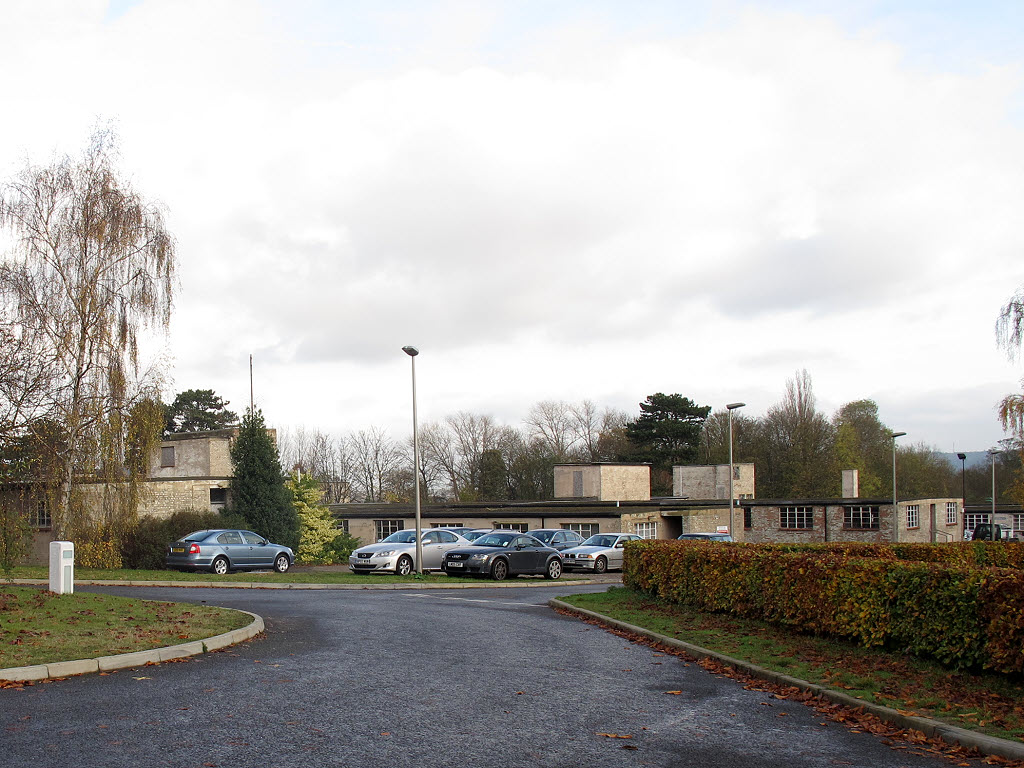
9.2 Station X: A Mansion Between Oxford and Cambridge
Britain’s code-breaking organisation entered the war under a deliberately dull name. The Government Code & Cypher School (GC&CS) had been formed in 1919 out of the naval and military cryptographic bureaux of the First World War, and through the inter-war years it occupied offices in London, attached to the Secret Intelligence Service. But London was the obvious first target of German bombers, and a cryptographic establishment cannot do delicate work while being blown up. In the late 1930s, as another war became inevitable, the head of SIS, Admiral Hugh Sinclair, went looking for a refuge.
He found it at Bletchley Park, a sprawling and architecturally confused Victorian mansion — one wartime code-breaker called it a “maudlin and monstrous pile” — set in its own grounds in Buckinghamshire, roughly fifty miles north-west of London. Sinclair is said to have bought the estate with his own money when the government dithered. The choice was not sentimental; it was logistical. Bletchley sat directly on the main railway line that linked Oxford and Cambridge, the two universities from which GC&CS expected to draw its cleverest recruits, and it lay on a junction of the London-to-the-north railway and an important trunk telegraph route. People and signals could both reach it easily. It was anonymous, well-connected, and out of bomber range.
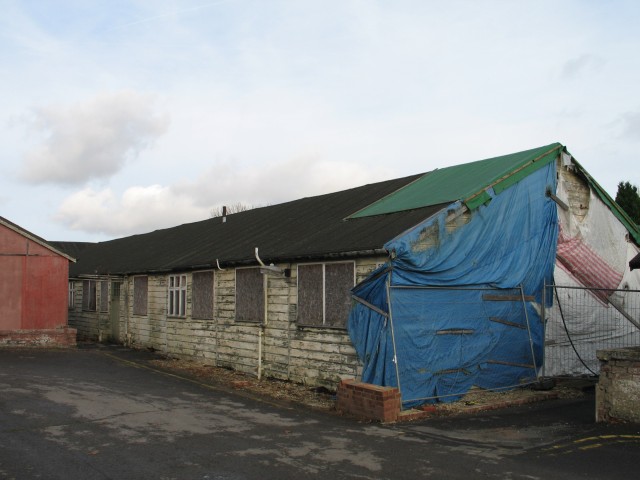
In August 1939, days before the invasion of Poland, the first contingent moved in under the cover story that they were “Captain Ridley’s Shooting Party” — a group of country-house guests. Within the secret world the site acquired a string of cover names, the most enduring of which was Station X — simply the tenth in a list of SIS wireless stations, the Roman numeral later mythologised into something far more glamorous than the bookkeeping it actually was. The mansion itself filled quickly, and the real work soon spilled out into a ring of hastily built timber huts thrown up across the lawns. Those huts, plain and cold and leaking, would give their numbers to the most secret organisation in Britain.
9.3 Recruiting the Unlikely: Mathematicians, Crosswords, and Chess
The old GC&CS had been a world of linguists and classicists — gentlemen scholars who broke codes the way they translated Greek, by erudition, intuition and pattern-sense. Its presiding genius was Alfred Dillwyn “Dilly” Knox, a papyrologist who had reconstructed fragments of the Greek poet Herodas before turning the same skills against enemy ciphers. Knox was the bridge between the two eras: a classicist who had already, before the move, begun wrestling with the mechanical Enigma.
But mechanical, mathematical ciphers demanded a new kind of mind. The most consequential single decision GC&CS made in these years was to recruit mathematicians — a then-radical idea, because mathematics was not regarded as a practical subject. From Cambridge came Alan Turing, already famous in a narrow circle for his 1936 paper on computable numbers, and Gordon Welchman, a geometer who would prove as gifted an organiser as he was a cryptanalyst. They were joined by Hugh Alexander, the British chess champion, and Stuart Milner-Barry, a chess international and Times chess correspondent — recruited, the story goes, almost as much for the structured, combative, pattern-hunting habits of mind that championship chess demands as for any formal training.
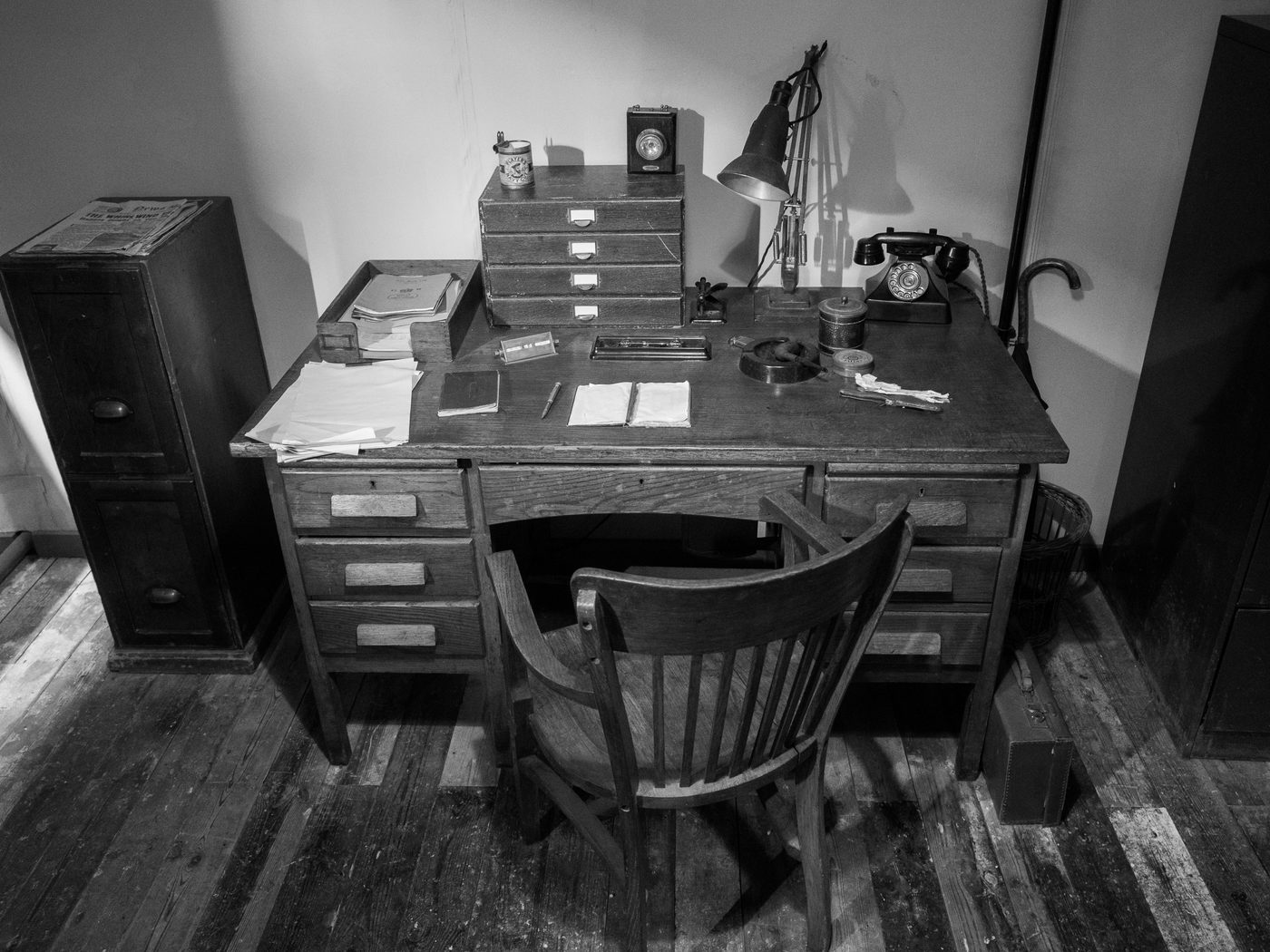
The recruiters fished for a particular cast of mind rather than a particular qualification: people who could hold ambiguity, spot pattern in noise, and stay obsessive over a problem that refused to yield. That is why the recruitment net famously caught crossword solvers. In a celebrated 1942 episode, The Daily Telegraph was persuaded to run a competition challenging readers to solve its cryptic crossword in under twelve minutes; a number of the fastest finishers were quietly approached afterward and asked to undertake “a particular type of work” for the war effort — and found themselves bound for Bletchley. Chess masters, crossword champions, classicists, mathematicians, debutantes from good families vouched for by someone already inside: the workforce was assembled by a mixture of academic head-hunting, the old-boy network, and the occasional inspired gimmick. The common thread was not a CV but a temperament.
9.4 The Hut System: An Intelligence Production Line
The genius of Bletchley was not only in breaking the cipher; it was in what came after the break. A decrypted message is useless if it cannot be understood, assessed, and delivered to a commander in time to matter. The British solved this by organising the whole flow as a production line, and the stations on that line were the huts. Each hut had a number, and the numbers became shorthand for functions — so that a hut’s identity survived even when the people moved into larger brick blocks later in the war.
The two halves of the operation mirrored each other. On the Army and Air Force side:
- Hut 6, run by Gordon Welchman, attacked the Enigma keys used by the German army and air force. This was the cryptanalytic engine room: registering intercepts, running the Bombes, and recovering the day’s settings.
- Hut 3 took Hut 6’s raw German decrypts and turned them into intelligence — translating, interpreting, cross-referencing against an immense card index, and grading each item before passing it on. Hut 3 housed specialised sub-sections for air, military and other traffic, and a liaison staff that fed finished product to commanders in the field through carefully disguised channels.
On the Naval side the structure was the same, shifted by two:
- Hut 8, led initially by Alan Turing, broke the Naval Enigma — by far the hardest target, with its larger rotor set and more disciplined operators, and the cipher on which the Battle of the Atlantic turned.
- Hut 4 was the naval counterpart to Hut 3: it translated and interpreted Hut 8’s decrypts and supplied finished naval intelligence to the Admiralty.
Picture the conveyor as a single message travelled it. A German operator somewhere in occupied Europe taps out a signal on his Enigma and transmits it in Morse. A British Y-station — one of a network of interception sites scattered around Britain and the empire, staffed largely by wireless operators of the women’s services — copies the meaningless letter groups out of the ether and forwards them to Bletchley by teleprinter or motorcycle dispatch rider. At Bletchley the intercept enters Hut 6 (or Hut 8), where cryptanalysts hunt for a crib — a stretch of probable plaintext — and set the Bombes hunting for the day’s settings. Once the key falls, the message is run through a British Typex machine wired to imitate an Enigma, and the German plaintext drops out. It passes next door to Hut 3 (or Hut 4), where translators and intelligence officers render it, weigh it, and decide who needs to know. And all of this had to happen fast, because the key sheet was valid only until midnight, when the Germans rolled to new settings and the whole problem began again. A break achieved at eleven at night was a triumph; the same break achieved at one in the morning, for a key already dead, was an academic exercise. The factory ran against the clock, every day, forever.
That output had a cover name of its own — Ultra — and the discipline around it was ferocious. Intelligence from Ultra was never acted upon in a way that might reveal its source unless a plausible alternative explanation (a conveniently timed reconnaissance flight, a “well-placed agent”) could be manufactured to account for British foreknowledge.
9.5 “Action This Day”: Going Over the Bureaucracy’s Head
By the autumn of 1941 the factory was working — and starving. The cryptanalytic methods were sound and the Bombes were proven, but Bletchley could not get enough of the mundane resources that turn a method into output: typists, clerks, unskilled assistants, more Bombes and the people to run them. The bottleneck was not genius; it was staffing, and the requests for staffing were disappearing into the indifference of Whitehall, where competing wartime demands outranked a secret establishment that could not even explain what it did.
So four of the senior code-breakers did something close to insubordination. On 21 October 1941, Alan Turing, Gordon Welchman, Hugh Alexander and Stuart Milner-Barry signed a letter — headed for the Prime Minister’s eyes only — and went straight over the heads of their own management to Winston Churchill. Milner-Barry travelled to London and delivered it by hand to 10 Downing Street. The letter laid out, plainly, that the war-winning work they were doing was being crippled for want of a relatively trivial number of extra staff.
Churchill’s response is one of the most quoted minutes of the war. He fired off an order to his chief of staff, General Ismay, under his famous red “ACTION THIS DAY” label: “Make sure they have all they want on extreme priority and report to me that this has been done.” The effect was immediate. Bottlenecks that had resisted months of polite memoranda dissolved within weeks; within a month Bletchley’s needs were reported as being met on the highest priority. It is a small administrative episode with an outsized lesson — that the most important resource decision of the code-breaking war was unblocked not by a new mathematical insight but by four scientists deciding that the chain of command was the enemy.
9.6 The Women of Bletchley Park
For decades the popular image of Bletchley was a few brilliant men in tweed. The reality was overwhelmingly female. As the establishment swelled from a few dozen people in 1939 to nearly ten thousand by 1945, the proportion of women rose with it, until by the war’s end roughly three-quarters of the staff — on the order of seven to eight thousand people — were women. Bletchley did not merely employ women in supporting roles; it ran on them.
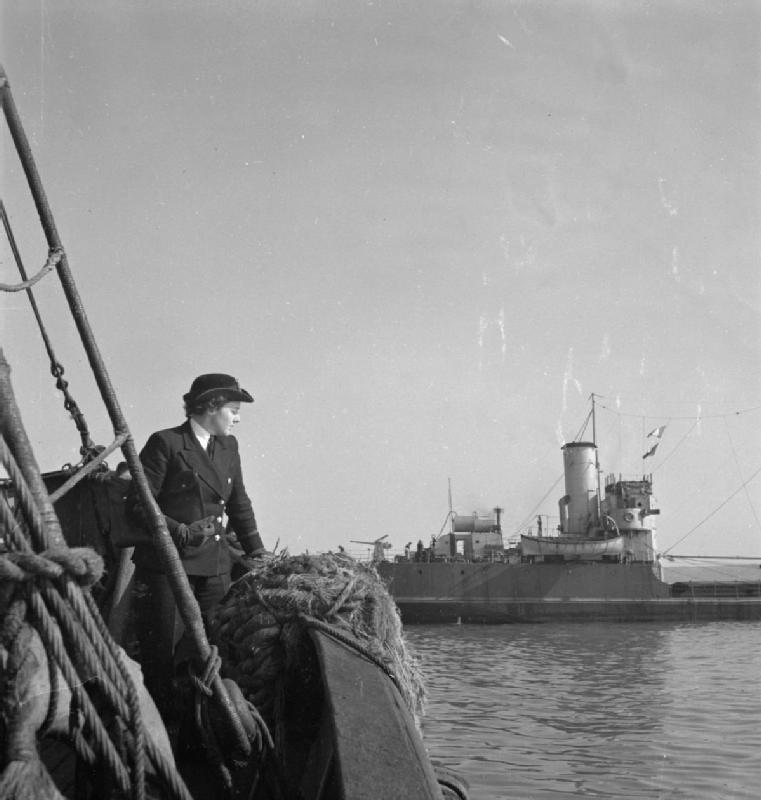
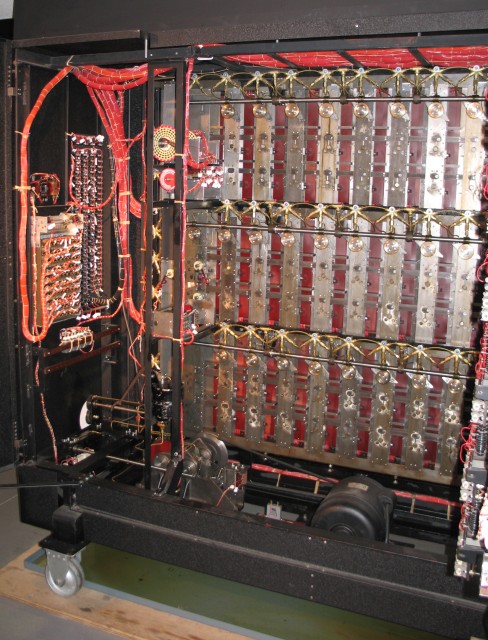
The largest single group were the Wrens — members of the Women’s Royal Naval Service (WRNS). It was Wrens, more than anyone, who operated the Bombes, the heavy electromechanical machines that searched for Enigma settings. The work was physically gruelling and mind-numbingly secret: setting up the back of a machine the size of a wardrobe according to a “menu” handed to them by the cryptanalysts, plugging hundreds of cables by hand, tending the machine as it ran, and telephoning a “stop” through to Hut 6 or Hut 8 without ever being told what the letters meant or why they mattered. They worked the clock around in three eight-hour shifts so the Bombes never stood idle. Later in the war, as the Bombe fleet grew past the capacity of the Bletchley site, much of this work was dispersed to outstations at Eastcote, Stanmore and Adstock, where Wrens by the hundred ran banks of more than a hundred machines.
But it would be a mistake to file every woman at Bletchley under “operator.” Women worked across the entire establishment — as intercept operators at the Y-stations, as traffic analysts, indexers, translators in the intelligence huts, teleprinter and Typex staff, and, in a number of cases, as cryptanalysts in their own right. The most celebrated example was the team around Dilly Knox. Knox, by then ailing, gathered a group of young women to work on the toughest hand-cipher and Enigma problems — a team the men of Bletchley called, with the casual condescension of the age, “Dilly’s girls.” Two of them became genuinely formidable code-breakers. Mavis Lever (later Mavis Batey), recruited at nineteen with no training in cryptography, was central to breaking the Italian naval Enigma; her team’s work in March 1941 gave the Royal Navy the intelligence that produced the crushing victory at the Battle of Cape Matapan. The same year she helped break the Enigma machine used by the German Abwehr — the intelligence service — a break that underpinned the Double-Cross deception system later vital to the secrecy of D-Day. Margaret Rock, a mathematics graduate who joined in 1940, became the senior cryptographer in Knox’s section. Knox, who valued them both far beyond the dismissive nickname, paid them his finest compliment in a pun on their names: “Give me a Rock and a Lever and I can move the universe.”
That these women did the work is beyond dispute; that history forgot them is the scandal. The secrecy that protected Bletchley fell hardest on those least able to advertise their contribution, and the post-war narrative quietly handed the credit to a handful of men. The record is now, belatedly, being corrected — and any honest account of how Enigma was beaten has to put the women at the centre of it, not the margins.
9.7 Scale and Secrecy
What makes the Bletchley story almost unbelievable is that an organisation of ten thousand people, sprawled across a main site and a ring of outstations, processing the most sensitive intelligence of the war, kept its secret completely. Every member of staff signed the Official Secrets Act, and the culture of compartmentalisation was so total that people working in one hut often had no idea what those in the next hut did. You knew your own task and nothing beyond it.
The discipline outlasted the war by a generation. The very existence of the Ultra secret was not officially acknowledged until the mid-1970s, when the first books on the subject appeared. Until then, thousands of veterans said nothing — not to friends, not to employers who thought they had spent the war doing dull clerical jobs, in many cases not even to their spouses. Husbands and wives who had both worked at Bletchley sometimes discovered the fact only decades later. It is one of the largest acts of collective discretion in modern history, and it was kept not by a dozen insiders but by ten thousand ordinary people who had simply been asked to stay quiet and did.
9.8 A Necessary Distinction: Enigma, Lorenz, the Bombe and Colossus
One clarification belongs here, because popular accounts blur it constantly. Bletchley Park broke two quite different German cipher systems, with two quite different machines, and it is easy — and wrong — to fold them into one.
The first was Enigma, the rotor machine this series has been describing, used in enormous volume across the German army, navy and air force. The machine Bletchley built to attack it was the Bombe — an electromechanical device that, given a probable crib, searched at speed for rotor settings consistent with it. The Bombe is fast and ingenious, but it is not a computer: it does not store a program or perform general calculation; it is a special-purpose deduction engine. The Bombe is the subject of the next volume.
The second system was entirely separate: the Lorenz cipher, a teleprinter-based machine that the Germans used for the highest-level strategic communications — Hitler’s own headquarters to his army commands. Bletchley code-named this traffic “Tunny.” Breaking Tunny required a machine of a completely different order, and the answer was Colossus — built by the Post Office engineer Tommy Flowers and his team, and switched on in 1944. Colossus was the world’s first large-scale programmable electronic digital computer, using thousands of valves (vacuum tubes) to do work no electromechanical device could. It is a landmark in the history of computing — but it had nothing to do with Enigma. It did not break Enigma, it was not a Bombe, and the two should never be confused. The deeper story of Colossus, and Bletchley’s place in the lineage that runs to the modern computer, is held over to Volume 13.
For now, hold the two pairs cleanly apart: Enigma → the Bombe, and Lorenz/Tunny → Colossus. This volume, and the next, are about the first pair.
9.9 What Bletchley Really Built
It is tempting to remember Bletchley Park as a place of lone geniuses — Turing at a blackboard, Knox among his papyri. The genius was real. But the thing that won was not individual brilliance; it was organisation: the decision to recruit mathematicians, the production-line of huts, the relentless conveyor from intercept to intelligence, the willingness to defy the bureaucracy when the bureaucracy got in the way, and the ten thousand people — most of them women — who ran the machinery around the clock and then kept silent about it for the rest of their lives. Bletchley turned a scholarly art into an industry, and in doing so it turned a theoretically unbreakable cipher into a daily-read open book.
With the factory understood, we can return to the single most famous machine inside it — and to the mathematician whose name it bears.
Next — Volume 10: Turing and the Bombe.
Comments (0)