Enigma · Volume 3
Enigma — Volume 3 — How Enigma Works I: The Rotor Cipher
Following a single spark on its round trip through the scrambler
3.1 About This Volume
This is the first of the technical “manual” volumes in the series, and it asks a deceptively simple question: what actually happens, electrically and mechanically, when an operator presses a key on an Enigma machine and a single lamp lights up in reply? Everything that came before — the history, the inventors, the commercial machines and their military descendants — has set the stage. Now we open the lid and trace the spark.
We will follow the current on its complete round trip: out of the battery, through the key switch, across the plugboard, into the entry wheel, through the three rotors right-to-left, into the reflector, back through the same three rotors left-to-right along a different path, out through the plugboard once more, and finally up into a lamp. Along the way we will dissect a single rotor — its contacts, its scrambled internal wiring, its rings and its notches — and we will see how the reflector gives Enigma both its greatest operational convenience and its fatal cryptographic flaw. Finally we will watch the rotors step, turning a fixed wiring harness into a polyalphabetic cipher that defeats the pencil-and-paper codebreaker.
The plugboard (Steckerbrett) and the daily key procedures get their own full treatment in Volume 4; here we mention the plugboard only as a station on the current’s journey. Self-encipherment as a weakness, and how Bletchley Park turned it into a crowbar, is previewed here and developed in Volume 10.
3.2 The Machine as an Electrical Circuit
It is tempting to think of Enigma as a kind of mechanical computer, but at heart it is something far humbler: a battery, a tangle of wires, twenty-six switches, twenty-six lamps, and a few rotating drums that keep rearranging which wire connects to which. There are no valves, no relays doing logic, no clever arithmetic. The entire cipher is just a circuit — but a circuit whose internal connections are scrambled, and which silently rewires itself between every keystroke.
When the operator presses a letter key, a 4.5-volt dry battery inside the case is connected through that key’s switch into the wiring. The current flows forward through a long chain of substitutions and comes back to illuminate exactly one lamp on the lampboard above the keyboard — never the lamp for the letter that was pressed. The operator reads off the lit letter and writes it down. That is the whole act of encipherment: press a key, note the lamp. Decipherment is identical — press the cipher letter, and the lamp for the original plaintext letter lights. The machine does not know or care whether it is encrypting or decrypting; it is the same circuit either way. Understanding why that is true is the central pleasure of this volume.
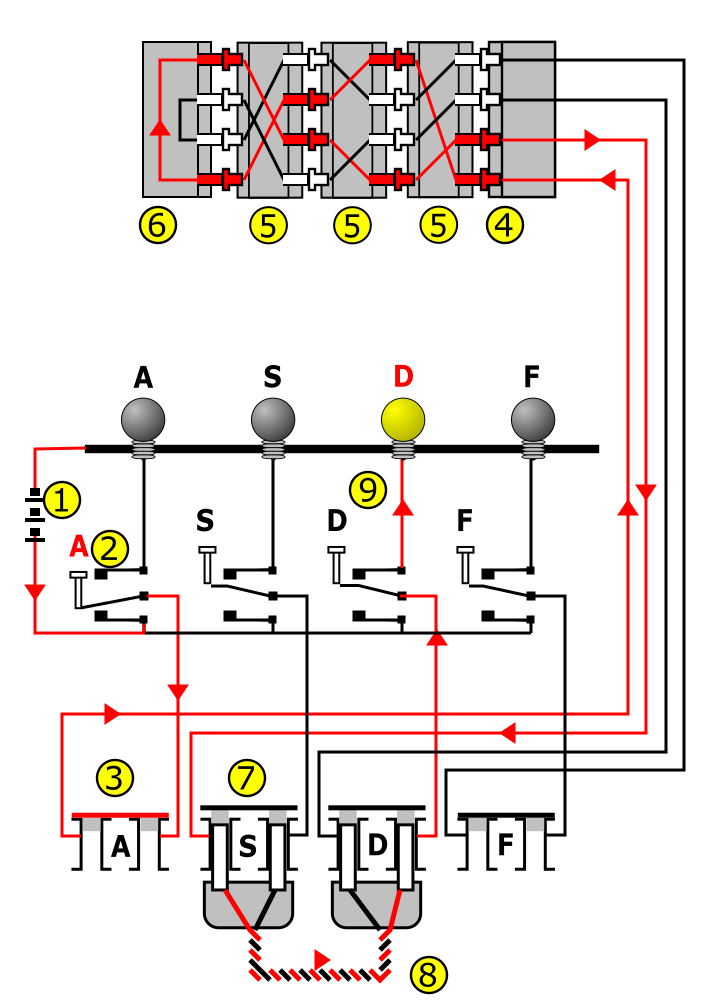
3.3 The Complete Path of One Keypress
Let us walk the circuit one station at a time. Suppose the operator presses A.
Battery and key switch. Pressing the key does two things at once. Mechanically, it nudges the stepping mechanism so that the rotors advance before the circuit closes (an important detail we will return to). Electrically, it closes a switch that routes the battery’s current to the contact for the letter A.
The plugboard (Steckerbrett). The current’s first stop is the plugboard at the front of the machine, between the keyboard and the rotors. If a patch cable connects A to some other letter — say J — the current is swapped onto the J line before it goes any further; if A is left unplugged, it passes straight through unchanged. The plugboard performs the same swap again on the way out. It is a simple but powerful pairwise letter-swap, and because it is applied both entering and leaving the rotor stack, it multiplies the machine’s key space enormously. We defer its full accounting to Volume 4 and, for clarity, will assume here that A is unplugged.
The entry wheel (Eintrittswalze, ETW). Next the current reaches a fixed, non-rotating disc called the entry wheel or stator. Its job is purely to connect the twenty-six wires of the plugboard/keyboard to the twenty-six spring-loaded contacts of the first rotor. In the German military Enigma (the Wehrmacht and Kriegsmarine machines) this wiring is a plain “straight-through” mapping in keyboard order: A connects to the first contact, B to the second, and so on. (The commercial and railway Enigmas used a different, alphabetical “QWERTZ” entry order — a small detail that gave the Polish codebreakers an early headache, as we saw in the historical volumes.) The entry wheel itself does no scrambling; it is the doorway into the rotor stack.
Through the three rotors, right to left. Now the real cipher begins. The current enters the rightmost rotor — the fast rotor — on its right face, follows that rotor’s scrambled internal wire across to a contact on its left face, and crosses the gap into the middle rotor. The middle rotor scrambles it again and passes it to the leftmost (slow) rotor, which scrambles it a third time. After three successive, independent substitutions the current emerges from the left face of the slow rotor, transformed almost beyond recognition.
The reflector (Umkehrwalze, UKW). At the far left sits the reflector. Unlike a rotor it has contacts on only one face, and its internal wiring connects those contacts together in thirteen fixed pairs. The current arrives on one contact and is sent straight back out on its partner — reflected back into the rotor stack. This is the trick that turns a one-way scrambler into a complete, self-reversing cipher.
Back through the three rotors, left to right. The returning current now passes through all three rotors again, but in the opposite direction — left to right — and crucially along a different set of wires than on the way in. A rotor’s internal wiring is a set of one-to-one connections, but each wire is traversed in the reverse sense on the return trip, so the substitution it performs going back is the inverse of the one it performed coming in, and the contact it returns through is almost never the one it entered by. Three more substitutions later, the current emerges from the right face of the fast rotor.
Back through the entry wheel and plugboard. The current crosses the entry wheel again and returns to the plugboard, where any patch cable swaps it one final time.
A lamp lights. Finally the current reaches the lampboard and illuminates exactly one letter — say G. The operator records G. The single spark has made a complete round trip: keyboard → plugboard → entry wheel → rotor 1 → rotor 2 → rotor 3 → reflector → rotor 3 → rotor 2 → rotor 1 → entry wheel → plugboard → lamp. Counting the plugboard twice, the entry wheel twice, the three rotors twice, and the reflector once, the letter A has been put through nine successive scrambling stages to arrive at G.
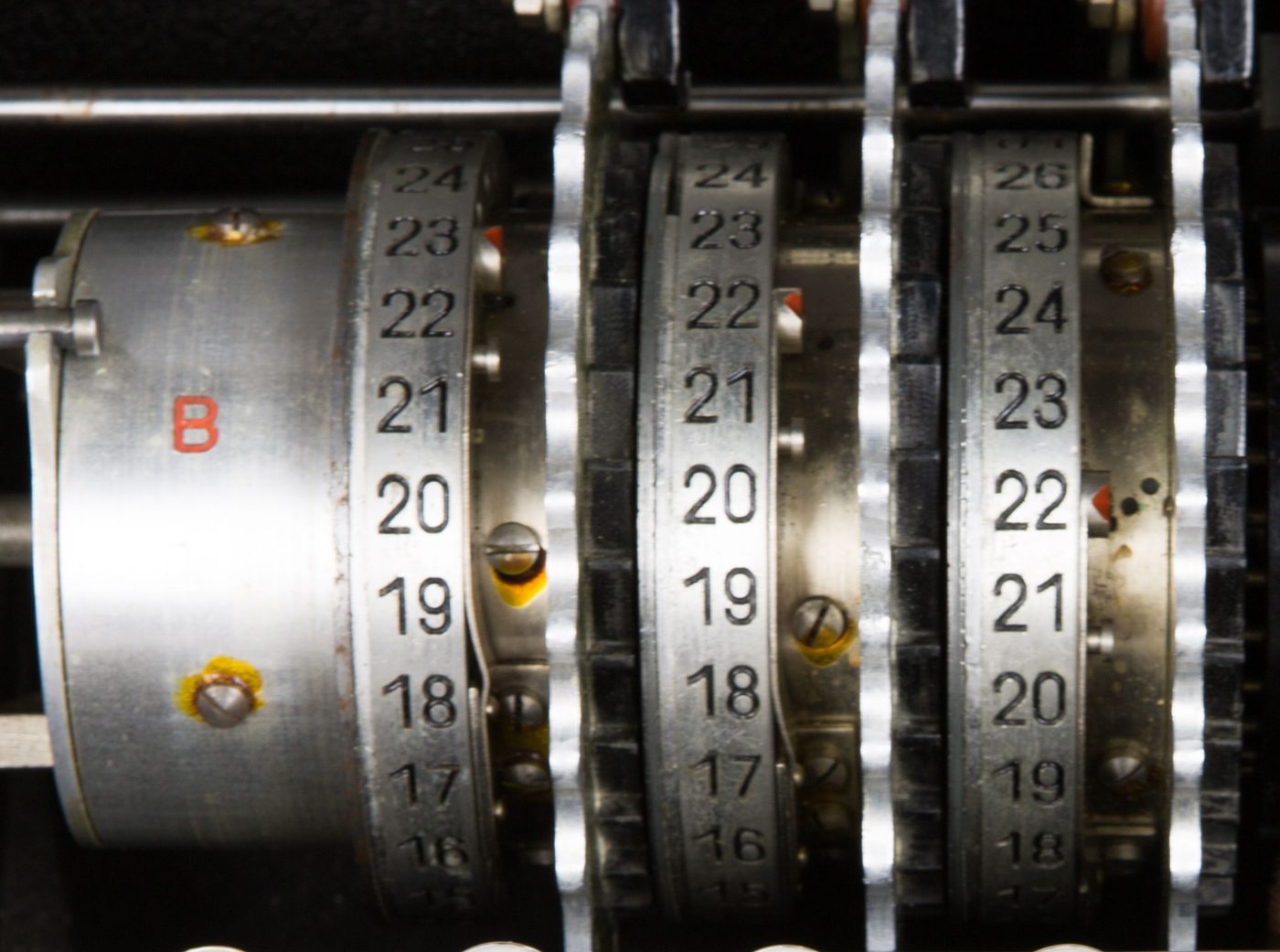
3.4 A Rotor in Detail
The rotor — Walze in German, literally “roller” or “drum” — is the soul of the machine, and it repays close inspection. Each rotor is a disc roughly the size of a hockey puck, and on its two faces it carries the means of joining one circuit to the next.
On the right face sit twenty-six small spring-loaded pins — the contacts that press against the face of the rotor (or the entry wheel) to its right. The springs guarantee a reliable connection even as the rotors turn and jostle. On the left face sit twenty-six flat, circular plate contacts, against which the spring pins of the next rotor press. So the rotors are sandwiched together pin-to-plate, pin-to-plate, forming a continuous chain of contacts from the entry wheel through to the reflector.
Inside the body of the rotor, twenty-six insulated wires connect the right-face pins to the left-face plates in a thoroughly scrambled order. This internal wiring is the rotor’s secret. One rotor might wire its A-contact across to its E-plate, its B-contact to its K-plate, and so on through a fixed but jumbled permutation of the alphabet. The five rotors issued with the Army and Air Force Enigma (numbered I through V), and the additional Naval rotors VI, VII and VIII, each carried a different fixed wiring. Choosing which rotors to fit, and in which order, was a major part of the daily key — and recovering those wirings was one of the first great triumphs of Polish cryptanalysis.
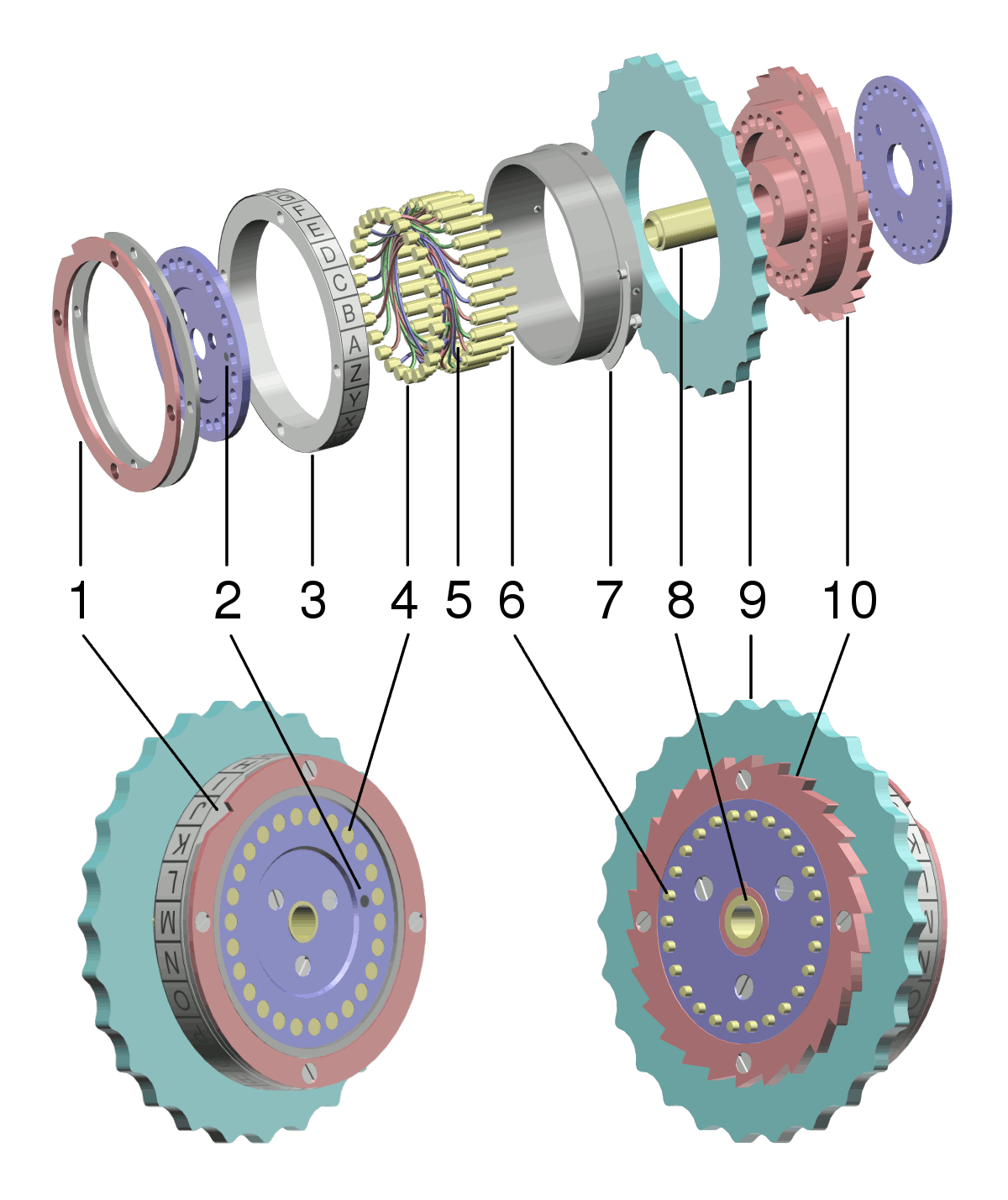
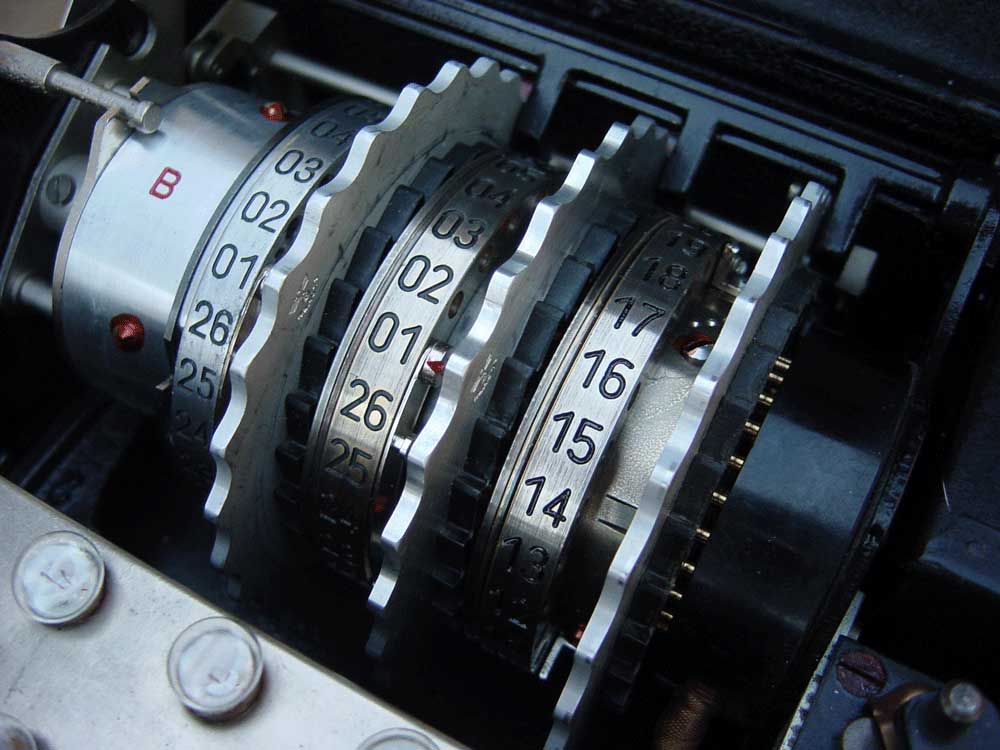
Around the circumference of the rotor are two more important features. The alphabet ring (or letter ring, Ringraster) is a band marked with the twenty-six letters (or, on some rotors, the numbers 01–26) that shows through a small window in the lid; this is what tells the operator the rotor’s current position. The ring can be rotated relative to the wired core and locked in place — this is the Ringstellung, the ring setting, which offsets the visible letter from the internal wiring and forms yet another component of the daily key. And cut into the ring is at least one notch, a small step that engages the stepping mechanism and causes the rotor to its left to advance. Most rotors (I–V) carry a single notch at a fixed alphabetic position; the Naval rotors VI, VII and VIII each carry two notches, which makes their stepping faster and harder to predict.
3.5 The Reflector: Reciprocity and Its Price
The reflector, or Umkehrwalze (literally “reversal rotor”, abbreviated UKW), looks like a rotor that lost half its contacts. It has the spring or plate contacts on only one face, and internally its twenty-six terminals are joined in thirteen fixed pairs. In the standard Army machine the reflector did not rotate during operation; it simply sat at the left end of the stack and bounced the current back.
That bounce has two profound consequences, one a gift and one a curse.
The gift: reciprocity. Because the current passes through the rotors, reflects, and passes back through the same rotors in the same positions, the whole transformation from keyboard to lamp is reciprocal (mathematically, an involution). If, at a given setting, pressing A lights G, then at that same setting pressing G will light A. The encipherment of A into G and the encipherment of G into A are one and the same operation. This is why an Enigma operator never has to switch the machine between an “encrypt” and a “decrypt” mode: to decipher a message, you simply set the machine to the same starting key the sender used and type the ciphertext, and the plaintext lights up letter by letter. Two operators with identically-set machines can converse, each typing what they receive and reading what lights up, with no separate decoding table. For a field cipher used by tired men under pressure, this symmetry was an enormous operational convenience, and it is no accident that the German services prized it.
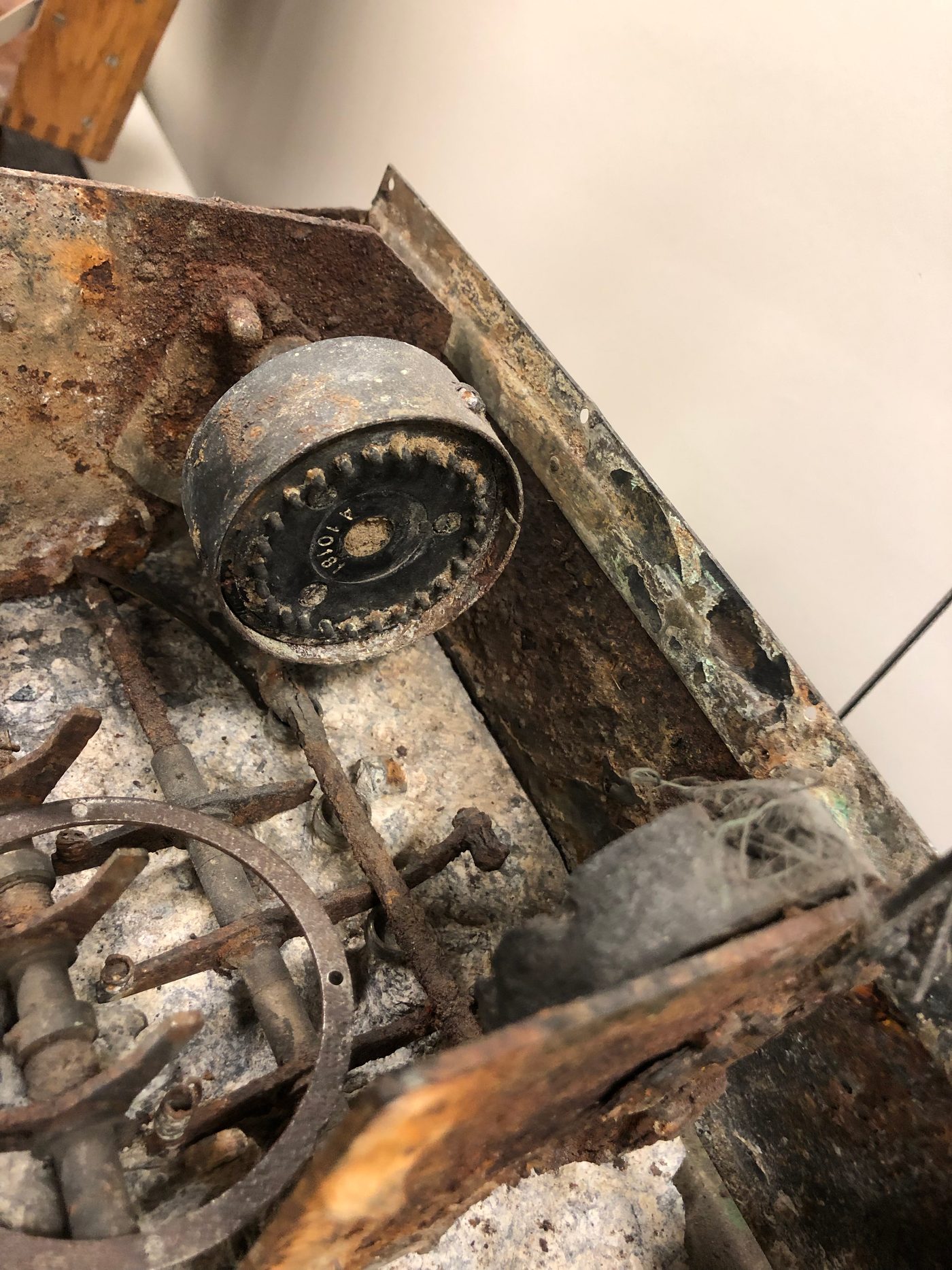
The curse: no letter can ever encipher to itself. Reciprocity comes from pairing letters, and a pairing has a fatal side effect. Because the reflector joins its terminals in pairs of distinct contacts — A is wired to some other letter, never back to A — the current that goes in on one line always comes back on a different line. Follow the consequence all the way out to the lamps and you find an iron rule: at no setting can any letter ever encipher to itself. Press A and you may light any of the other twenty-five letters, but never A. This is the self-reciprocal, no-fixed-point property, and it is one of the most consequential design decisions in the history of cryptography.
To a German signals officer in the 1930s this looked harmless, perhaps even like a virtue — surely it is good that a letter is never left unchanged? In fact it leaked information on every single keystroke. It told a codebreaker, for free and with certainty, twenty-five things the plaintext letter could be and one thing it could not be. That single forbidden letter is exactly the lever the codebreakers needed. When an analyst guessed that a stretch of ciphertext concealed a probable word — a crib, such as a stereotyped weather report or the German for “nothing to report” — the no-self-encipherment rule let them instantly reject any alignment in which the guessed word and the ciphertext shared a letter in the same position. Whole oceans of impossible positions could be struck out at a glance, and the surviving candidates were few enough to test by machine. This is the property around which the British bombe was built, and we develop that story fully in Volume 10. For now, hold onto the irony: the very feature that made Enigma so convenient to use is the same feature that made it possible to break.
3.6 The Stepping Mechanism: Why the Cipher Will Not Sit Still
Everything described so far would, on its own, produce a fixed monoalphabetic substitution — a single scrambled alphabet, exactly the kind of cipher a schoolchild can break by counting letter frequencies. What lifts Enigma into a different class is that the rotors turn, and they turn in a particular, slightly perverse way.
The odometer in the lid. Before the circuit closes on each keypress, the stepping mechanism advances at least one rotor by one position of twenty-six. The rightmost rotor, the fast rotor, advances on every keystroke. Because its position has changed, the same key pressed twice in a row almost never lights the same lamp. The fast rotor behaves like the ones digit of a car’s odometer, clicking over with every press.
When the fast rotor completes a full revolution, its notch engages the mechanism and pushes the middle rotor forward by one — exactly as an odometer’s tens wheel advances once the ones wheel rolls past nine. When the middle rotor in its turn completes a revolution, its notch advances the slow (leftmost) rotor. With a single notch per rotor, the fast rotor cycles through 26 positions, the middle steps once per 26 of those, and the slow steps once per 26 of those, giving a period of 26 × 25 × 26 before the whole arrangement repeats. The substitution alphabet is therefore different on essentially every keystroke: Enigma is a polyalphabetic cipher with an enormous cycle.
The double-stepping anomaly. Here the odometer analogy breaks down in a famous and instructive way. A real odometer advances its middle wheel only when the wheel to its right rolls over. Enigma’s middle rotor does something stranger: under the right conditions it steps on two consecutive keystrokes. This is the celebrated double-stepping anomaly, and it falls directly out of the machine’s pawl-and-ratchet design.
The stepping is driven by three spring-loaded pawls, one behind each rotor, all pushed forward together on every keystroke. Each pawl sits half over the toothed ratchet of its own rotor and half over the notched ring of the rotor to its right. A pawl can only engage and turn its rotor when it is able to drop into a notch on that neighbouring ring; otherwise the notch ring blocks it and nothing moves. The fast rotor’s pawl always has a clear path, so the fast rotor always steps. The middle rotor steps only when the fast rotor’s notch presents itself — the normal carry.
But consider the moment the middle rotor has itself stepped into the position where its own notch is aligned under the left pawl. On the next keystroke, the left pawl drops into the middle rotor’s notch and advances the slow rotor — and in doing so it also catches the middle rotor’s ratchet and carries the middle rotor forward a second time. So the middle rotor, having just been stepped once by the normal carry from the fast rotor, steps again on the very next stroke as it drags the slow rotor along. The middle rotor moves on two keystrokes back-to-back. This happens once every 26 × 25 keystrokes, and its net effect is to shorten the machine’s overall period: instead of the full 26 × 26 × 26 = 17,576 settings, the genuine cycle is 26 × 25 × 26 = 16,900. The anomaly is not a flaw the Germans worried about — it is simply an artifact of cheap, reliable mechanical engineering — but any accurate simulation of Enigma must reproduce it, and every codebreaker had to account for it.
3.7 Why This Defeats Frequency Analysis
The reason all this mechanical fuss matters is that it demolishes the classical codebreaker’s chief weapon: frequency analysis. In any ordinary language, letters appear with characteristic frequencies — in English, E is far commoner than Z; in German, E and N dominate. Against a simple substitution cipher, where each plaintext letter is always replaced by the same cipher letter, those frequencies survive the encryption: the most common symbol in the ciphertext is almost certainly the stand-in for E, and from that toehold the whole message unravels. Such ciphers fall in minutes.
Enigma denies the analyst that toehold by changing the substitution alphabet on every single letter. Because the fast rotor steps before each keypress, the first E in a message might encipher to T, the next E to W, the next to L. A doubled letter in the plaintext — the ss in Schloss, say — comes out as two different ciphertext letters. Run a frequency count over a long Enigma message and the histogram is nearly flat: every cipher letter occurs about as often as every other, all distinctive structure smeared away across the rotors’ relentless stepping. The crib-based attacks that ultimately broke Enigma did not come from counting letters at all; they came from exploiting the machine’s structural regularities — above all the no-self-encipherment rule, the predictable stepping, and the rigid German message procedures — rather than the statistics of the plaintext. Those are the threads we pick up in the volumes ahead.
For now, the essential picture is complete. Enigma is a battery, a plugboard, an entry wheel, three wired rotors, and a reflector, joined into a single circuit that sends each spark on a nine-stage round trip and lights one lamp. The reflector makes that cipher reciprocal — wonderfully convenient, and fatally unable to leave any letter unchanged. The pawls and ratchets make it polyalphabetic, advancing the rotors like a slightly eccentric odometer that double-steps its middle wheel. Together these give a hand-held machine a cycle of nearly seventeen thousand alphabets and a key space the Germans believed unassailable. In Volume 4 we open the front panel and give the plugboard, the daily key sheets, and the operating procedures the full attention they deserve — the human and procedural layer wrapped around the electromechanical heart we have just dissected.
Next — Volume 4: Plugboard, Keys & Procedures.
Comments (0)