Enigma · Volume 1
Enigma — Volume 1 — The Machine That Lost a War
What Enigma was, the stakes it carried, and why a typewriter-sized box still matters — the orientation volume for the fifteen-part series
1.1 About This Volume
This is the entry point to a fifteen-volume deep dive on the Enigma cipher machine — arguably the most consequential piece of communications technology of the twentieth century, and certainly the most famous. This first volume sets the stage: it explains what Enigma actually was, sketches the human drama that surrounds it, names the stakes, and previews the road ahead. It carries no equations and assumes no prior knowledge. Readers who already know the outline of the story and want mechanism may skip directly to Volume 3 (the rotor cipher) or Volume 7 (the first break); readers who want the whole arc should start here.
The series ends, in Volume 15, somewhere unexpected: on a workbench, with a modern open-source replica — the Open Enigma — that lets anyone hold the machine’s logic in their hands. Everything between here and there explains why that replica is worth building.
1.1.1 The Fifteen-Volume Series
Table 1 — The Fifteen-Volume Series
| Vol | Title | Focus |
|---|---|---|
| 1 | The Machine That Lost a War (this volume) | Orientation, stakes, the whole story in miniature |
| 2 | Origins: Scherbius and the Rotor-Machine Era | 1918–1920s; the inventors and the commercial machines |
| 3 | How Enigma Works I — The Rotor Cipher | Keyboard, lamps, rotors, reflector, stepping |
| 4 | How Enigma Works II — Plugboard, Keys & Procedures | Steckerbrett, daily keys, indicator drill |
| 5 | The Combinatorics — Why They Thought It Unbreakable | The key space, and the math that misled |
| 6 | The Military Enigmas | Army, Air Force, the naval M3 and four-rotor M4 |
| 7 | The First Break — The Polish Cipher Bureau | Rejewski, Różycki, Zygalski; 1932 |
| 8 | The Handover — Pyry Forest, 1939 | Poland passes the secret to Britain and France |
| 9 | Bletchley Park | The huts, the people, the industrial scale of Ultra |
| 10 | Turing and the Bombe | Cribs, the Bombe, Welchman’s diagonal board |
| 11 | Breaking Naval Enigma & the Battle of the Atlantic | The M4, the “pinches,” the Shark blackout |
| 12 | Ultra — Using the Secret | Disguising the source; the decades of silence |
| 13 | Legacy & Lessons for Modern Cryptography | Kerckhoffs, key management, the human factor |
| 14 | Surviving Machines, Museums & Pop Culture | Where the machines are now; how the story is told |
| 15 | ⭐ The Open Enigma — Building the Replica | The open-source kit, the build, what it teaches |
1.2 A Box That Looked Harmless
It looks, at first glance, like a typewriter that someone modified for reasons they could not quite explain. A wooden case, hinged at the lid. A keyboard of round, metal-rimmed keys lettered A through Z. Above the keys, a second array of twenty-six letters, each behind a small glass window with a bulb beneath it. And under the lid, set into the top of the machine, a row of toothed wheels that the operator could turn with a fingertip. It weighed about twelve kilograms with its battery. A soldier could carry it; two could set it up on a folding table inside a half-track or a U-boat’s radio room.
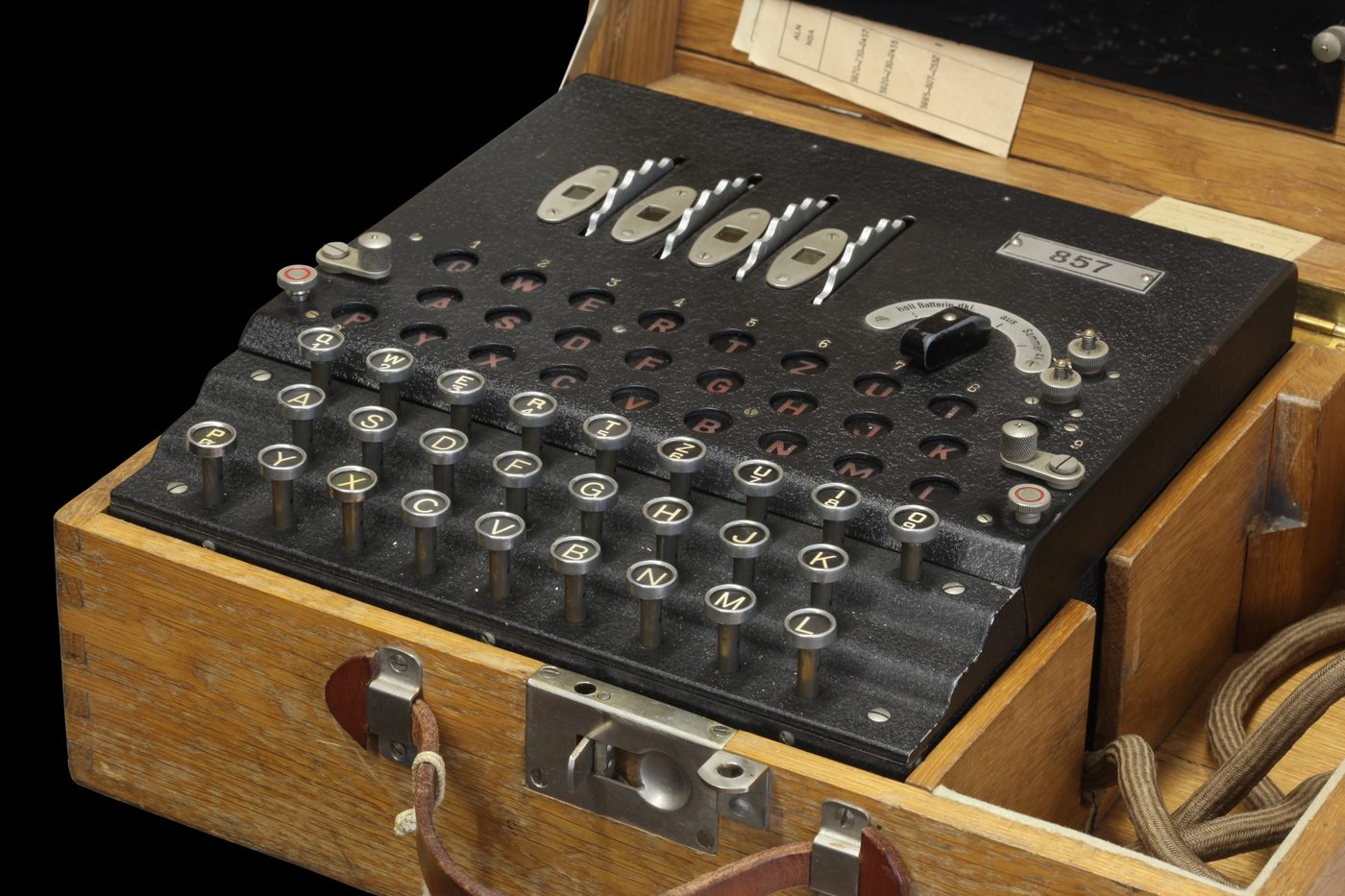
The machine had no screen, no paper, no moving carriage. It printed nothing. To use it, an operator typed a letter and a lamp lit under a different letter; an assistant read off the illuminated letter and wrote it down. Type the plaintext, transmit the lamplit letters by radio in Morse, and at the other end an identical machine — set up the same way that morning — reversed the process: type the received gibberish, and the lamps spelled out the original message. That was the whole of it. The genius was entirely interior.
What happened inside, between the key and the lamp, was a substitution cipher of a particularly slippery kind. Press A and the lamp might show G. Press A again — immediately, the very next keystroke — and it would not show G again; it might show T. The machine changed its own wiring with every single keypress, so that the same letter typed twice in a row almost never enciphered to the same letter twice. A message of two hundred characters was, in effect, enciphered with two hundred different alphabets, marching in a sequence that only an identically-configured machine could reproduce. To the Germans who relied on it, that property looked like a closed door with no keyhole.
1.3 Why It Mattered
Cryptography is no abstract pursuit when a continent is at war. Modern armies are held together by radio. A general cannot whisper to a division three hundred kilometres away; he broadcasts. And anything broadcast can be heard by the enemy, who needs only an antenna and patience. The entire value of a cipher is that it lets you speak in the open and still keep a secret — that you can flood the airwaves with orders, weather reports, convoy positions, and reinforcement schedules, knowing the listening enemy hears only noise.
Nazi Germany built its blitzkrieg on exactly this premise. Fast-moving armoured columns, coordinated air support, and above all the U-boat campaign in the Atlantic ran on dense, constant radio traffic — and that traffic was almost entirely enciphered on Enigma. The German high command treated the machine as unconditionally secure, and used it for everything: routine logistics and the Führer’s own directives, daily weather observations and the sailing orders of submarine wolfpacks. They believed, with the certainty of men who had done the arithmetic, that even if the enemy captured a machine and a stack of messages, the sheer number of possible settings would defeat any attempt to read them. Volume 5 examines that arithmetic — and the subtle reasons it gave false comfort.
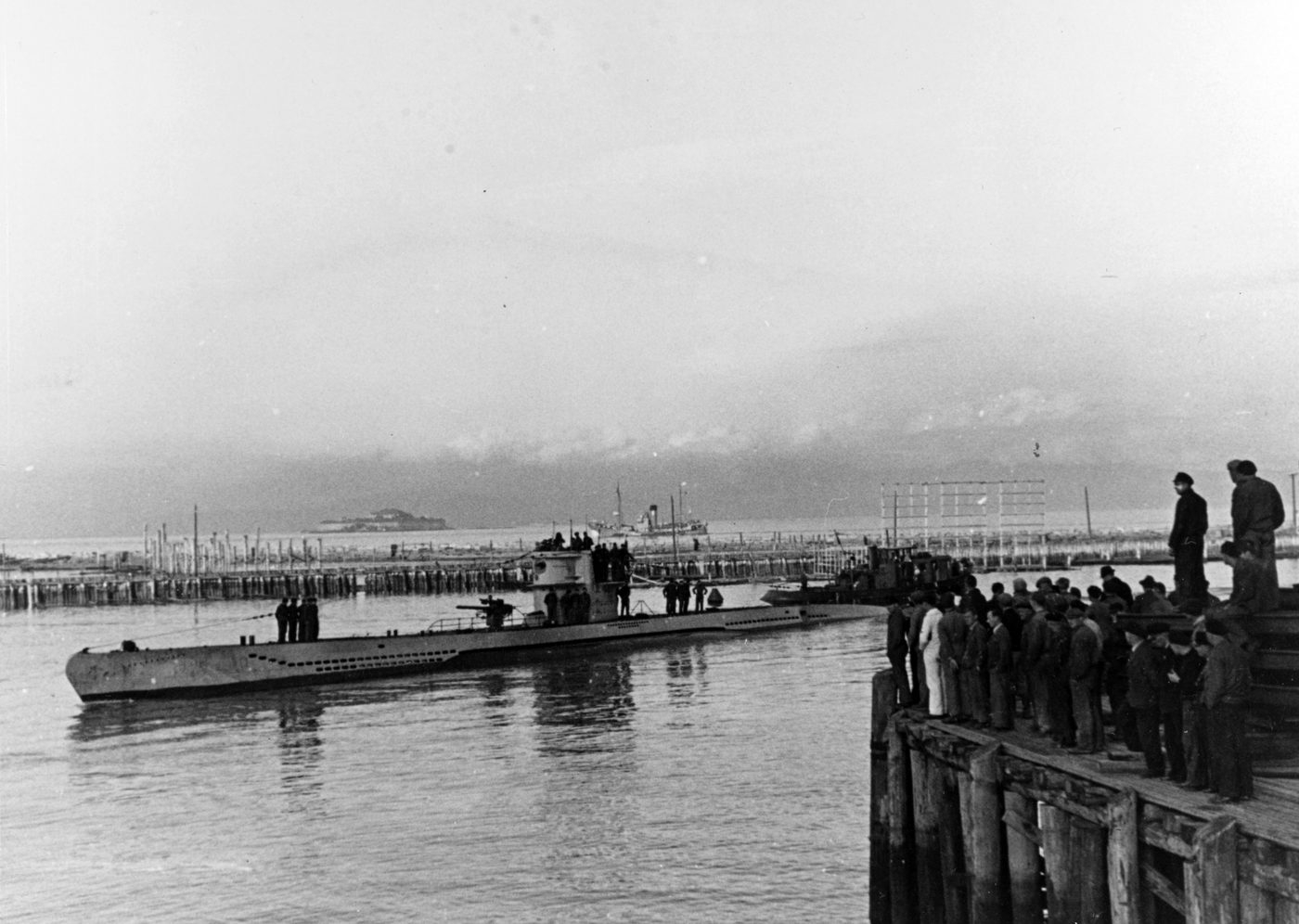
For Britain in particular, the stakes were not metaphorical. In 1941 and again in 1942, the country was being slowly strangled. German submarines were sinking merchant ships faster than the shipyards could replace them, and a maritime nation that imports its food and fuel cannot lose the sea lanes indefinitely. Winston Churchill later wrote that the only thing that ever truly frightened him during the war was the U-boat peril. Whether the convoys could be routed around the wolfpacks — whether the Admiralty could read the submarines’ own orders and steer ships through the gaps — was, quite literally, a question of national survival. The whole drama turns on a single question: whether one side can read the other’s mail.
1.4 The Door Had a Keyhole After All
The Germans were wrong, though it took genius to prove it. The story of breaking Enigma is not one triumph but a relay race, run by people who mostly never met.
The first leg was Polish. In the early 1930s, while British and French codebreakers had set the military Enigma aside as hopeless, three young mathematicians at the Polish Cipher Bureau — Marian Rejewski, Jerzy Różycki, and Henryk Zygalski — tried something nobody had. Instead of attacking the machine like linguists, hunting for patterns in the text, they attacked it like mathematicians, modelling the rotor wiring as a problem in the theory of permutations. From the messages alone, Rejewski reconstructed the internal wiring of a machine he had never seen — one of the great feats in the history of cryptanalysis, and the subject of Volume 7. By 1938 the Poles were reading German traffic routinely, using machines of their own design — including an electromechanical device they called the bomba.
Then the Germans hardened their system, the threat of invasion grew, and in July 1939, five weeks before the tanks crossed the border, Poland gave everything away — handing complete working replicas and their methods to astonished British and French officers in a forest south of Warsaw. That handover (Volume 8) is the hinge on which the whole story turns. Without it, the British effort might have started years later, or not in time at all.
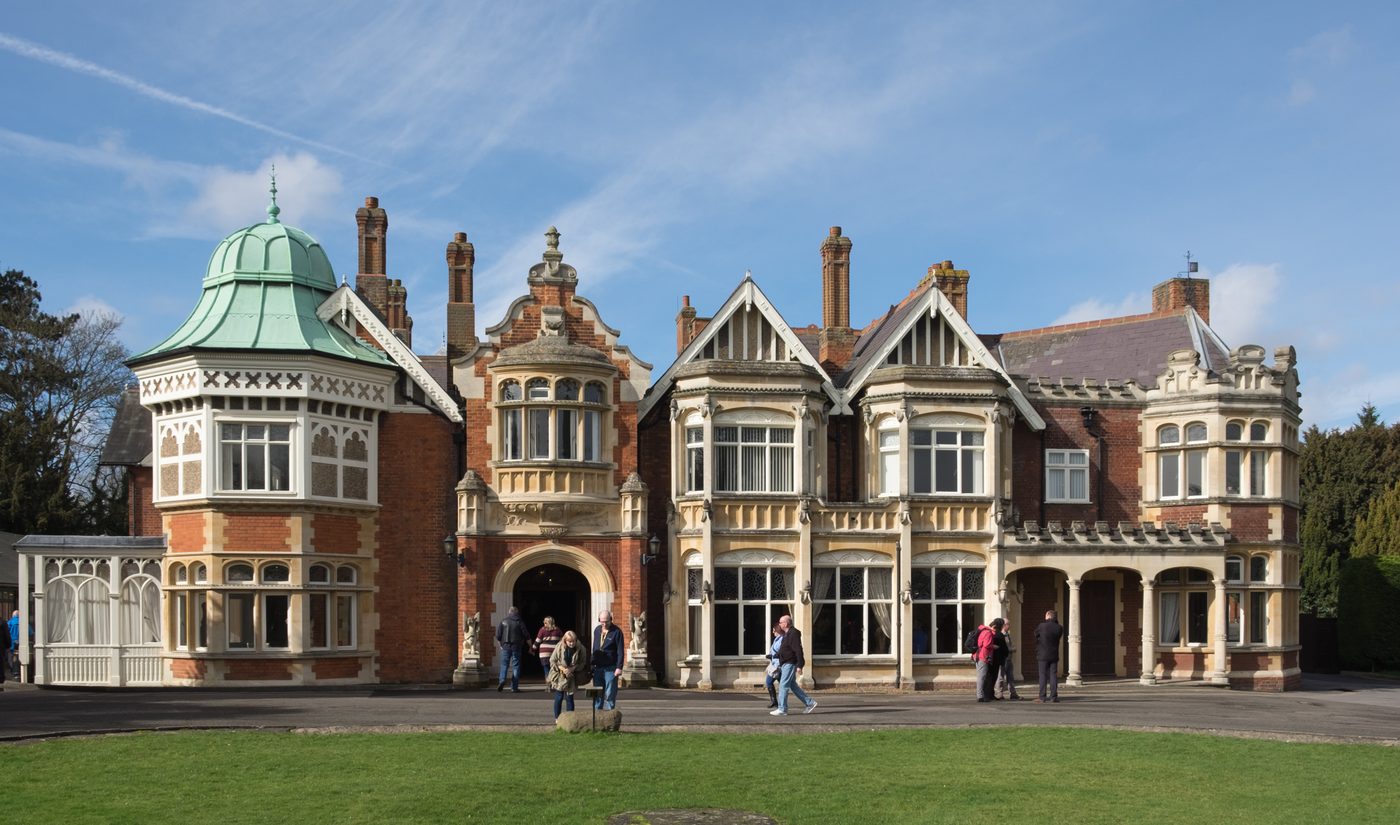
The second and longest leg was British, and it happened at Bletchley Park — a Victorian country house turned secret factory, where the genteel pre-war world of amateur cryptographers collided with the industrial age. Bletchley did something the Poles, with their tiny budget, could not: it turned codebreaking into a production line. Thousands of people — a majority of them women, operating machines and managing an ocean of paper — worked in three shifts around the clock to break the day’s keys before the day’s intelligence went stale. Volume 9 is about that place and those people.
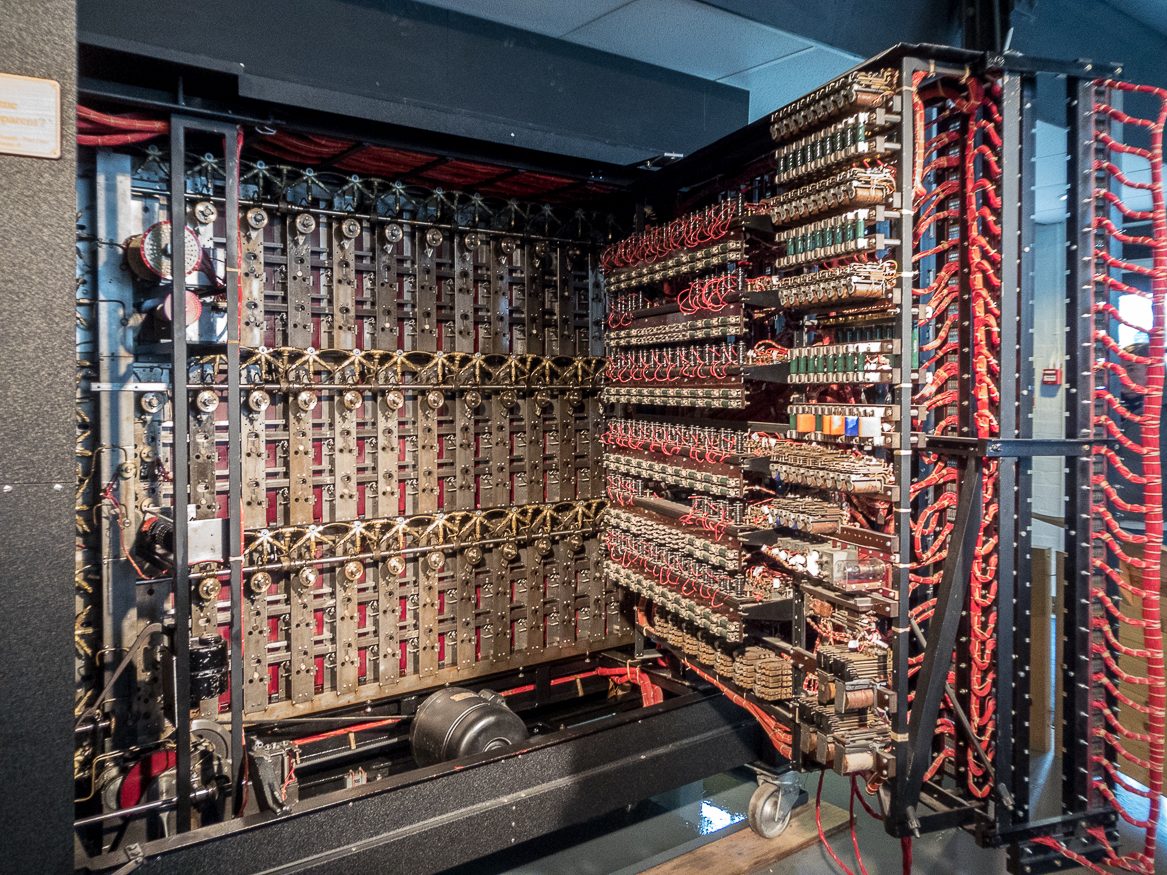
At the centre of the technical effort, though not of the social one, was Alan Turing. He took the Polish idea and rebuilt it for a harder problem and a larger scale. The Germans had removed the specific weakness the Polish bomba exploited, so Turing devised a new attack — one based not on a flaw in German procedure but on the predictable content of messages, the near-certainty that a given report would contain a word like Wetter (weather) or a stock military phrase. From that idea came the Bombe, a room-sized electromechanical machine that tested thousands of rotor settings an hour, cutting through the impossible numbers by clever logic rather than brute force. Volume 10 explains exactly how it worked.
By 1943 the relay was complete. The intelligence it produced — codenamed Ultra — flowed to commanders in a tightly controlled stream, disguised so carefully that the Germans never seriously suspected the truth. Convoys were rerouted; Rommel’s supply ships were sunk on schedules the Allies seemed to know in advance; the D-Day deceptions could be checked against the enemy’s own confidential reactions. Volumes 11 and 12 follow Ultra from the radio room to the battlefield.
1.5 The Man on the Plinth
If the story has a face, it is Alan Turing’s — though it is worth saying plainly, this early, that the image most people carry is a modern reconstruction of a private man, and that the work was never his alone.
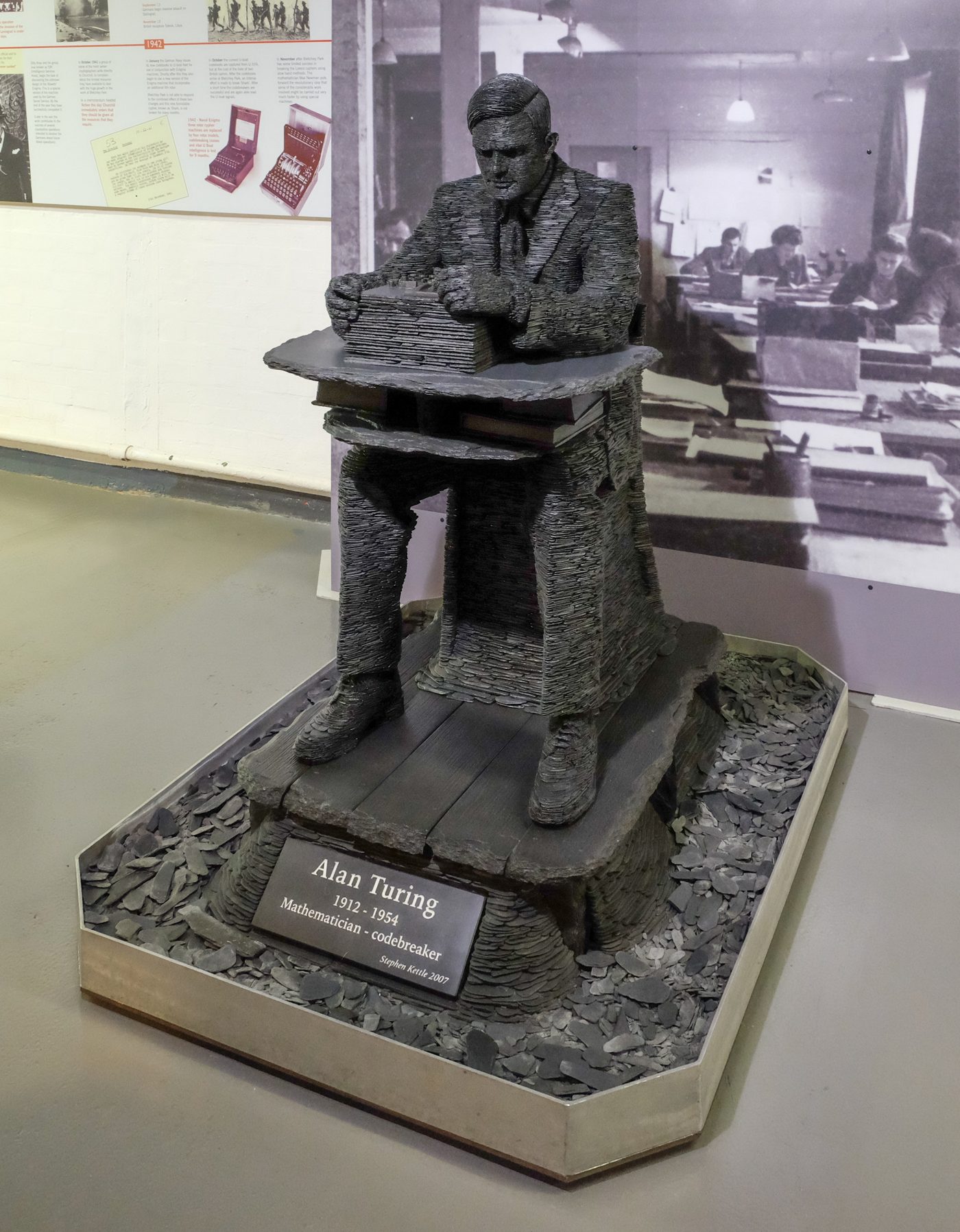
Turing is remembered now for two distinct reasons that the public tends to merge. Before the war, he was the author of a 1936 paper that effectively invented the theoretical computer — the abstract “universal machine” at the foundation of computer science. During the war, he was the principal architect of the British attack on naval Enigma. The same mind that defined what a computation is also organised the practical breaking of the hardest cipher of his age. The threads connect: the war was where abstract logic became roomfuls of clattering machinery, and that machinery led, within a few years and a few miles, to Colossus and the first programmable electronic computers. Volume 13 traces that lineage.
Turing’s later treatment by the country he served — prosecuted in 1952 for being gay, chemically punished, dead by his own hand in 1954 at forty-one, and not officially pardoned until 2013 — is part of the story too, and the series does not skip it. The machine that helped save Britain was broken by people Britain did not always deserve.
1.6 What This Series Will and Will Not Do
A great deal has been written about Enigma, much of it excellent and some of it mythologised. This series tries to do three things that popular accounts often do not.
First, it takes the machine itself seriously as an object of engineering. Volumes 3 through 6 are a genuine technical manual: how the current actually flows from key to lamp, why the rotors step the way they do, what the plugboard adds, how the naval four-rotor model differed from the army’s three. By the end you should be able to explain Enigma to an engineer, not merely gesture at it.
Second, it takes the mathematics of the break seriously without burying the reader. Rejewski’s permutation theory and Turing’s crib-based logic are presented as ideas you can follow, with the heavy machinery confined to clearly-marked sections you can skim.
Third, it ends with a build. The Open Enigma project (Volume 15) reproduces the machine’s logic in modern, transparent, open-source hardware — an Arduino at its heart, the rotor wiring in software, the lamps and keys faithfully physical. Reproducing a thing is the oldest and best way of understanding it, and the final volume is where the whole series stops being history and becomes something you can switch on.
1.7 The One-Paragraph Version
If you read nothing else, read this. Enigma was an electromechanical cipher machine that Nazi Germany trusted absolutely and used for nearly all its secret radio traffic. Its security rested on rotating wheels and a plugboard that, between them, offered a number of settings so vast the Germans thought it beyond brute force — and they were right that it was beyond brute force. They were wrong that it was beyond cleverness. Polish mathematicians broke it first, by treating it as algebra; British codebreakers at Bletchley Park, led technically by Alan Turing, industrialised the attack with the Bombe and predictable German habits; and the resulting intelligence, Ultra, helped win the Battle of the Atlantic and shorten the war by an estimated two years. The secret held for three decades after victory. The lesson — that a cipher is only as strong as the discipline of the people using it, and that secrecy of the method is no substitute for secrecy of the key — is the founding lesson of modern cryptography. The rest of this series is the long version.
Next — Volume 2: Origins. Before Enigma was a weapon it was a product, patented by a German engineer hoping to sell secrecy to banks and corporations. Volume 2 goes back to 1918, to Arthur Scherbius and the brief, crowded moment when several inventors on different continents all arrived at the rotating-wheel cipher at once.
Comments (0)