Enigma · Volume 6
Enigma — Volume 6 — The Military Enigmas
One family, many machines: how a single design splintered into the ciphers of a war
6.1 About This Volume
It is tempting to speak of “the Enigma” as though there were a single machine — one box, one wiring, one problem to be solved. There was not. By the time the Second World War was fully under way, the German armed forces fielded a whole family of Enigmas, related in design but separated by deliberate, sometimes obsessive, choices about how much extra complexity to bolt on. The Army’s standard machine and the U-boat command’s four-rotor monster were cousins, not twins. Military intelligence used a machine without a plugboard that nevertheless stepped its reflector. The Swiss bought a commercial model and rewired it; the German railways ran an older variant the British nicknamed after a missile; and a special export Enigma was shipped to Japan.
This volume surveys that family in military service. It asks three questions of each variant: what was it, why did it differ from its siblings, and what did those differences mean for the people trying to break it? Some distinctions were cosmetic. Others — an eighth rotor here, a fourth wheel there, a stricter indicator procedure — were the difference between a cipher that fell in weeks and one that blacked out Bletchley Park for the better part of a year. We will spend most of our time at sea, because the Kriegsmarine built the hardest targets of the war, but we begin on land with the machine that most people picture when they hear the word.
6.2 Enigma I — The Standard Wehrmacht Machine
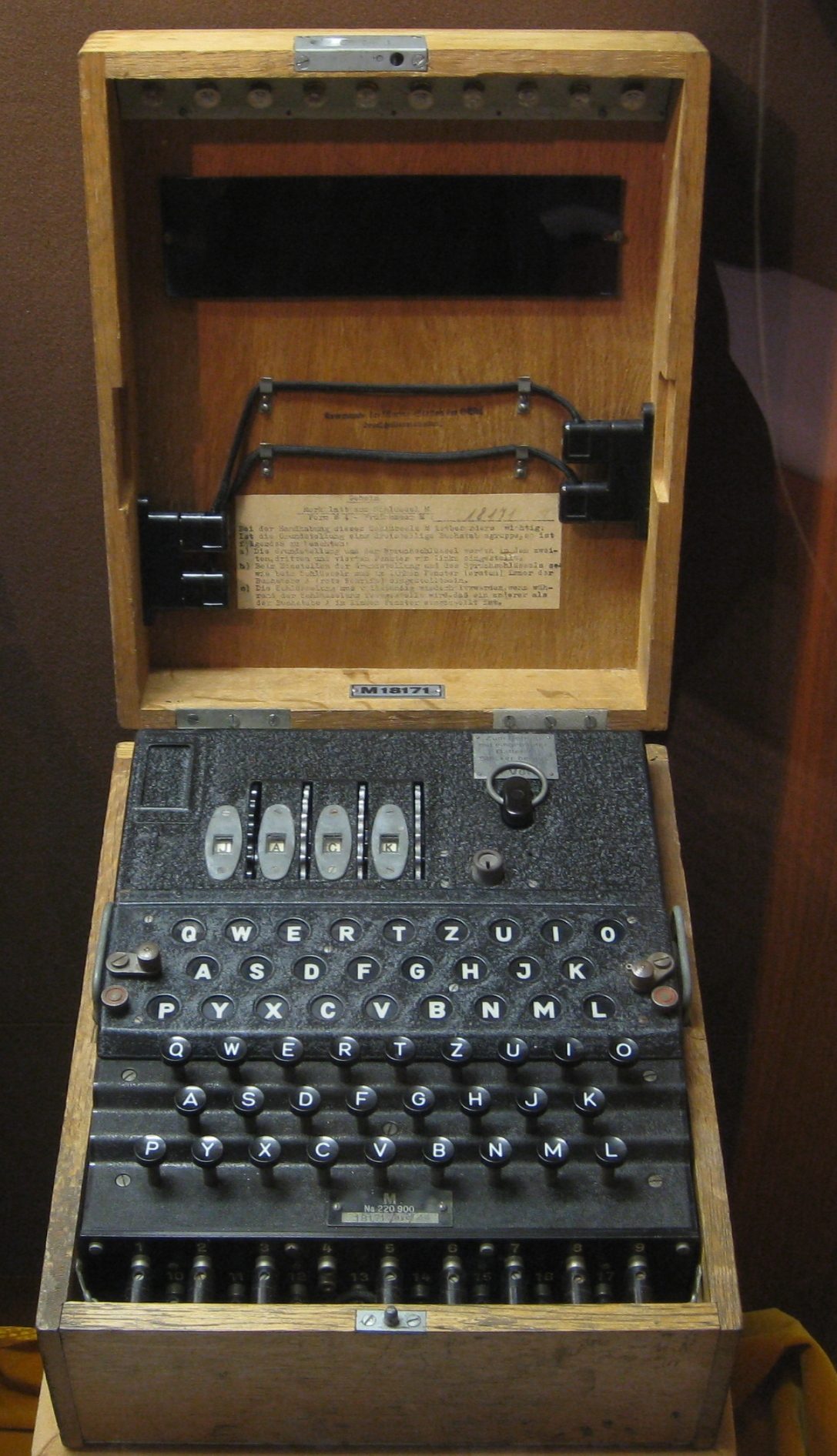
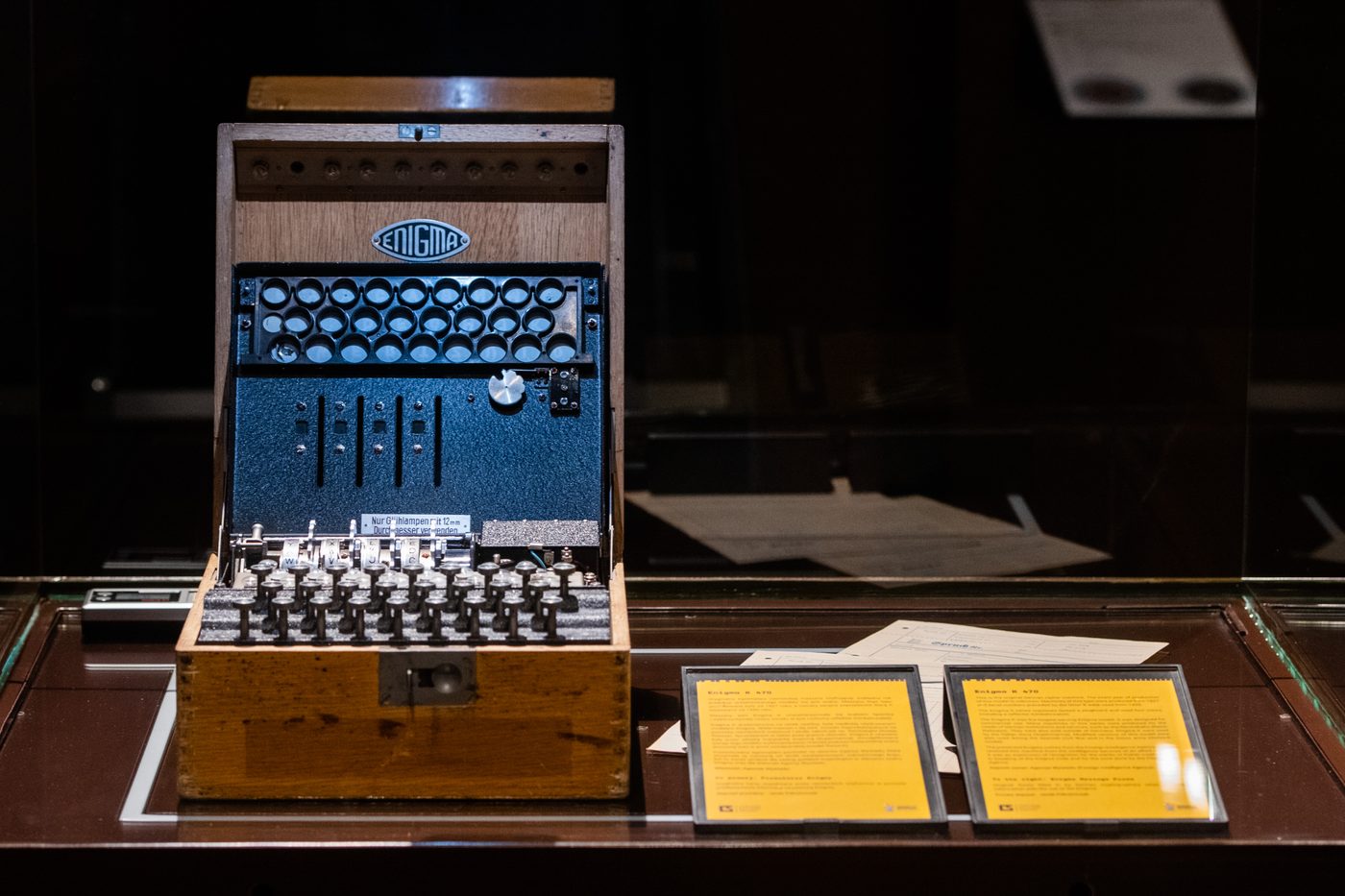
The workhorse of the German Army (Heer) and Air Force (Luftwaffe) was the machine usually called Enigma I, sometimes the Wehrmacht or Service Enigma. Everything that the popular image of Enigma contains lives here: a typewriter-style keyboard, a lamp panel of twenty-six glowing letters above it, a set of rotating wheels behind a hinged lid, and — the feature that lifted military Enigma decisively above its commercial ancestors — a plugboard (Steckerbrett) across the front.
Mechanically, Enigma I used three rotors at a time, chosen from a set of five, the wheels designated by Roman numerals I through V. The choice of which three to install, and in which order, was part of the daily key; with five wheels to draw from there are 60 ordered selections of three, a respectable multiplier on top of the rotor positions. Behind the rotors sat a fixed reflector, the Umkehrwalze, which sent the current back through the wheels by a second path and gave Enigma its defining property: a letter never encrypted to itself, and encryption was its own inverse. The standard reflector was Umkehrwalze B, joined later in the war by the alternative Umkehrwalze C. (A short-lived rewireable reflector, the “Dora,” appears in a later volume; here it is enough to know the army usually ran the fixed B.)
The plugboard is where the real strength lived. By cross-wiring pairs of letters before and after the rotor stack, the operator added a layer of substitution whose number of configurations dwarfed everything else in the machine. It is no exaggeration to say that the plugboard, not the rotors, was what made Enigma I look unbreakable to its users — and it is exactly the plugboard that the Polish and British attacks, treated in the volumes to come, learned to peel away.
For all its strength, Enigma I was undone as much by habits as by mathematics. Army and Air Force operators were numerous, hurried, and imperfectly disciplined. They reused settings, sent stereotyped message openings, and — most famously — chose lazy three-letter message keys. The Luftwaffe’s general-purpose key, which Bletchley codenamed Red, became the most thoroughly and continuously read of all German ciphers, broken from May 1940 onward almost as a matter of routine. The machine was sound; the operators leaked.
6.3 The Kriegsmarine — Why the Navy Was the Hardest Target
The German Navy used Enigma differently, and the difference was not subtle. Where the Army treated its machine as a piece of field equipment, the Kriegsmarine treated cryptographic security as a discipline. Three things made naval Enigma the war’s stiffest cipher problem: more rotors to choose from, stricter procedure, and a far better way of telling the recipient how to set up his machine.
Start with the rotors. The naval three-rotor machine, the M3, looked from the outside like Enigma I, but its operators chose their three wheels from a set of eight rather than five. The three extra wheels — rotors VI, VII and VIII, introduced in 1939 for naval use — were not merely more of the same. Each of them carried two turnover notches rather than one. A notch is the feature that kicks the neighbouring rotor forward by one step; a wheel with two notches steps its neighbour twice as often and far less predictably. The practical effect was twofold. First, the count of wheel orders exploded: choosing three rotors in order from eight gives 336 possibilities, against the Army’s 60. Second, the double-notched wheels broke some of the regularities that cryptanalysts relied on to model the machine’s stepping. More wheels, stepping more chaotically — the search space the codebreakers faced was bigger and rougher.
Procedure mattered just as much. Naval operators did not get to invent their own message keys out of laziness. The Navy distributed the rotor wirings and daily settings with a security regime that assumed the worst, and it wrapped the message key in a layer of paper cryptography that the other services never bothered with.
That paper layer was the bigram / Kenngruppen indicator system, and it deserves its own paragraph because it is precisely what kept Alan Turing and Hut 8 out for so long. Rather than enciphering the message key directly and sloppily, a naval operator selected trigram groups from a printed book, the Kenngruppenbuch — a Schlüsselkenngruppe to identify which key (network) was in use, and a Verfahrenkenngruppe from which the actual message setting was derived. These groups were then super-enciphered using printed bigram tables (Doppelbuchstabentauschtafeln), a set of nine tables labelled A to J, with a calendar dictating which table applied on a given day. In plain terms: even after you had broken the Enigma machine itself, the indicators that told you how each message was set up were hidden behind a separate, hand-keyed cipher that you also had to capture or reconstruct. The Army’s indicator habits gave the codebreakers a free crib into the day’s settings; the Navy’s gave them a locked door in front of a locked door.
The naval home-waters and Atlantic key carried by these three-rotor machines was codenamed Dolphin at Bletchley. Even Dolphin, the “easy” naval key, resisted far longer than Red — and it was broken largely on the back of pinches, the physical capture of bigram tables and settings from weather ships and U-boats, rather than by analysis alone.
6.4 The Four-Rotor M4 — Triton, and the Shark Blackout
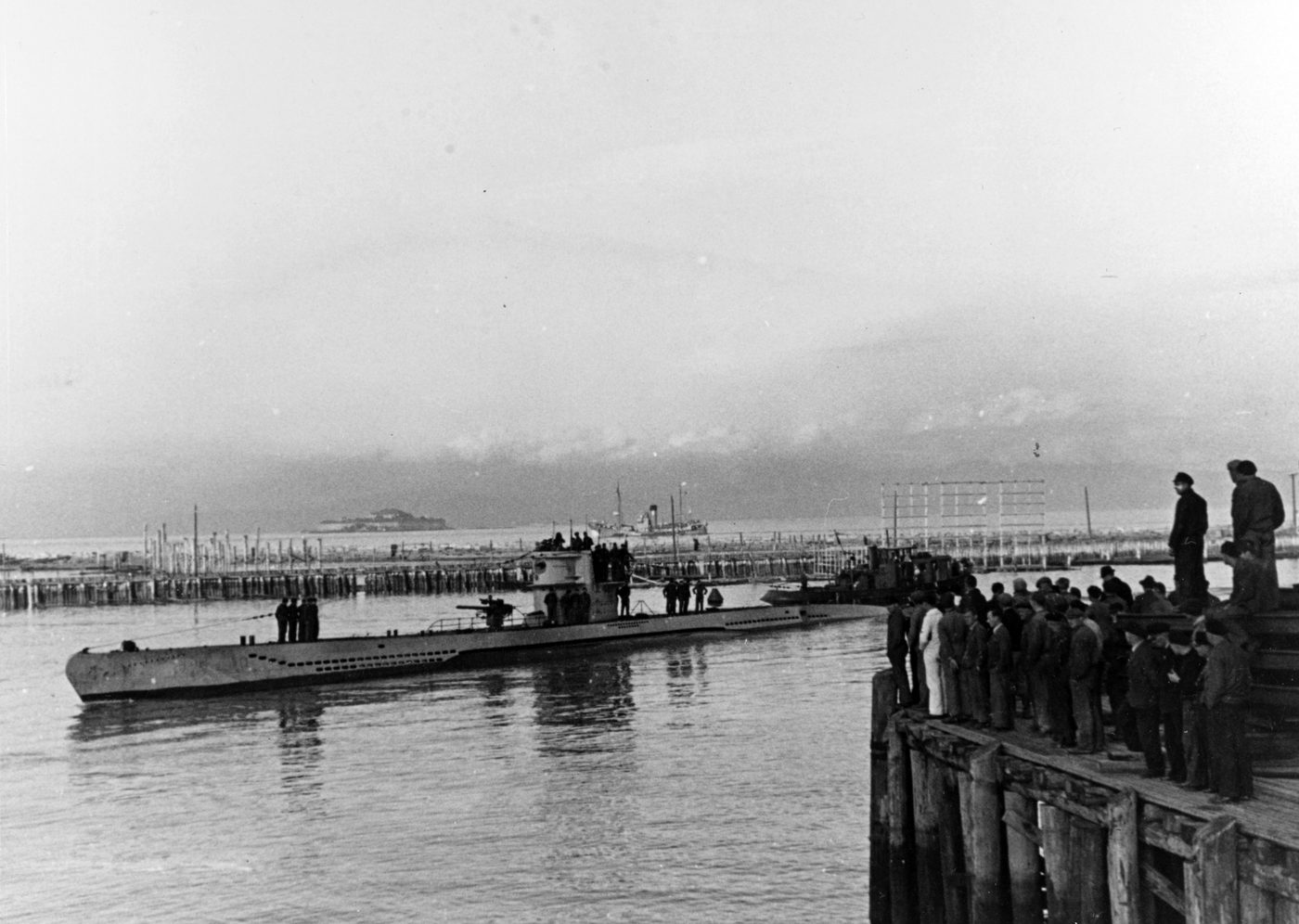
On 1 February 1942 the U-boat arm raised the stakes again. For its Atlantic and Mediterranean submarines it introduced a new machine, the M4, running a new key network the Germans called Triton and Bletchley Park called Shark. The M4 added a fourth rotor, and with it the war’s most consequential cryptographic step change.
The engineering of that fourth wheel is the clever part, and it repays a careful look. The Germans did not want to redesign the machine’s housing — every U-boat already carried the M3 box, and a wholesale change would have been a logistical nightmare. So rather than widen the machine to fit a fourth full-size rotor, they split the reflector. The thick Umkehrwalze was replaced by a thin reflector, the Umkehrwalze Dünn, and the space thus freed was filled by a thin fourth rotor. This wheel came in two types, marked with Greek letters — Beta (β) and Gamma (γ) — and, crucially, it did not step during encipherment. The operator could set it by hand to any of twenty-six positions before a message, but it stayed put while the message ran.
The genius of the arrangement was backward compatibility. The thin fourth rotor plus the thin reflector were wired so that, when the fourth wheel was set to a particular position — the ‘A’ position — the combination behaved exactly like one of the standard thick three-rotor reflectors. An M4 with its fourth rotor parked at ‘A’ was, electrically, an M3. That meant the new four-rotor boats could still exchange traffic with the three-rotor machines aboard surface ships and shore stations that had not yet been upgraded. It was a transition feature — and, incidentally, an occasional gift to the codebreakers, because messages sent in that compatibility mode were three-rotor problems in disguise.
In its full four-rotor mode, though, the M4 was a different animal. The non-stepping fourth wheel multiplied the number of possible reflector-end configurations by twenty-six, and that single factor put the problem beyond the reach of the existing three-rotor Bombes. The result, for Bletchley, was catastrophic: a near-total blackout on Shark that lasted most of 1942, precisely as the Battle of the Atlantic reached its crisis. How that blackout was endured and finally broken — through pinched documents, a four-rotor Bombe, and a great deal of suffering in the convoys — is the subject of Volume 11. Here the point is structural: a single, cheaply retrofitted wheel, engineered to be invisible to the existing attack, came closer to winning the U-boats their war than any tonnage of torpedoes.
6.5 The Abwehr Enigma — The Counter Machine Without a Plugboard
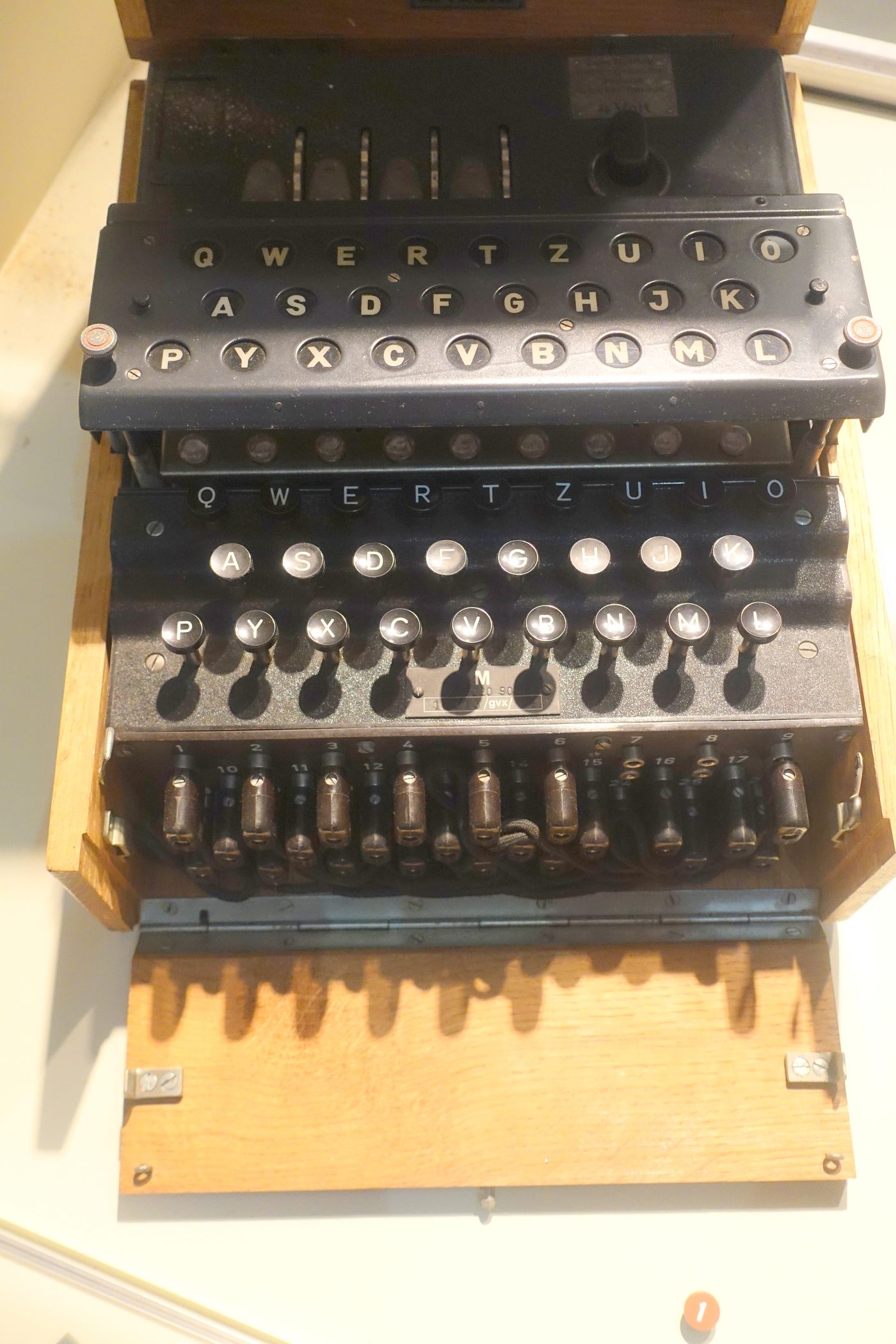
German military intelligence, the Abwehr, used a quite different member of the family: the Enigma G, also known as the Zählwerk Enigma or “counter machine.” Where the service and naval Enigmas all leaned on the plugboard as their main source of strength, the Abwehr machine had no plugboard at all. In exchange, it complicated the rotor mechanism in ways the standard machines did not.
Three features set the G apart. First, its rotors carried multiple notches — many turnover points around each wheel rather than the one or two of the service rotors — so the wheels stepped far more often. Second, those rotors were driven not by the usual pawl-and-ratchet but by a system of gears, a cog-driven stepping that produced a regular, odometer-like advance. Third, and most unusually, the reflector itself rotated, stepping during encipherment like an ordinary wheel rather than sitting fixed. And across the front, instead of a plugboard, sat the feature that named the machine — a mechanical counter that ticked up by one with every key press, a clockwork tally of letters enciphered.
Why build it this way? The Abwehr’s traffic was the cipher of spies and agents, often sent over noisy channels by operators working alone. The absence of a plugboard made the machine smaller, lighter (around twelve kilograms) and simpler to operate in the field, while the multi-notch rotors and rotating reflector were meant to recover, through mechanical churn, some of the diffusion that the missing plugboard would otherwise have provided. It was a different bargain — less brute-force substitution, more relentless stepping. Bletchley’s Dilly Knox and his team, who specialised in unsteckered Enigmas, broke into Abwehr traffic in late 1941, and the intelligence it yielded fed directly into the Double-Cross deception that turned captured German agents against their masters.
6.6 The Lesser Variants — K, Railway and Tirpitz
Around these principal machines orbited a cluster of smaller variants, each worth a paragraph for the way it illuminates the family’s range.
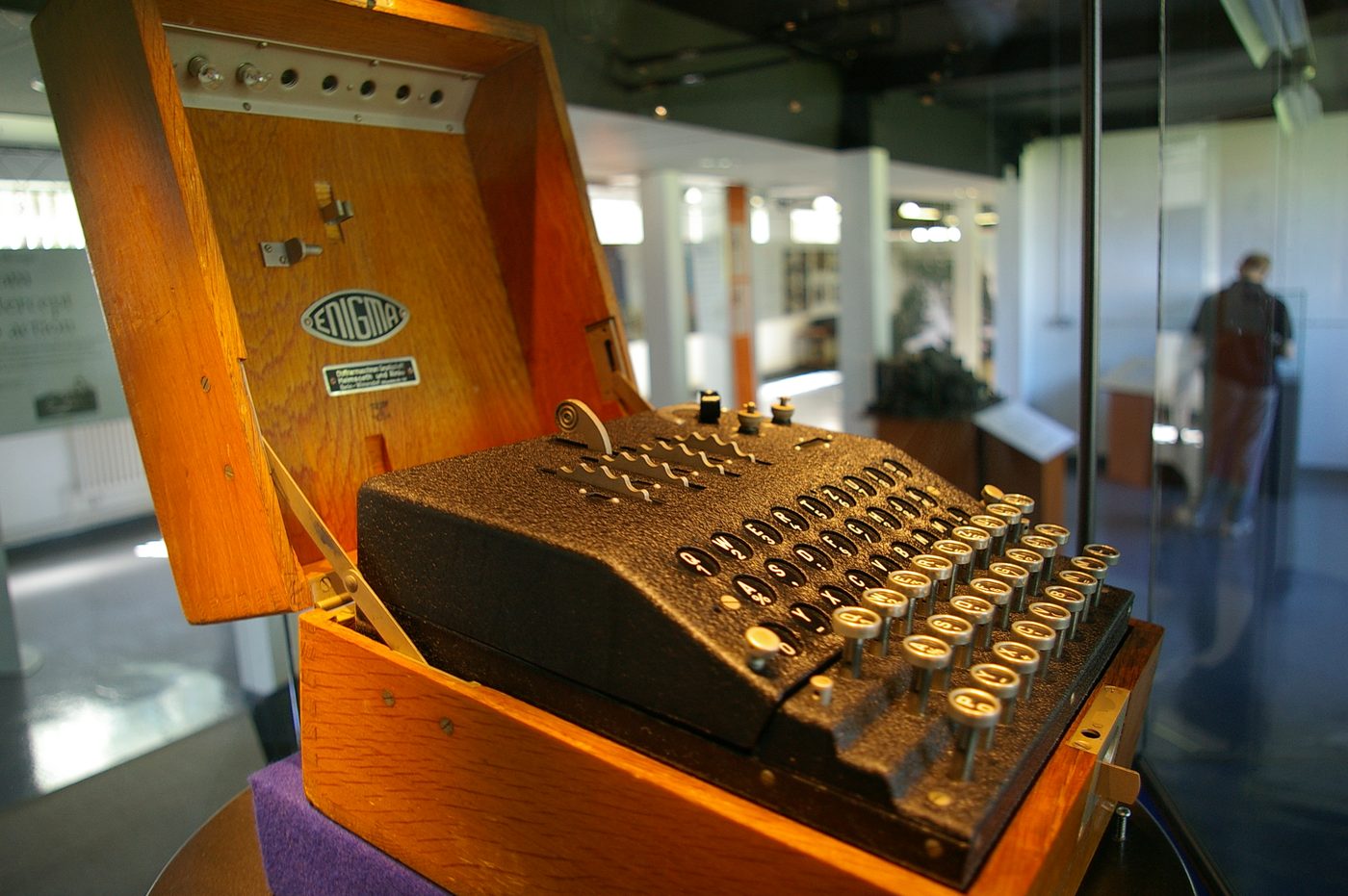
The Enigma K was the commercial, plugboard-less descendant of the 1920s civilian machines, sold abroad in the years before the war. Its most notable military user was neutral Switzerland, whose army rewired the rotors of its purchased machines and ran what Bletchley came to call the “Swiss K.” Because it lacked a plugboard, the Swiss K was cryptographically far weaker than Enigma I, and British and other codebreakers read parts of its traffic — a reminder that the plugboard, absent here, was the single feature most responsible for the service machines’ strength.
The German state railways, the Reichsbahn, used their own version of the commercial machine for administrative and logistical traffic. Bletchley codenamed this railway Enigma “Rocket.” It too lacked a plugboard, and its breaking — achieved largely by Dilly Knox’s section — gave the Allies a continuous window onto German troop and supply movements by rail across occupied Europe, intelligence of enormous value in the run-up to operations such as the invasion of the Soviet Union and the Normandy build-up.
Finally, the Enigma T, codenamed “Tirpitz,” was a special variant built for Germany’s Axis partner: it was supplied to Japan for liaison traffic between the two navies. The T had its own distinct rotor wiring and reflector arrangement and no plugboard. In practice the Germans and Japanese made little use of it, and its cryptologic significance was slight, but it stands as the family’s one true export — an Enigma built to let two empires on opposite sides of the world speak in the same machine cipher.
6.7 Keys and Colours — One Machine, Many Ciphers
There is a final concept that ties this whole survey together, and without it the breaking of Enigma cannot be understood at all: the key network. A given Enigma machine — say, Enigma I — was not one cipher but a template for thousands of them. What turned the machine into a specific, readable cipher was the daily key: the choice of rotors and their order, the ring settings, the reflector, the plugboard pairings, and the starting positions. Every organisation that needed to keep its traffic separate from everyone else’s was issued its own daily key, distributed on printed sheets and changed (typically) every twenty-four hours.
The Germans ran dozens of these separate networks — one for general Luftwaffe operations, others for individual air fleets, for army groups, for the various naval theatres, for the SS, for the railways, and on and on. Two stations could be using physically identical machines and still be unable to read one another, because they held different daily keys. For the codebreakers this had a stark consequence: breaking “Enigma” was never a single victory. Each network was a separate problem, broken (or not) on its own merits, on its own day, and lost again at the next key change.
Bletchley Park needed a way to name these networks, and the scheme they hit upon became part of the institution’s folklore. They marked each key with a colour, and the colours became the keys’ names. The very first they read regularly — the Luftwaffe’s general key — was annotated in red pencil by Gordon Welchman and so became Red, broken from May 1940 and read with such consistency for the rest of the war that it served as a barometer of the whole effort. The principal home-waters and Atlantic naval key was Dolphin; the four-rotor U-boat key was Shark. When the codebreakers ran out of colours, they turned to plants, insects and birds, so that the order of battle at Bletchley came to read like a naturalist’s field notebook — a private taxonomy imposed on the secret traffic of an enemy who never knew the names existed.
That taxonomy is the thread we will follow through the rest of the series. The machines surveyed here — Enigma I, the M3, the M4, the Abwehr G, the K, Rocket and Tirpitz — were the hardware. The keys were the actual ciphers, and breaking them was the work. We have now seen the family in full; it is time to go back to the beginning of the fight, to the people who first proved that any of it could be broken at all.
Next — Volume 7: The First Break — The Polish Cipher Bureau.
Comments (0)