Enigma · Volume 11
Enigma — Volume 11 — Breaking Naval Enigma & the Battle of the Atlantic
The cat-and-mouse beneath the convoys, and the men who drowned for a codebook
11.1 About This Volume
The previous volumes taught a machine to reason about another machine. The Bombe (Volume 10) gave Bletchley Park an industrial engine for finding Enigma settings, and against the German Army and Air Force it worked superbly, because those services were careless. Their operators chose lazy message keys, repeated stock phrases, and handed the codebreakers cribs by the bucketful.
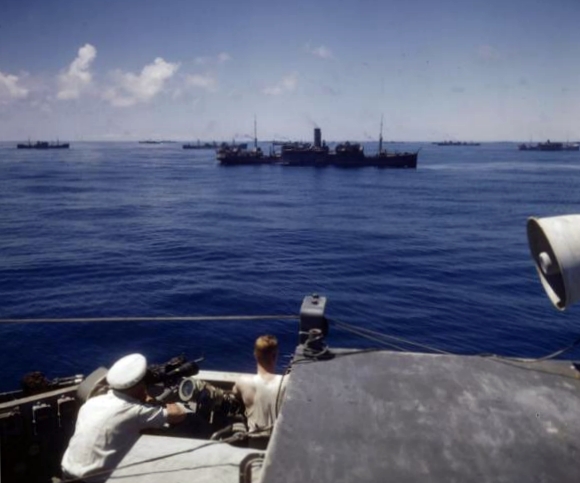
This volume is about the one German service that did not oblige. The Kriegsmarine — the German Navy — ran the most disciplined indicator system of the war, wrapped its Enigma keys in printed tables that denied Bletchley the procedural slips that broke everything else, and fought the longest and most consequential campaign of the conflict, the Battle of the Atlantic. Winston Churchill wrote afterwards that the only thing that ever truly frightened him during the war was the U-boat peril. Britain imported food, fuel, and the means of making war across an ocean infested with submarines, and whether the island could be supplied at all turned, in part, on whether a few dozen people in a wooden hut could read the enemy’s mail.
They could — then for ten terrible months they could not — then they could again, at a price paid in three men’s lives. This is the story of Hut 8, of Alan Turing’s strange and beautiful manual statistics, of the desperate “pinches” of codebooks from sinking ships, and of how reading the U-boats’ signals fitted alongside radar, aircraft, and better tactics to turn the tonnage war. It is also an honest account of the limits of that achievement, because the intelligence war ran in both directions, and the codebreakers were never the only thing that mattered.
11.2 The Hardest Net
Why was naval Enigma so much harder than the Army and Air Force keys? Two reasons, one mechanical and one procedural.
The mechanical reason: the Navy’s standard machine, the M3, drew its three rotors from a stock of eight (the Army and Air Force had only five). Three wheels chosen from eight, in order, gives 336 possible rotor orders against 60 for the five-wheel machines — already more than five times as many starting hypotheses to test on scarce Bombe time, before a single setting was tried. The Navy had also commissioned three extra rotors (numbered VI, VII, and VIII) whose internal wiring Bletchley did not even know at the outbreak of war.
The procedural reason mattered more. To tell a receiving operator how to set up his rotors, every Enigma message carried an indicator — and it was the careless construction of indicators that the Poles, and later Hut 6, had exploited. The Navy gave them nothing to exploit. Its system, governed by a secret booklet called the Kenngruppenbuch (“group book”) and a set of bigram tables (the Doppelbuchstabentauschtafeln, or double-letter substitution tables), buried the message key under two extra layers of book cipher.
In outline: the operator chose trigraphs from the Kenngruppenbuch, set his machine to the day’s basic position (the Grundstellung), enciphered a randomly chosen message-setting through the machine — then substituted the resulting letters again through the printed bigram tables before transmitting. There was no doubled key, no predictable structure, nothing for a permutation theorem to bite on. To read the indicator at all you needed the bigram tables themselves, and those came only two ways: by laborious reconstruction through statistical attack, or by capturing a physical copy. This is why, against the Navy more than anyone, stealing the books became a strategic objective.
11.3 Hut 8 and the Long Game
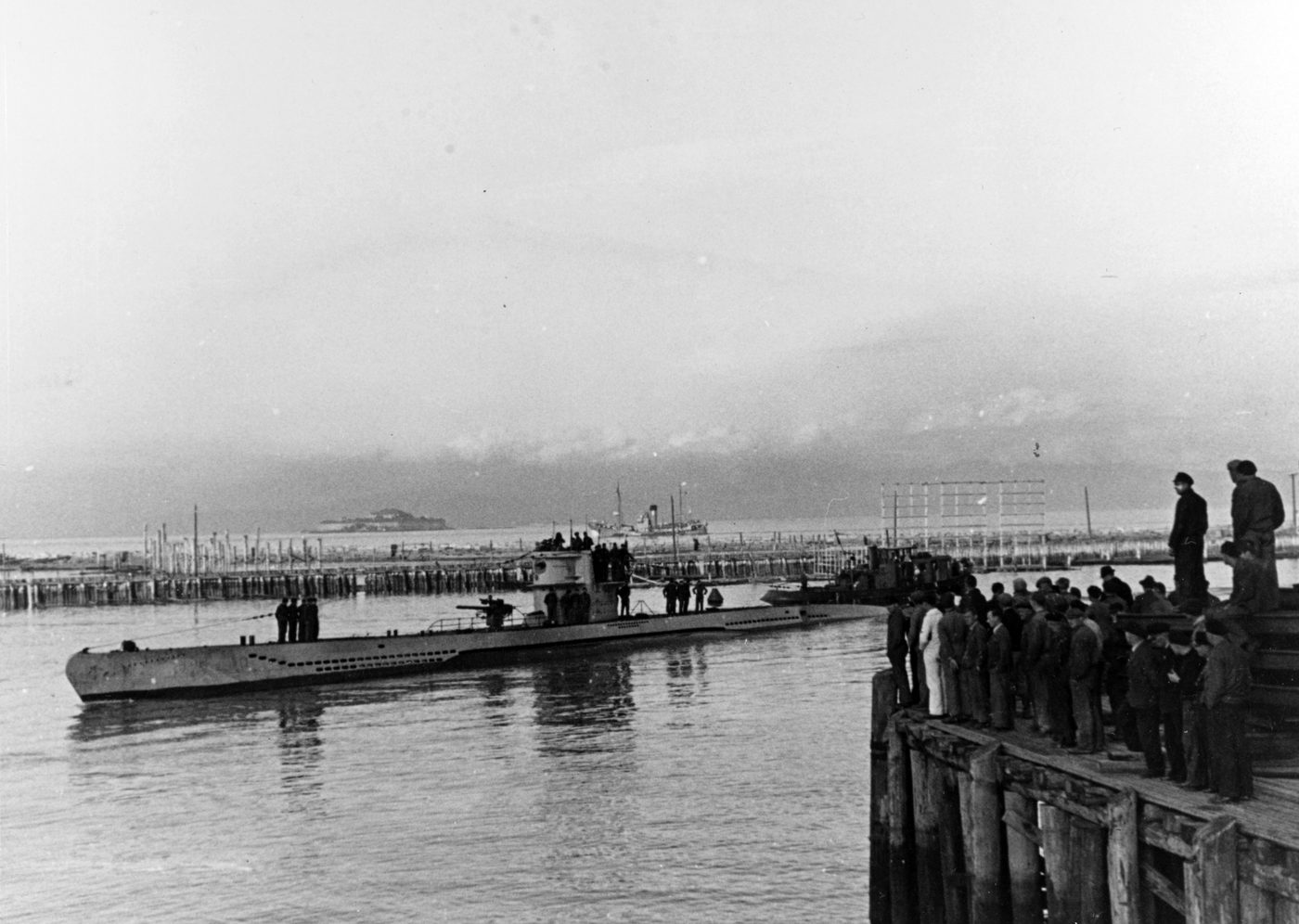
Naval Enigma was the charge of Hut 8, the section Alan Turing led for the first part of the war and which Hugh Alexander — a British chess champion, brilliant and far more practical as an administrator than Turing — ran from 1943. Where Hut 6 (Army and Air Force) could often ride a flood of cribs straight onto the Bombes, Hut 8 faced a narrower, stingier problem. It needed a way to spend its precious Bombe hours wisely: to reduce the field of 336 rotor orders to a handful worth testing, before committing a machine to the search.
The tool that did this was not a machine at all. It was a manual technique of extraordinary subtlety, invented by Turing and worked by hand on long sheets of cardboard. It was called, after the Oxfordshire town where the sheets were printed, Banburismus.
11.4 Banburismus: Reasoning by the Weight of Evidence
Banburismus is one of the most remarkable pieces of applied mathematics of the war, and worth understanding, because it shows Turing thinking like a modern statistician years before the field caught up with him.
The starting observation is this. Two Enigma messages enciphered at nearby rotor positions — overlapping in the way the right-hand rotor steps through the alphabet — are not statistically independent. Natural-language plaintext is not random; some letters and combinations are common, others rare. Lay the ciphertext of two messages alongside each other and slide one against the other, and at the correct relative offset (where both were enciphered through the same sequence of rotor positions) the columns show more coincidences — more places where the same letter appears in both — than chance alone would produce. At a wrong offset, coincidences fall to the random rate of about one in twenty-six.
Turing’s method was to print each message’s ciphertext as a row of holes punched in a long card — the Banbury sheet, up to ten feet wide — then physically stack two sheets and slide them past each other, counting the coincidences at every offset by eye through the punched holes. A peak in the count flagged a likely true overlap. From a set of such overlaps he could begin to reconstruct the relative positions at which different messages had started, and from that deduce constraints on the right-hand rotor’s setting and identity, dramatically shrinking the space the Bombe would have to search.
The genius lay in how Turing weighed the evidence. A single coincidence count is only weak evidence; many counts, combined, can be conclusive. Turing built a rigorous framework for accumulating these scraps — what a statistician today would recognise as sequential Bayesian inference, the updating of a hypothesis as evidence arrives. He even invented his own unit for the weight of evidence, the ban (and its tenth, the deciban), a logarithmic measure of how strongly the data favoured one hypothesis over another. He was, in effect, doing decision-theoretic statistics in a hut, in wartime, to decide where to point a machine — and doing it before the academic literature on sequential analysis had been published.
Banburismus was hard. It demanded intuition, patience, and a feel for the numbers, and only a small elite could do it well. Among the very best was Joan Clarke, the only woman among the section’s senior cryptanalysts and, by Hugh Alexander’s own judgement, one of the finest Banburists in Hut 8 — the second naval key ever broken by the method was hers. Clarke and Turing grew close over the shared work; he arranged their shifts to overlap, and in the spring of 1941 they became briefly engaged, a private matter kept from colleagues and called off later that year, though the two remained close friends until Turing’s death. Hut 8 ran Banburismus continuously for roughly two years, abandoning it only in 1943 — not because it stopped working, but because by then enough Bombes were available that brute search had become cheaper than the cleverness.
11.5 The Pinches
Banburismus could narrow the field, but to read traffic promptly Hut 8 still needed the bigram tables and current key lists — and the surest way to get them was to take them off a German ship. The Royal Navy mounted a series of operations, the “pinches,” to do exactly that, and 1941 was the decisive year.
In May 1941, the Bletchley analyst Harry Hinsley realised that German weather ships, isolated in the North Atlantic, carried the same Enigma key material as the U-boats. On 7 May 1941 a force seized the weather ship München north of Iceland and recovered the Enigma settings for June. When the Germans rotated their tables at mid-month, a second operation took the weather ship Lauenburg off Jan Mayen on 28 June 1941, netting the July keys. The enemy never connected the loss of a small weather trawler to a catastrophic compromise, and Bletchley had quietly bought itself months of current settings.
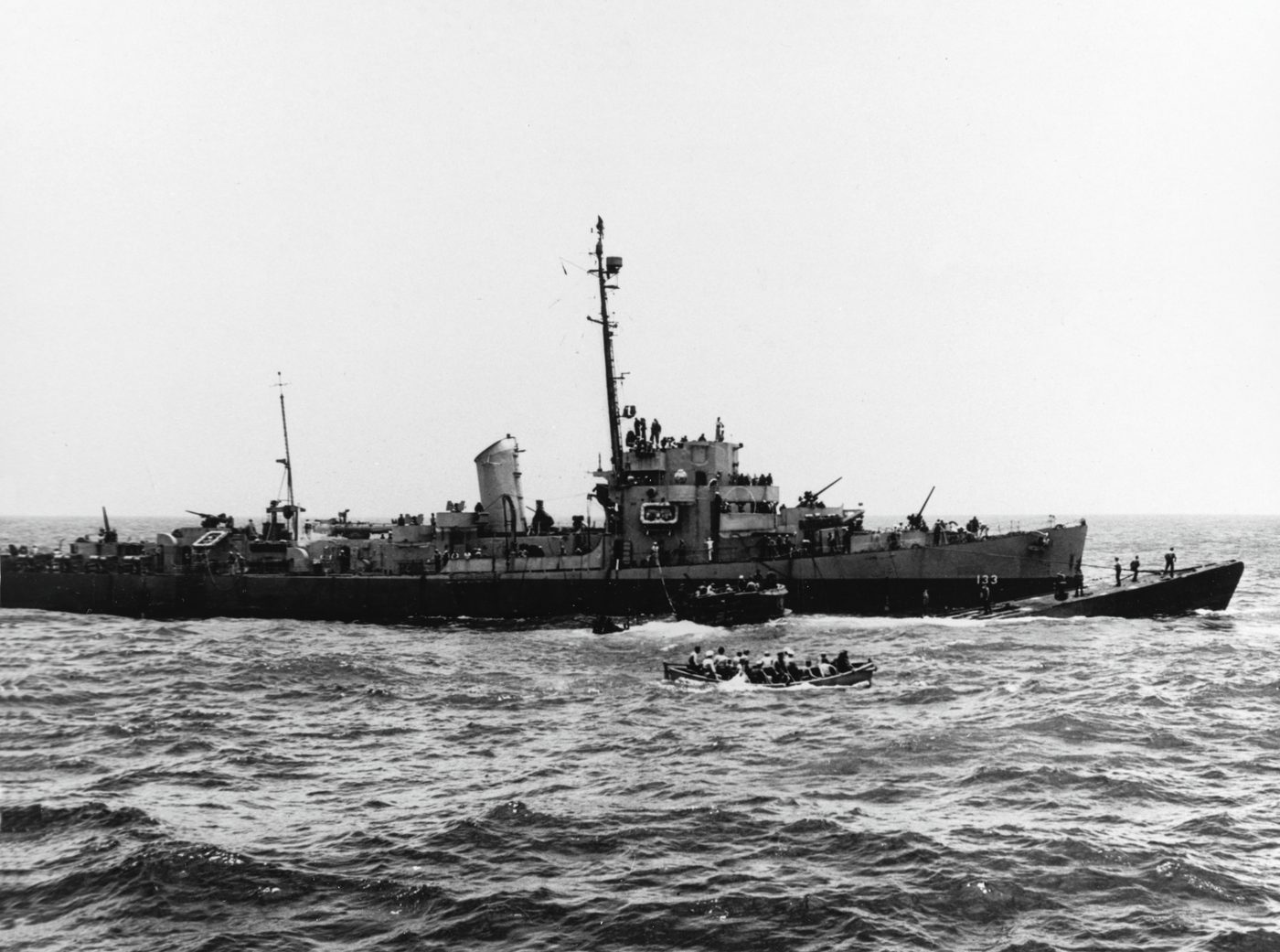
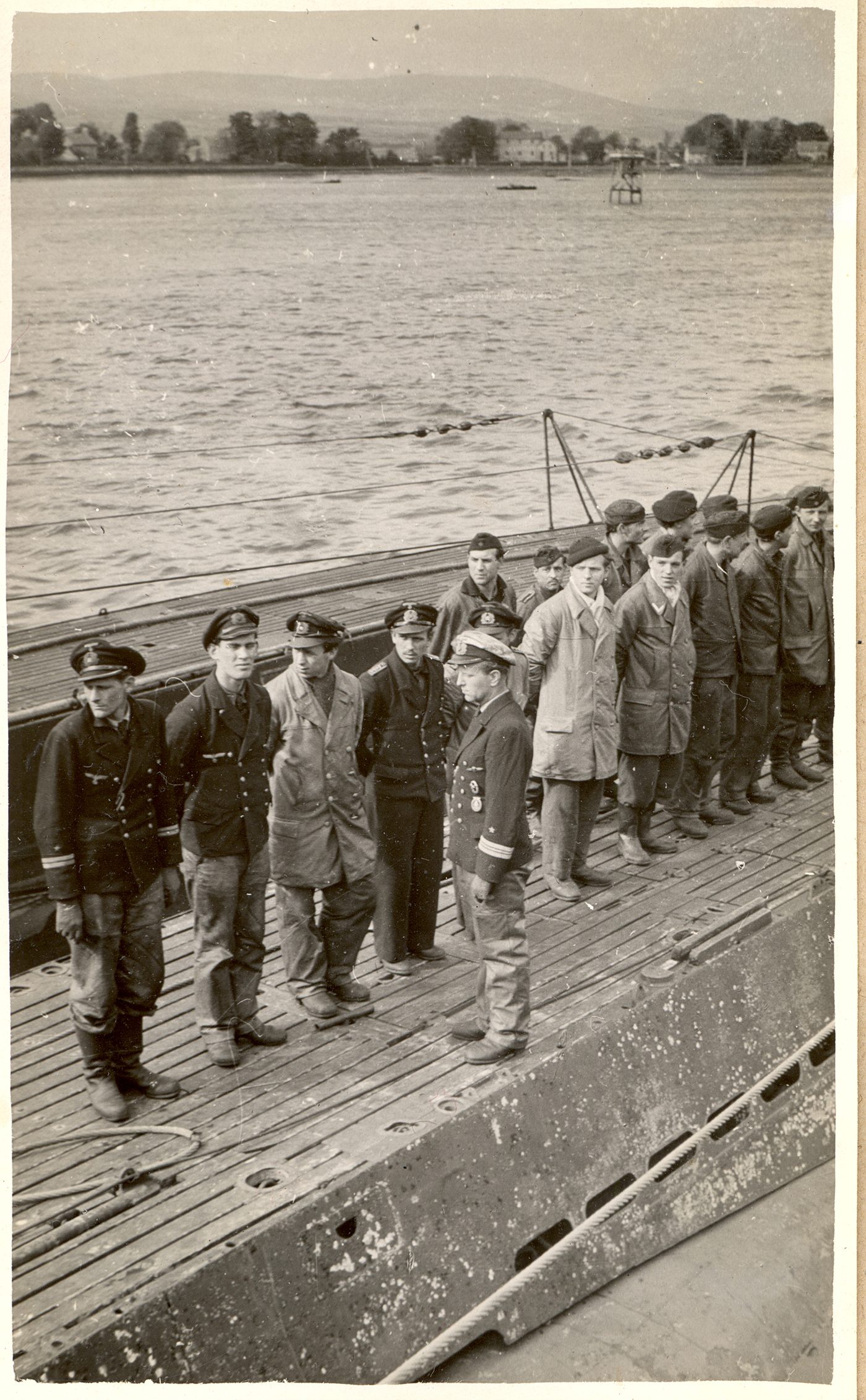
Between those two raids came the most celebrated pinch of all. On 9 May 1941, during a convoy battle, escorts of the 3rd Escort Group depth-charged U-110, commanded by Fritz-Julius Lemp — the same officer who had sunk the liner Athenia on the war’s first day. Forced to the surface and abandoned, the U-boat was not scuttled in time. Commander Joe Baker-Cresswell of HMS Bulldog, seeing the boat wallowing intact, suppressed the instinct to ram and sent across a boarding party. A young sub-lieutenant, David Balme, climbed down into the abandoned hull and stripped it of everything portable — the Enigma machine, its short-signal codebook, charts, and the all-important key documents. The boat sank under tow, which was just as well: its loss had to stay invisible. Operation Primrose, as the capture was named, was kept one of the tightest secrets of the war; King George VI is said to have called the haul “the most important single event in the whole war at sea.” None of the codebooks’ German custodians ever learned they had been read.
These 1941 pinches, together with Banburismus, let Hut 8 read the main Atlantic U-boat key — Bletchley called it Dolphin — with increasing fluency through the second half of 1941. The intelligence flowed to the Admiralty, convoys were routed around the known U-boat patrol lines, and sinkings fell. It was a glimpse of what reading the enemy could do. Then, on the first day of February 1942, the lights went out.
11.6 The Shark Blackout
On 1 February 1942 the Atlantic U-boat arm switched to a new key network, Triton — which Bletchley codenamed Shark — enciphered on a new machine. The M4 was a four-rotor Enigma: a fourth, thin rotor (the Greek wheel, “Beta” or “Gamma”) plus a slim reflector occupied the space of the old three-rotor machine’s single reflector. It was backward-compatible — set the fourth wheel and matching reflector to a neutral position and the M4 behaved exactly like an M3, which is how the Navy ran it during the changeover — but in full four-rotor mode it multiplied the number of possible settings twenty-six-fold. The three-rotor Bombes could not search that space in any useful time.
Hut 8 went blind against Shark for most of 1942 — the bloodiest stretch of the whole Atlantic war. With the United States newly in the war and its eastern seaboard initially undefended and unconvoyed, Dönitz’s boats — now numerous, and coordinated into wolfpacks by radioed orders the Allies could no longer read — sank merchant ships faster than the shipyards could replace them. Through that long blackout the Submarine Tracking Room had to reconstruct U-boat dispositions from radio direction-finding and dead reckoning alone, without the priceless certainty that decrypts had briefly provided. The convoys bled.
Breaking back into Shark required two things: faster Bombes able to handle the fourth rotor, and — more urgently — the Navy’s short-weather-cipher codebook, because U-boats reported weather in a brief auxiliary cipher that, once recovered, would give Hut 8 a reliable crib into the four-rotor traffic. The Bombes were coming. The codebook had to be stolen.
11.7 U-559: Fasson and Grazier
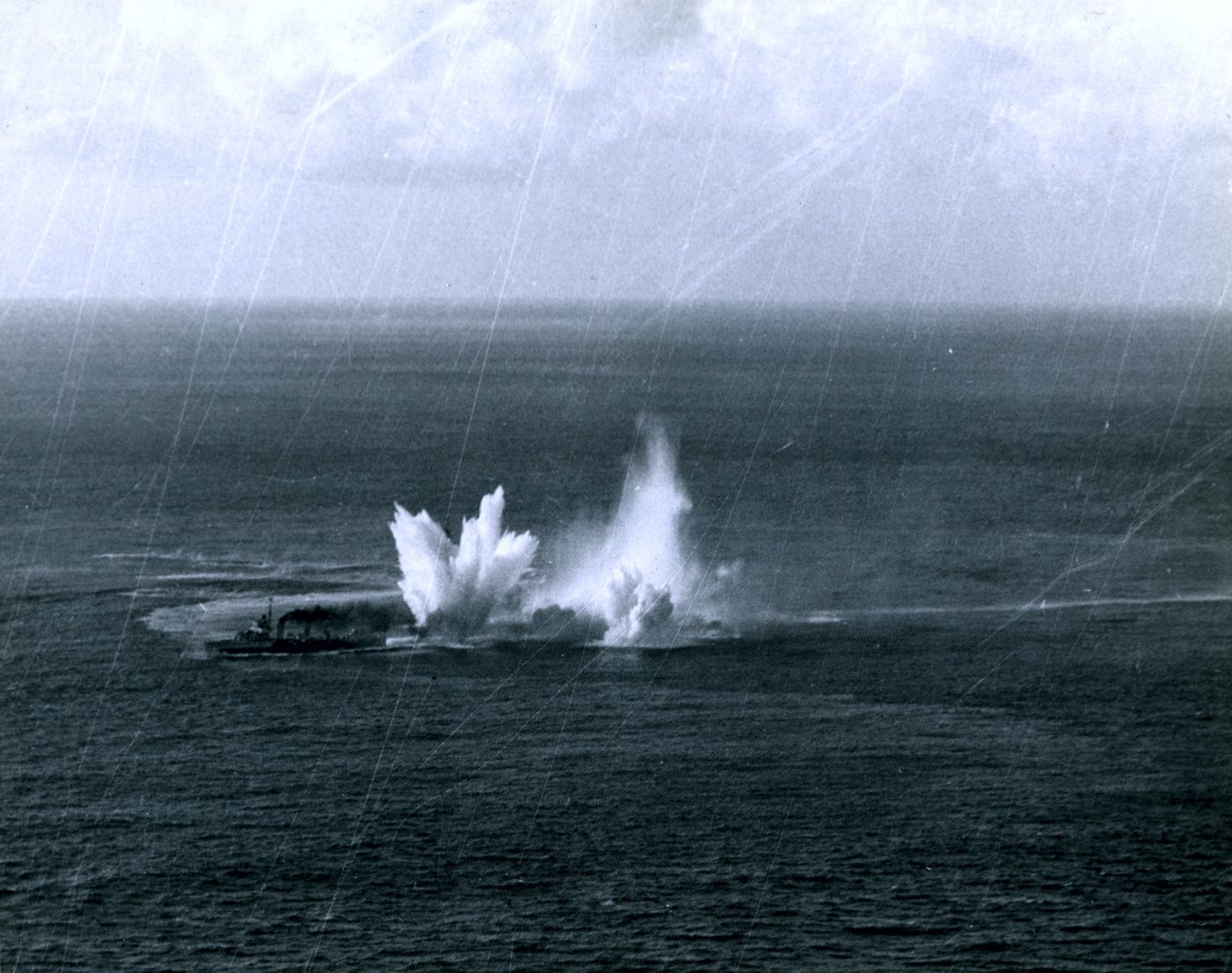
On 30 October 1942, in the eastern Mediterranean north of the Nile Delta, a hunting group of British destroyers ran down U-559 after a long pursuit. Depth-charged to the surface and abandoned, the U-boat sat low in the water, sinking but not yet gone, its seacocks open. From HMS Petard, three men went into the sea and swam to the foundering hull: First Lieutenant Francis Anthony “Tony” Fasson, Able Seaman Colin Grazier, and a sixteen-year-old NAAFI canteen assistant, Tommy Brown, who had lied about his age to enlist.
Fasson and Grazier climbed down into the flooding control room and worked in the dark, water rising around them, prising codebooks and documents free and passing them up to Brown, who ferried them to a boat alongside. Among what they recovered were the short signal book and the short weather cipher — exactly the material Hut 8 needed. Then, without warning, the U-boat lurched and went down, carrying Fasson and Grazier under with it. Their bodies were never recovered. Tommy Brown, on the casing at that moment, was thrown clear and survived.
Fasson and Grazier were each awarded the George Cross, posthumously — Britain’s highest award for gallantry not in the face of the enemy. Brown received the George Medal; it later emerged he had lied about his age, and he was quietly discharged, only to die in a house fire in 1945 trying to save his sister. The codebooks they died for reached Bletchley within weeks. Combined with the new four-rotor Bombes coming into service, the short weather cipher gave Hut 8 its way back in: Shark was broken again on 13 December 1942. The blackout was over. By the most-cited estimate, reading Shark in December 1942 and January 1943 alone may have spared between 500,000 and 750,000 tons of Allied shipping. Two men drowned in a sinking submarine to make that possible, and almost no one knew their names for decades. We name them here: Tony Fasson and Colin Grazier.
11.8 The Tonnage War and the Tracking Room
It helps to be clear about what the U-boat war actually was. Dönitz fought a tonnage war — a war of arithmetic. He did not need to win battles; he needed to sink merchant ships faster than the Allies could build them, until Britain’s import economy collapsed. The convoy system was the Allied answer: gather merchantmen into escorted groups, because a convoy is paradoxically harder to find in a vast ocean than the same ships scattered, and far better defended when found.
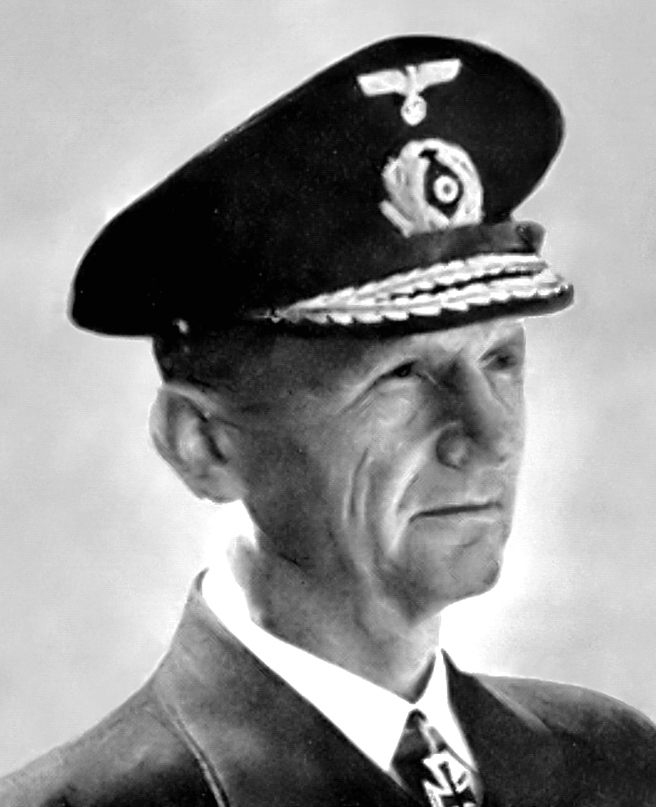
Intelligence entered this arithmetic through the Admiralty’s Operational Intelligence Centre and, at its heart, the Submarine Tracking Room run by Rodger Winn — a barrister, not a career sailor, with a polio-shortened leg and a courtroom-trained gift for reading an opponent’s mind. Winn fused every source he had — Ultra decrypts when available, radio direction-finding, sighting reports, and his own steeped intuition about how Dönitz thought — into a running picture of where the wolfpacks lay. The crucial point is what he did with it. The decisive use of Ultra in the Atlantic was usually not to sink U-boats but to avoid them: Winn’s “evasive routing” steered whole convoys around the patrol lines, so the wolfpack waited for ships that never came. A convoy that is never found loses nothing. Across the war this quiet redirection saved more tonnage than any number of depth charges.
11.9 The Turning, Spring 1943
The climax came in the spring of 1943, and it was a near-run thing. In March 1943 the U-boats enjoyed their last great slaughter — over half a million tons sunk, the great convoy battles around HX-229 and SC-122 mauling the escorts — and for a few weeks the Admiralty privately doubted whether the convoy system could survive. Then the balance tipped so sharply that Dönitz withdrew his boats from the North Atlantic altogether.
What turned it was not any single thing, which is precisely the point. Ultra was reading Shark again and routing convoys away. But Ultra now arrived alongside a suite of other advances that had matured at the same moment:
- HF/DF, “Huff-Duff” — shipborne high-frequency direction-finding sets that pinpointed a U-boat the instant it transmitted, letting an escort run down the bearing and attack before the pack could gather. Crucially, this worked even when the signals could not be decrypted.
- Escort carriers and support groups — small aircraft carriers and dedicated hunter-killer groups that could be sent toward a threatened convoy, rather than tied to one, giving the escorts the offensive punch to kill attackers.
- Very-long-range aircraft — B-24 Liberators with the range to close the mid-Atlantic air gap, the “black pit” south of Greenland where convoys had previously sailed beyond the reach of land-based air cover. Air cover, more than anything, forced U-boats under and broke up their attacks.
- Better radar, weapons, and training — centimetric (10 cm) radar the German radar-warning receivers could not detect, ahead-throwing weapons like Hedgehog, and escort crews hardened by three years of war.
The emblem of the turn was convoy ONS-5 in early May 1943: a slow westbound convoy attacked by a pack of around thirty U-boats. It lost thirteen merchant ships — but the escorts and aircraft sank six U-boats in return, a previously unthinkable exchange rate. Days later, after losing dozens of boats across the month for diminishing returns, Dönitz conceded the North Atlantic. He called it “Black May.” The convoys had become traps.
11.10 The War That Ran Both Ways
Two honest caveats keep this story from becoming a fable, and both deserve emphasis.
First, the Germans never concluded that Enigma was broken. When their operations went wrong — convoys vanishing from ambush, wolfpacks finding empty sea — they investigated but consistently reached the wrong verdict. They suspected Allied radar, traitors, spies in the French ports, agents in their own command. They trusted the mathematics of Enigma’s astronomical key-space too completely to believe a machine cipher could be read at scale, and they reorganised, added the fourth rotor, tightened procedures — but always for the wrong reasons, and never enough to shut Bletchley out for good. This misplaced confidence was itself a strategic gift to the Allies, and it is the recurring tragedy of the Enigma story: a fine machine undone less by its mathematics than by the conviction that the mathematics made it unbreakable.
Second, and less comfortably, the intelligence war ran in both directions. The German naval cryptanalytic service, the B-Dienst, was very good — and for long stretches it was reading the Allies. It broke into British Naval Cypher No. 3, the cipher used for Anglo-American-Canadian convoy communications (the Germans aptly nicknamed it the “convoy cipher”), and from 1942 into mid-1943 read a large share of its traffic — at the peak, signals decrypted ten to twenty hours ahead of the events they described. Through that window the B-Dienst could hand Dönitz the convoys’ own routing instructions, helping his wolfpacks find the very ships the Submarine Tracking Room was trying to route them away from. The savage convoy battles of March 1943 were fought, in part, by two sides each reading fragments of the other’s mail. The Allied compromise was closed only when Naval Cipher No. 5 replaced the broken system on 10 June 1943 — after the tide had already turned.
This is why Ultra must be kept in proportion. It was a decisive factor — by some estimates it shortened the war and saved enormous tonnage — but it was one factor woven among many: convoy discipline, HF/DF, air power, escort tactics, shipbuilding capacity, and the simple, grinding courage of merchant seamen who sailed knowing the odds. Reading Shark did not win the Battle of the Atlantic by itself. It made every other Allied advantage sharper, and it bought the time in which those advantages could be brought to bear.
11.11 What It Cost, and What It Bought
The naval chapter is the Enigma story at its highest stakes and its most human. The cleverness is here in full — Turing’s Banburismus is arguably the most beautiful single idea in the whole codebreaking effort, decision-theoretic statistics improvised in a hut to husband a machine’s scarce hours. But unlike the Army and Air Force keys, naval Enigma could not be won by cleverness alone. It demanded that men sail into the North Atlantic and the Mediterranean and physically take the books off sinking enemy ships, and at least twice — at U-110 and at U-559 — it demanded the ultimate price be paid for paper that the wider world would not be allowed to know existed for thirty years.
When you next read that “Bletchley Park broke the U-boat codes,” hold two images together. One is Turing sliding Banbury sheets across a table, counting coincidences by eye. The other is Tony Fasson and Colin Grazier going down into the dark of a flooding hull to hand a codebook up through the hatch, and not coming back. Both are how Shark was broken. Neither would have sufficed without the other.
Next — Volume 12: Ultra — Using the Secret.
Comments (0)