The Codebreakers · Volume 3
The Codebreakers — Volume 3 — 1930: Rowlett, Sinkov, Kullback and Hurt — Building the Signal Intelligence Service
How the U.S. Army replaced Yardley's Black Chamber with four young recruits and one teacher; what Friedman taught them in the vault of the Munitions Building, in what order and from which texts; how the Army's correspondence courses and officers' school spread the method; and what became of the four men who learned it
3.1 About This Volume
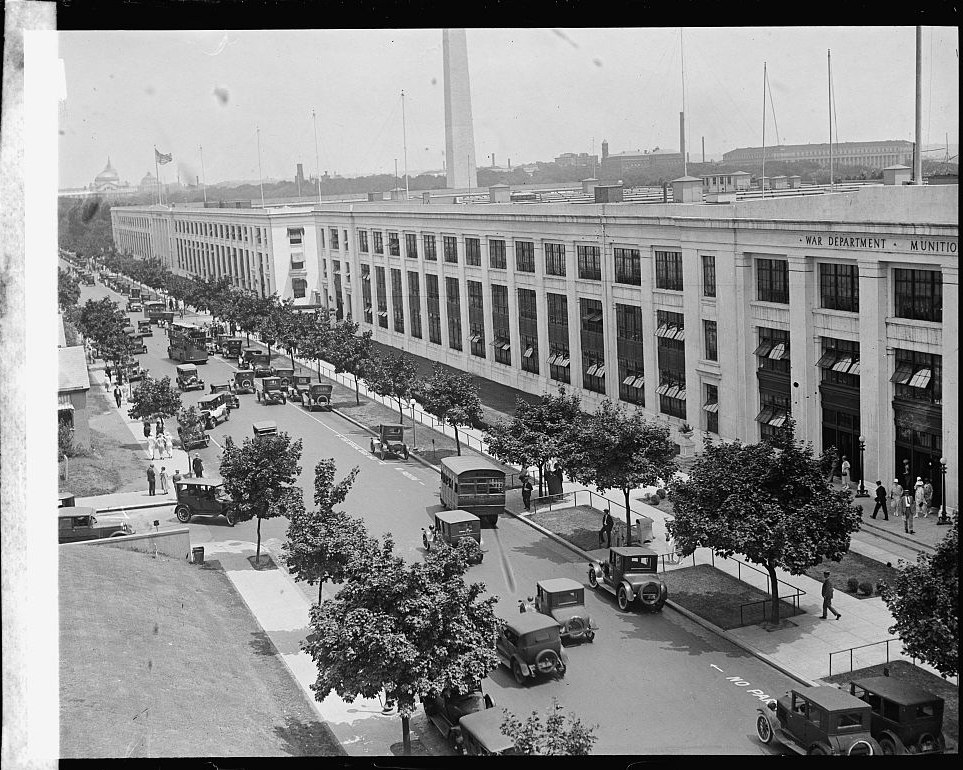
In April 1930 the United States Army had one cryptanalyst in Washington, William Friedman. Ten years later it had a team that could reconstruct a Japanese cipher machine from intercepts alone. Most of that team’s skill was manufactured, deliberately, between 1930 and 1935, by a training programme that Friedman designed for four young men he had hired at the bottom of the Depression. This volume is about that programme: who the four were and why they were chosen, what Friedman made them study and in what order, how the training was later written into textbooks and correspondence courses for the whole Army, and what became of the four.
The volume does not retell the break of RED, the Japanese machine the four broke in 1936, which has its own volume in the PURPLE unit (Volume 3 there). It is about how they became people who could break it.
3.2 The Opening
The Army’s codebreaking organisation existed because the State Department’s had been abolished. Until 1929, the State Department and the Army’s intelligence division (G-2) had jointly paid for Herbert Yardley’s Cipher Bureau in New York, which had read Japanese diplomatic traffic since 1920. When Henry Stimson became Secretary of State in 1929 and learned what it did, he closed it. G-2, Rowlett later recorded, “viewing Stimson’s order as a major disaster to the American intelligence effort”, proposed that a code-breaking operation be set up in the War Department instead, and offered the Chief Signal Officer the money it had been giving the State Department (Hannah, “Frank B. Rowlett — A Personal Profile”, p. 9; Library copy).
Two decisions shaped what followed. The first was where to put the new unit. It was placed in the Office of the Chief Signal Officer rather than in G-2, so that “if its existence did become known to the Secretary of State, its continuation could be justified as being part of the Chief Signal Officer’s responsibilities to design, compile, store, and issue all cryptographic materials required by the War Department”. The second was what kind of people to hire. Yardley’s staff had dispersed; there was no pool of trained cryptanalysts to recruit. The money “would be used to hire a small group of young men who would be trained in cryptology, and who hopefully would become the cadre of an effective cryptanalytic organization.” There was enough for four junior cryptanalysts and one clerk (Hannah, pp. 8–9).
The new Signal Intelligence Service (SIS) therefore began not as an operational bureau but as a school with one teacher. Its mission, Friedman told the recruits, was twofold: first and more important, “to insure that U.S. military codes and ciphers were the best and most secure that could be devised”; second, “to undertake the peacetime interception and analysis of foreign code and cipher communications for the production of intelligence”, and in war “to intercept and solve enemy messages at all levels.”
3.3 Choosing the Four
Friedman’s specification for his recruits was unusual: mathematics and a foreign language. He wanted the four to cover, between them, French, German, Spanish and Japanese, so that the unit could work on the traffic of the countries that mattered without depending on outside translators (McIntire, “Give to Ferner”, pp. 2–3; Library copy). The Civil Service Commission set an examination for “junior mathematicians”, and Friedman picked from the top of the list. Callimahos recorded that Friedman “picked the three persons from the civil service list who had made the highest scores on the mathematics examination” (The Friedman Legacy, p. 192, note 6; Library copy).
The first year’s hires, as Samuel Snyder later tabulated them from the records (Snyder, “John Hurt — A Translator Extraordinaire”, p. 16; Library copy):
Table 1 — The first year's hires, as Samuel Snyder later tabulated them from the records ([Snyder, "John Hurt — A Translator Extraordinaire"](https://media.defense.gov/2021/Jun/30/2002752880/-1/-1/0/TRANSLATOR.PDF), p. 16; [Library copy](/library/john-hurt-a-translator-extraordinaire-samuel-s-snyder-1970))
| Reported | Name | Title |
|---|---|---|
| 1 March 1930 | Annie Louise Newkirk | Cryptographic clerk (Friedman’s secretary) |
| 1 April 1930 | Frank B. Rowlett | Junior cryptanalyst |
| 10 April 1930 | Abraham Sinkov | Junior cryptanalyst |
| 21 April 1930 | Solomon Kullback | Junior cryptanalyst |
| 13 May 1930 | John B. Hurt | Cryptanalyst aide |
| 2 September 1930 | H. Lawrence Clark | Cryptographic clerk (secret inks) |
3.3.1 Frank Rowlett
Rowlett was born on 2 May 1908 at Rose Hill, in the far south-west corner of Virginia, and took a B.A. in mathematics and chemistry at Emory and Henry College. He was teaching school in Franklin County, Virginia, with his wife when he took the examination; the $2,000 salary was about $500 more than the two of them together earned. His language was German. He reported on 1 April 1930, and liked to point out that it was All Fools’ Day (NSA Hall of Honor, Frank B. Rowlett; Hannah, pp. 5–6).
3.3.2 Abraham Sinkov and Solomon Kullback
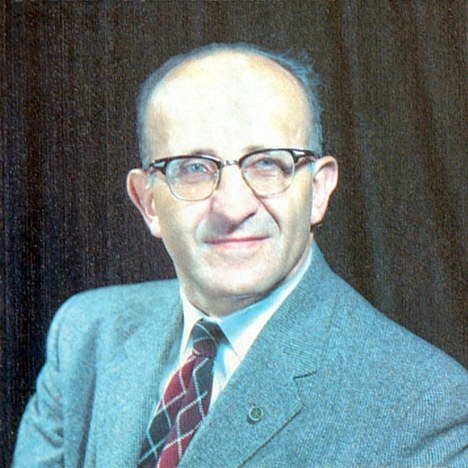
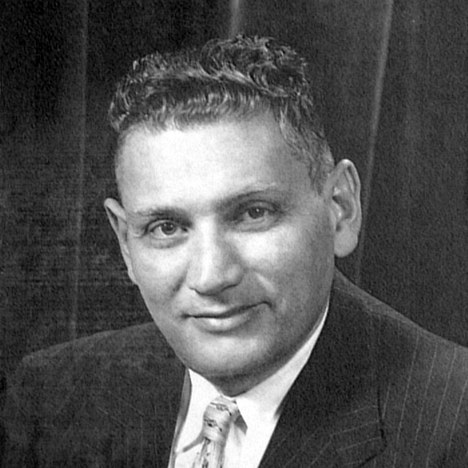
Sinkov and Kullback were old friends. Sinkov, the son of Russian immigrants, was born in Philadelphia in 1907 and raised in Brooklyn; Kullback was born in Brooklyn on 3 April 1907. Both went to Boys High School, then a selective school, and both to City College of New York; both went back to teach in New York schools and both disliked it. Boys High was running three sessions a day, and new teachers got the worst shifts. Sinkov showed Kullback a civil-service flyer for junior mathematicians at $2,000 a year; both sat the examination, both placed high, and both received “mysterious letters from Washington asking about their knowledge of foreign languages”. Sinkov offered French and Kullback Spanish. “Although neither was quite certain what a cryptanalyst did, they accepted” (NSA Hall of Honor, Abraham Sinkov; Solomon Kullback).
3.3.3 John Hurt
The fourth place was the hardest to fill. The Civil Service Commission, Military Intelligence and the State Department all failed to find a mathematician who knew Japanese. Through Congressman Schaeffer of Virginia, Friedman heard of the congressman’s nephew, John B. Hurt of Wytheville, Virginia, who had studied Latin and French at William and Mary, Roanoke College and the University of Virginia between 1921 and 1928 — without taking a degree, because he had failed a mathematics requirement — and who had learned Japanese from a neighbour who had been a missionary in Japan, in exchange for vegetables from the family garden, and then from a Japanese college roommate. The Army major who interviewed him told Friedman he had never met an American so proficient in the language: “He knows Japanese much better than I or, for that matter, anyone else in G-2.” Hurt had never set foot in Japan. He was hired as a “cryptanalyst aide” on 13 May 1930 and remained the SIS’s — and then NSA’s — senior Japanese translator until he retired in January 1963 (Hannah, p. 6; Snyder, pp. 16–17).
3.4 The Training Regime
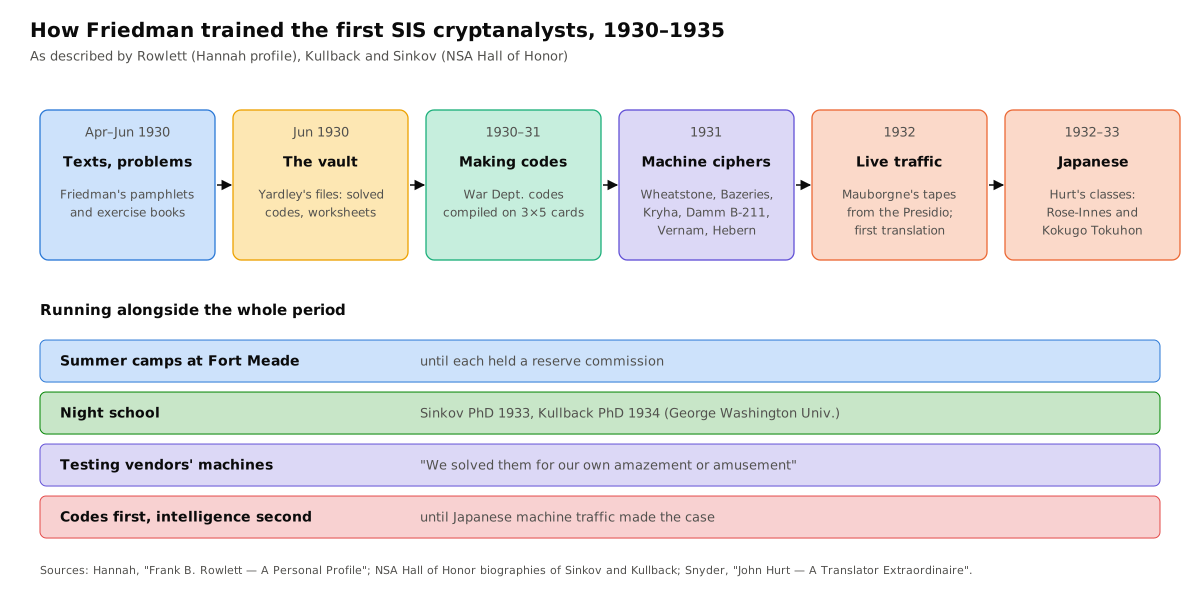
What Friedman did with the four is the heart of this volume. The sources — Rowlett’s recollections, Kullback’s and Sinkov’s as recorded by the NSA historian, and Snyder’s tribute to Hurt — agree on its outline: about two years of study before any operational work, built around Friedman’s own texts and graded problems, moving from the simplest systems to machines, and interleaved with the practical jobs of code-making.
3.4.1 Texts and problems
From the first week, Rowlett recalled, “we continued our cryptologic training under Friedman, using mainly his pamphlets and exercise books” (Hannah, p. 6). The pamphlets were the Riverbank series of 1917–1922 and Friedman’s Army texts, beginning with Elements of Cryptanalysis (1923); the exercise books were problems Friedman had set, many of them drawn from real First World War traffic. Sinkov described Friedman’s teaching style in two sentences: “His teaching was such that we developed on our own. He just looked in from time to time to see how we were doing” (Chiles, in The Friedman Legacy, p. 200). The method was to give a student a problem just beyond his reach, and enough of a lead to get started.
The training was also frugal. “So austere was the Army budget that we sometimes had to supply our own pencils and paper,” Rowlett wrote. “We bought penny pencils at the dime store, and we brought in scratch paper and tablets from home.” Kullback wrote out intercepted messages on the backs of old Signal Corps weather reports to save paper. Once, when funds ran out completely, the staff took a month’s leave without pay (Hannah, pp. 6, 11).
3.4.2 The vault
The most memorable lesson came in late June 1930. Friedman led Rowlett, Sinkov and Kullback, without explanation, to Room 2742 in the seventh wing of the Munitions Building, opened a combination lock and a second steel door, lit a match to find the light cord, switched on the fans and said: “Welcome, gentlemen, to the secret archives of the American Black Chamber!” The room held the files of Yardley’s bureau, brought to Washington when it closed. Rowlett remembered the three of them losing all track of time:
Here were the secret records dealing with the American code-breaking activity sponsored by the State Department and the Director of Military Intelligence; here were copies of the secret codes and ciphers, both purloined and cryptanalytically recovered, of many of the great nations of the world; here were the worksheets used in breaking Japanese diplomatic codes; here were the translations of Japanese messages relating to the negotiations of the Washington Naval Conference …; here were the decipherments of the German field ciphers of 1917 and 1918, with descriptions of how they were broken; here were hundreds of copies of unsolved code messages from every important capital of the world… King Solomon’s mines could have offered no greater treasures for us.
— Rowlett, in Hannah, pp. 7–8
The vault was a library of worked examples. Its first use, Friedman told them, was to find everything it contained on German Army field ciphers and Japanese diplomatic codes — the two problems the Army thought most likely to matter in a future war.
3.4.3 Making codes
Breaking was only half the job, and officially the lesser half. Once the training was far enough along, the three junior cryptanalysts were put to compiling codes for the War Department, and Friedman also detailed them, for weeks at a time, to the War Department code room to cover a shortage of clerks. Rowlett, who could type, did night shifts there and was dismayed by what he saw: most messages of every classification went out in the old War Department Telegraph Code of about 50,000 groups, “an inherently insecure procedure” (Hannah, p. 9).
Code-making itself was manual and comic. With no machinery for it, the method for a 50,000-word code was to prepare two sets of 3-by-5 cards, one for encoding and one for decoding, and randomise them by playing “52 pickup”: the cryptologists locked themselves in the vault and threw handfuls of cards into the air. A major from another office who saw them asked Friedman about it and was assured it was purposeful. “I thought this code business had finally gotten to them,” he said (NSA Hall of Honor, Kullback). The anecdote has a serious point: it was the first time the trainees confronted the problem of generating randomness on demand — the same problem that, in 1934–35, would drive Rowlett to invent the stepping maze of SIGABA (Volume 9).
3.4.4 Machines
Early in 1931 the training turned to cipher machines, in a deliberate sequence of increasing difficulty: a modified version of the Wheatstone cipher device; the Bazeries “multiplex” cylinder, “which we solved with relative ease”; the German Kryha machine, sold on the claim that its number of possible arrangements made it humanly impossible to solve, which they solved “in fairly short order”; Arvid Damm’s B-211, a handsome portable machine that turned out to be “nothing more than a fractionating system easily duplicated on paper”; the AT&T teleprinter cipher devised by Gilbert Vernam, whose weakness Friedman had already exploited and wanted them to rediscover; and finally the Hebern rotor machine, using the same test messages the Navy had given Friedman in 1924. That last one defeated them until Friedman “explained the underlying statistical concepts” (Hannah, pp. 10–11).
Two things about this curriculum stand out. The trainees learned to build paper models of machines and check them against the real thing — for the B-211 they enciphered a short message on both and found the cipher texts identical — a habit that led directly to the paper and stepping-switch analogs of RED and PURPLE. And they learned that every machine sold as unbreakable had a weakness. “We solved them for our own amazement or amusement,” Kullback said; the exercise kept the government from adopting insecure machines, and “these three never found one they couldn’t solve.”
3.4.5 Japanese
In 1932 Friedman announced that they were ready to begin the intelligence mission, with Japanese diplomatic communications first. Traffic came from the Army’s new intercept service and from an unofficial source: Colonel Joseph Mauborgne, the Signal Officer at the Presidio of San Francisco, had set up a receiver in the basement of his quarters and was copying the San Francisco–Tokyo commercial circuit himself. He mailed his undulator tapes to Washington, where Rowlett read out the Morse and Kullback wrote it down. Working from the Black Chamber’s old solutions, they soon produced their first current translation, in a modified form of the Japanese “LA” code — an event that caused the Chief Signal Officer and G-2 “to take renewed interest in our work” (Hannah, p. 11).
From September 1932 Hurt taught the three of them Japanese for a few hours a week, from the Rose-Innes conversational text and the national school readers, the Kokugo Tokuhon, which Rowlett found far more useful for cryptanalysis. Hurt was ill with tuberculosis from May 1933 and his replacement could not be paid for long; but, Rowlett noted, “by that time we were learning more from code recovery than from the language classes, for the messages gave us the vocabulary actually used by Japanese diplomats” (Hannah, p. 12). When Hurt returned, Friedman had him concentrate on translation and leave the cryptanalysis to the others — the beginning of a division of labour between analysts and linguists that every later American organisation kept.
The training produced its first independent discovery in the same period. One afternoon in the vault Kullback started pounding the table: “That’s it! That’s what they have done! It’s an English monoalphabet!” He had noticed that the letter patterns of three cipher groups could only be “The Japanese Government” — and that a whole class of Japanese messages was enciphered in the simplest substitution of all, vowels for vowels and consonants for consonants, in Japanese as well as English. It was a stroke of luck that he had spotted the one message with English plain text, and an illustration of a principle the school taught relentlessly: look for the repeated pattern, test the hypothesis on the next message, and do not assume sophistication where carelessness will explain the facts (Hannah, pp. 12–13).
3.4.6 Officers, doctorates and summer camps
Friedman did not want his civilians to stay narrow. He encouraged them to take reserve commissions — “for several summers running, the three SIS cryptanalysts attended training camps at Fort Meade until they received commissions as reserve officers” — and to study at night. Sinkov took a Ph.D. in mathematics at George Washington University in 1933, and Kullback in 1934. The commissions mattered in 1941, when the Army needed officers who understood codebreaking; the doctorates mattered after the war, when both men moved into senior scientific posts (NSA Hall of Honor, Sinkov and Kullback).
3.5 From a Class of Four to an Army’s Curriculum
What Friedman taught four people in a vault he then wrote down for thousands. The written curriculum came in three layers.
3.5.1 The Signal Intelligence School
The SIS ran a small school for Regular Army officers. Laurance Safford, the Navy’s equivalent of Friedman, judged it the Army’s “greatest triumph … at this time of stringency and uncertainty”: “the establishment under the Signal Intelligence Service of a training school for officers, which grew from a student body of one in 1931 to about a dozen ten years later” (Safford, SRH-149, p. 10). The numbers were tiny. The first Regular Army officer assigned full-time to the SIS, Lieutenant Mark Rhoads, arrived at the end of 1930; he was still at Arlington Hall in 1946, when he received a commendation alongside the civilians of the PURPLE team (Volume 5).
3.5.2 The Army Extension Courses
The second layer reached far more people. The Army Extension Courses were the Army’s correspondence-study programme for reserve and National Guard officers, and Friedman wrote cryptographic texts for them. By 1935 the Government Printing Office was printing two of them, prepared under the Chief Signal Officer for the Army Extension Courses: Special Text No. 165, Elementary Military Cryptography, and Special Text No. 166, Advanced Military Cryptography. They taught officers how cryptographic systems work and how to use, and not misuse, the Army’s own — the communications-security half of the profession. A reserve officer anywhere in the country could take them by post.
3.5.3 Military Cryptanalysis
The third layer was the core professional text. Between 1938 and 1941 the Office of the Chief Signal Officer issued Friedman’s four-part Military Cryptanalysis: Part I on monoalphabetic substitution (1938); Part II on the simpler polyalphabetic systems; Part III, Simpler Varieties of Aperiodic Substitution Systems (1939); and Part IV, Transposition and Fractionating Systems (1941), by “William F. Friedman, Principal Cryptanalyst, Signal Intelligence Service”. Each part refers back to the paragraphs of the earlier ones and to the Extension Course texts, so that the whole forms a single graded course. Alongside them, Solomon Kullback’s Statistical Methods in Cryptanalysis (revised edition, 1938) gave the mathematical underpinning — the statistical tests worked in Volume 6.
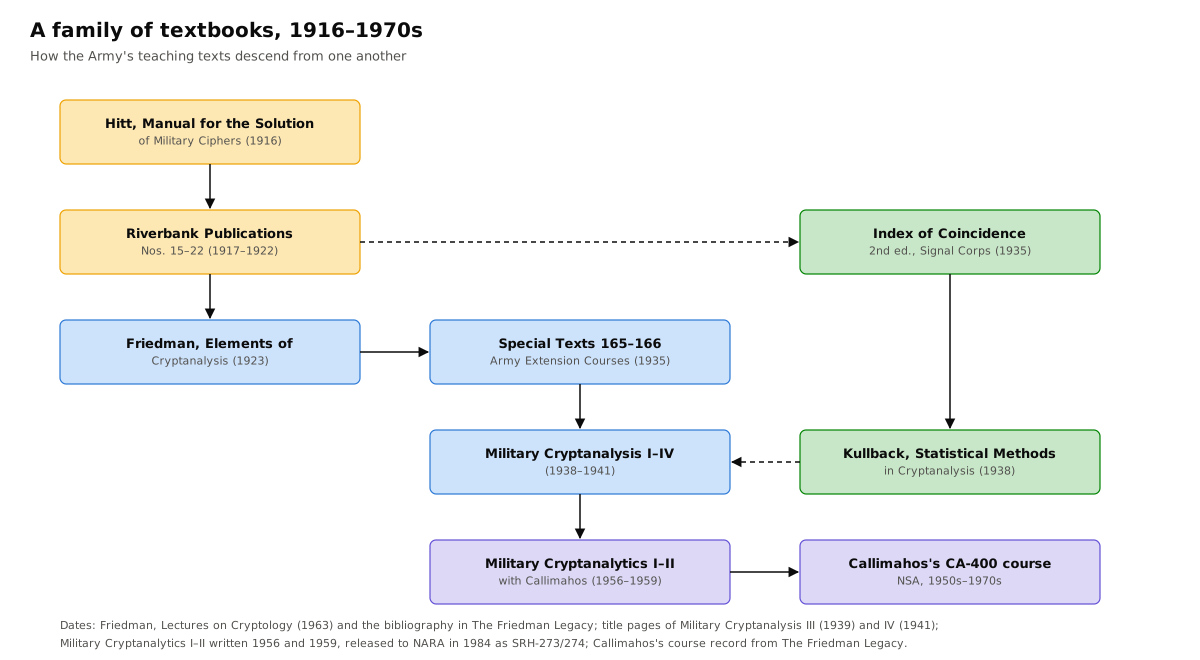
These texts were what the wartime army learned from. Lambros Callimahos — a concert flautist who enlisted in February 1941 and became Friedman’s closest collaborator — was one of the original twenty-eight students in the Army’s Cryptographic School at Fort Monmouth, New Jersey, and remembered his delight “when I found that Mr. Friedman’s texts on military cryptanalysis were to be our Old and New Testaments combined”. By 1942 the school had moved to Vint Hill Farms Station in Virginia, and Callimahos, now its chief instructor in cryptanalytics, had “several hundred students” (Callimahos, in The Friedman Legacy, p. 185; Library copy). After the war Friedman and Callimahos expanded Military Cryptanalysis into Military Cryptanalytics, written in 1956 and 1959 and used for decades at NSA; Volume 12 follows them into the present.
3.6 Growth, Slowly
The SIS grew very little for six years. Seven people formed its centre from 1930 to 1936. In early 1936 Sinkov was sent to the Panama Canal Zone, where he established the Army’s first permanent intercept site outside the continental United States and trained its people; Kullback soon left for a similar tour in Hawaii. Sinkov’s departure gave Friedman his first chance in six years to hire another junior cryptanalyst, and on 1 July 1936 Robert Ferner, a 21-year-old physics graduate from Alliance, Ohio, reported for duty at the same $2,000 the first three had been paid. Samuel Snyder arrived in August 1936; by his count the staff then numbered nine (McIntire, pp. 3, 6; Snyder, p. 16). By 1939 it was about nineteen, and at the time of Pearl Harbor the Army’s whole Signal Intelligence Service numbered 331, military and civilian (Wilcox, Sharing the Burden, p. 3; Library copy).
The second generation was trained by the first. Rowlett said later that he and his colleagues “passed along their training to the new hires”, and Hurt ran in-house Japanese classes that Ferner attended (McIntire, p. 6). Friedman added new material from current problems: the German ADFGVX cipher of 1918, for instance, was in the curriculum, and in 1941 it gave the SIS a model for attacking a new Japanese transposed code (Volume 5). The school was now reproducing itself.
3.6.1 The RED test
The first examination of the whole system came in 1935–36, when the Army ordered Friedman’s group to concentrate on the Japanese Foreign Ministry’s first cipher machine, which they named RED. Rowlett and Kullback, working with nothing but intercepts, “unravelled the keying system and then the machine pattern”; Hurt translated. “With a solid background now in machine systems,” Kullback said later, “it wasn’t very difficult really for us to work it out” (NSA Hall of Honor, Kullback). The technical story is in the PURPLE unit’s Volume 3. The lesson for this volume is in Kullback’s phrase “a solid background”: five years of study had made a hard problem look easy.
3.7 What Became of the Four
The four men hired in 1930 spent their careers in the institutions their training created.
Frank Rowlett led the SIS’s Japanese work through RED and PURPLE (Volume 5), conceived the stepping maze that made SIGABA secure (Volume 9), and in November 1942 became head of Arlington Hall’s training programme. He was chief of the General Cryptanalytic Branch in 1943–45, chief of the Intelligence Division in 1945–47, and technical director of operations at the Armed Forces Security Agency from 1949 to 1952. After a disagreement with NSA’s first director, General Ralph Canine, he spent 1952–58 at the CIA; he returned to NSA as special assistant to the Director, and in 1965 became commandant of the National Cryptologic School, the agency’s training college. He retired in 1966. In 1964 Congress awarded him $100,000 “as partial compensation for his classified cryptologic inventions”. Asked what his greatest contribution to PURPLE had been, he said: “I was the one who believed it could be done.” He died on 29 June 1998 (NSA Hall of Honor, Rowlett).
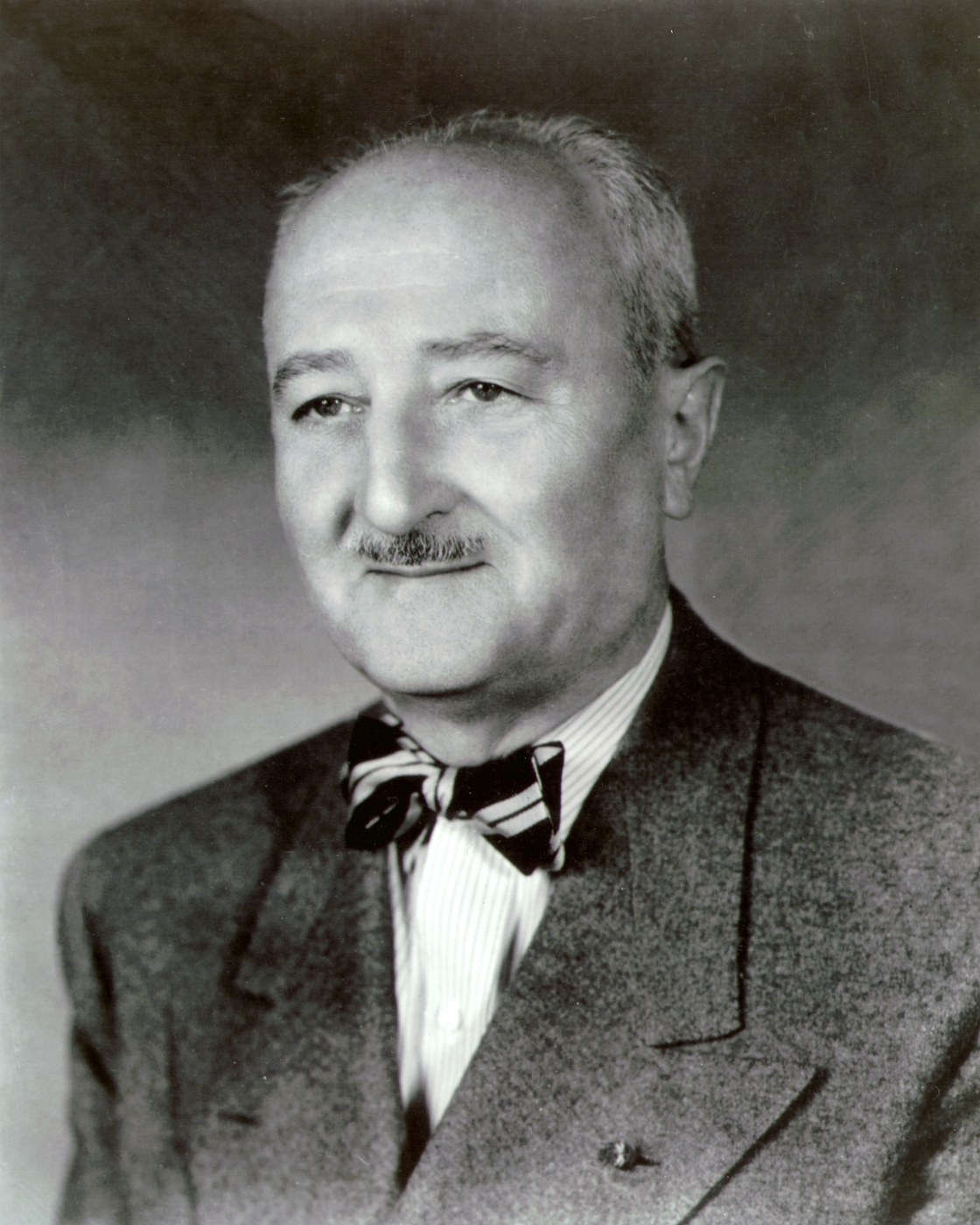
Abraham Sinkov led the delegation that took a PURPLE analog to Bletchley Park in February 1941 (the PURPLE unit’s Volume 6). In July 1942 he arrived in Melbourne to command the American detachment of General MacArthur’s Central Bureau, the joint U.S.–Australian codebreaking organisation that moved to Brisbane and produced much of the intelligence behind MacArthur’s campaigns in New Guinea and the Philippines; its nominal director, General Spencer Akin, had worked with Sinkov in Washington and Panama and left the operation in his hands. After the war Sinkov ran the Armed Forces Security Agency’s communications security programme, attended the National War College in 1954, and became NSA’s Deputy Director for Production, “effectively swapping jobs with his old colleague Frank Rowlett”. He retired in 1962 and became a professor of mathematics at Arizona State University, where he wrote Elementary Cryptanalysis: A Mathematical Approach (1966), still used as an introduction to the subject (Volume 12). He died in January 1998 (NSA Hall of Honor, Sinkov).
Solomon Kullback went to Britain in May 1942 to learn how Bletchley Park exploited the Enigma and to cooperate on German codebook systems; after one success he cabled home, borrowing a catch-phrase of the comedian Red Skelton, “We dood it!” He then ran Arlington Hall’s Japanese section, where, he said later, “there wasn’t a damn thing that the Japanese transmitted that we weren’t able to read.” Friedman’s 1943 list of awards credits him with the largest share in breaking the German diplomatic “Floradora” system after the British had given it up. After the war he became chief of research and development and then chief scientist of NSA, supervising, among others, Leo Rosen and Samuel Snyder in the development of new storage and processing machinery. He retired in 1962 to teach statistics at George Washington University; his Information Theory and Statistics (1959) and the measure that bears his and Richard Leibler’s names are the subject of part of Volume 12. He died on 5 August 1994.
John Hurt translated. From 1930 until the middle of 1937 he was the SIS’s only full-time Japanese translator, and he remained at the centre of Japanese translation through the war and after; Snyder, who worked beside him from 1936, called him “a translator extraordinaire” who knew more about the written language “than most native-born Japanese”. He retired in January 1963 (Snyder, pp. 16–18).
The NSA historian who wrote Kullback’s biography for the Hall of Honor ended it with a judgement on all four: “The original members of SIS were a unique quartet, men who ought to be national heroes.”
Next — Volume 4: The Navy’s Codebreakers — Safford, Driscoll, Rochefort and OP-20-G. A lieutenant called off a minesweeper to run a “Research Desk”, a former music teacher who became the Navy’s finest cryptanalyst, a radio school on the roof of Main Navy, fleet exercises in which the codebreakers read everything, and a rivalry with the Army that ended in odd and even days.
Comments (0)