The Codebreakers · Volume 4
The Codebreakers — Volume 4 — The Navy's Codebreakers — Safford, Driscoll, Rochefort and OP-20-G
The other American school: a lieutenant called off a minesweeper to run a 'Research Desk', a former music teacher who became the Navy's finest cryptanalyst and its teacher, a radio school on the roof of Main Navy, fleet exercises in which the codebreakers read everything, and a rivalry with the Army that ended in odd and even days
4.1 About This Volume
The Army’s Signal Intelligence Service of Volume 3 was not the only American codebreaking school between the wars, nor the oldest. Six years before Friedman hired his first junior cryptanalyst, the U.S. Navy set up a “Research Desk” in its Code and Signal Section with one officer and one civilian. Over the next seventeen years that desk grew into OP-20-G, a worldwide organisation of intercept stations, decrypting units and trained officers that read the Imperial Japanese Navy’s codes, broke the Japanese naval attaché machine, developed the U.S. Navy’s own cipher machines and, in 1942, gave Admiral Nimitz the intelligence that won the Battle of Midway.
This volume is about the people who built that organisation — above all Laurance Safford, Agnes Meyer Driscoll and Joseph Rochefort — and about how the Navy, with no Riverbank behind it, taught itself and its officers the craft. It ends with the rivalry and cooperation between the two services over PURPLE and MAGIC, which shaped what Washington knew, and did not know, in December 1941. The Navy’s codebook breaks of the 1920s and the Japanese RED BOOK are introduced in the PURPLE unit’s Volume 2; the joint invention of SIGABA is Volume 9 of this series.
4.2 The Research Desk
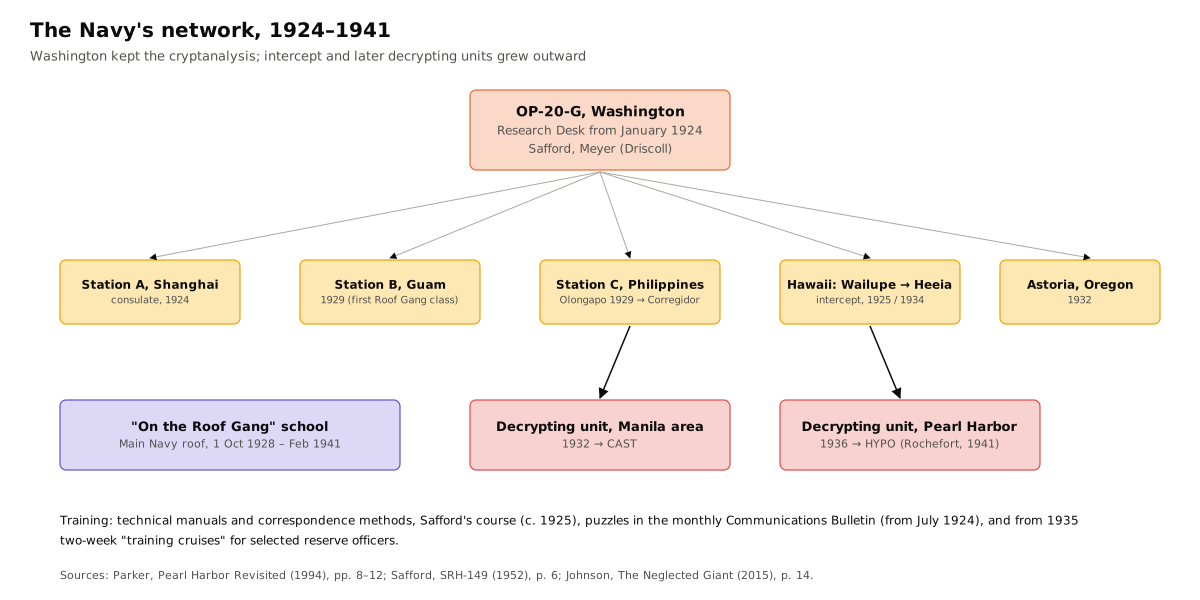
The Navy’s first organised effort was modest and borrowed. During the First World War it relied on cryptographic advice from the British Admiralty’s Room 40, and from 1919 to 1923 it relied largely on Yardley’s Cipher Bureau in New York. By 1923, the NSA historian Frederick Parker writes, the Navy “apparently felt that the Cipher Bureau had produced neither the desired cryptographic improvements nor the necessary insights into the activities of foreign navies, in particular Japan’s growing fleet”. In January 1924 the Director of Naval Communications, Commander Ridley McClean, established a research desk within the Code and Signal Section “with a complement of one officer, Lieutenant Laurance F. Safford, and one civilian, Agnes Meyer, both of whom were cryptanalysts/cryptographers” (Parker, Pearl Harbor Revisited, p. 8; Library copy). Safford’s own later history put the initial allowance at one officer and four civilians, “later supplemented by two enlisted radiomen” (Safford, SRH-149, p. 6).
The section came to be known by its office code within the Office of the Chief of Naval Operations: OP-20-G, the G section of the 20th division (Naval Communications). Its first raw material was stolen. Agents of the Office of Naval Intelligence had photographed a Japanese naval codebook in a Japanese office in New York; it became the “Red Book” (the PURPLE unit’s Volume 2 tells the story), and the Research Desk’s first task was to exploit it.
4.2.1 Two choices that shaped the Navy’s school
Two decisions of the 1920s distinguished the Navy’s organisation from the Army’s.
The first was a communications-security framing. The Research Desk sat in Naval Communications, and its stated goal, Parker writes, was “to develop cryptographic systems for the U.S. Navy which would avoid the weaknesses observed in the cryptographic techniques employed by foreign governments”. Intelligence — translating the decrypts, interpreting them, deciding what they meant — was left to the Office of Naval Intelligence. Parker judges that this concession “was to prove costly to OP-20-G”, because it ceded control of linguists and of the intelligence product to another office (p. 9). It also meant that, as with the Army, the people who broke ciphers were the same people who designed them.
The second was decentralisation. The Navy’s targets were at sea in the Pacific, and so were its ears. Intercept stations were set up as trained operators became available — Shanghai (Station A, in the U.S. consulate, 1924), Guam (B), the Philippines (C), Hawaii, Peking, Astoria in Oregon, Bar Harbor in Maine — and, from 1932 in the Manila area and 1936 at Pearl Harbor, “advanced communications intelligence (decrypting) units” serving the commanders of the Asiatic and Pacific Fleets (SRH-149, p. 6; Parker, pp. 9–12). Washington kept technical control; the fleets kept command. Joseph Wenger summed up the result in 1937: “not an integrated organization … but a number of technically dependent but operationally independent units”.
4.3 Laurance Safford
Safford was the Navy’s Friedman — the NSA’s Hall of Honor uses almost exactly those words: “His identification with the Naval effort was so close that he was the Friedman of the Navy” (NSA Hall of Honor, Laurance Safford). Born in Massachusetts in 1893 (the Hall of Honor says 1890), he graduated fifteenth in the Naval Academy class of 1916 and spent his early career in ships. Nothing in it predicted what followed, but “a constantly rumpled uniform hid an excellence in mathematics and an affinity for machines”, and a liking for chess. In January 1924 he was called from command of a minesweeper off the China coast to run the Research Desk.
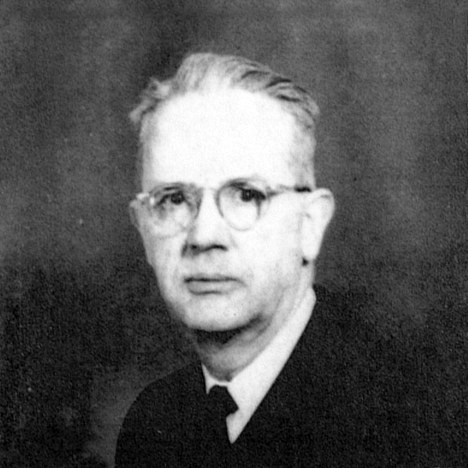
Safford’s career followed the Navy’s rotation: he was pulled out for sea duty in 1926, returned in 1929, went to sea again from 1932 to 1936, and then ran OP-20-G through to Pearl Harbor. In the gaps others ran the desk — Rochefort in 1926–27, Thomas Dyer in 1932–33 — and much of the continuity was provided by the one person who did not rotate: Agnes Driscoll.
His contributions fall into three groups. He was an organiser and recruiter: he began organising the Navy’s worldwide intercept and direction-finding network, “so that when the United States entered World War II it already had a system of intercept stations”. He was a machine builder: as early as 1922, he wrote later, the Navy had recognised “that the future of secret communications lay in machine cipher systems rather than in the then-current systems of enciphered-codes”, and it sponsored the development of an Electric Cipher Machine (ECM) “from that time on” (SRH-149, p. 5). Safford and the engineer Donald Seiler turned Hebern’s rotor machine into the ECM Mark I, the Navy’s main cipher machine from 1936 to 1942, and then, from the Army’s idea, into the Mark II — SIGABA (Volume 9). And he was an advocate of cooperation with the Army, “largely responsible for the Navy entry into a joint effort with the Army on the Japanese diplomatic systems”, and a personal friend of Friedman’s.
4.4 Agnes Meyer Driscoll
If Safford was the Navy’s Friedman, Agnes Meyer Driscoll was its Friedman as well, in the other half of his role: the cryptanalyst who solved the hardest problems and taught everyone else how.
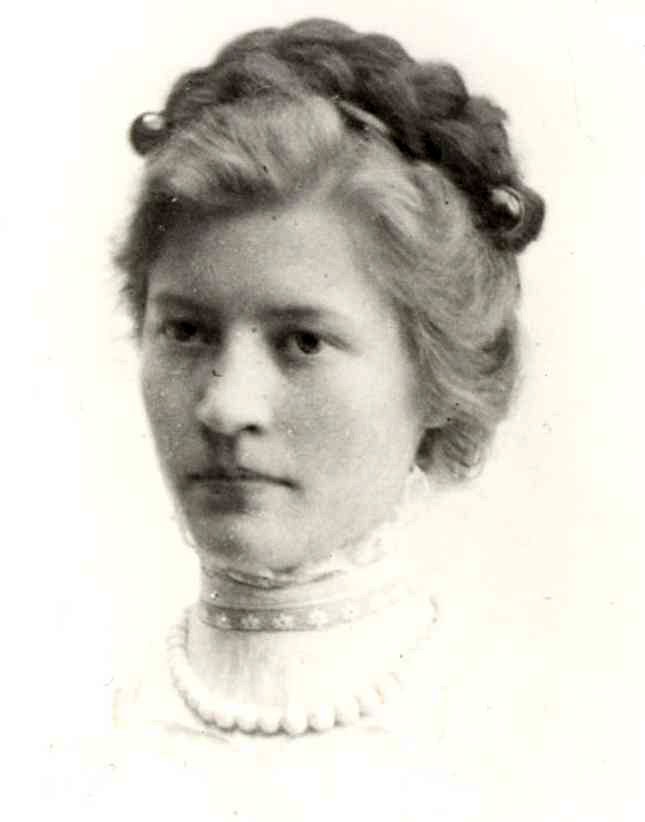
She was born in Illinois in 1889 and took an A.B. at Ohio State University in 1911, “majoring in mathematics, physics, foreign languages, and music”. She was director of music at a military academy in Amarillo, Texas, and then head of the mathematics department at the local high school. In June 1918 she enlisted in the Navy at the highest rank open to a woman, chief yeoman, and was assigned to the Code and Signal Section (NSA Hall of Honor, Agnes Meyer Driscoll). After the war she stayed on as a civilian.
4.4.1 How she learned
Driscoll, unlike the Army’s recruits of 1930, had no school to join; she assembled one from what existed. In 1920 she spent five months attached to Yardley’s bureau in New York, and in the spring of 1920 the head of OP-20-G arranged with George Fabyan for her to take the Riverbank course; Fabyan reported in May that she was “coming along first rate”, and she completed it around 20 June. On a federal employment form in 1943 she listed her training simply as “Course in Cryptanalytics in NYC, and one in Chicago [Riverbank]”. Her biographer, the NSA historian Kevin Johnson, sums it up: “So she got herself taught to be a codebreaker, to be a better code maker” (Johnson, The Neglected Giant, pp. 8–9; Library copy).
That last phrase is the key to her early career. She was hired to make the Navy’s own systems better, and her first achievements were as a designer. She devised the cryptographic principle of the Navy’s CM cipher device, built by William Gresham — a frame of sliding strips whose movement was transmitted through gears to the other strips, producing a “stepping” that Navy historians compared to a rotor machine’s; four were issued on 16 January 1923 and the device stayed in use until 1938. She also solved Hebern’s machine when he submitted it to the Navy. In 1923 she left to become technical adviser to Hebern’s own company, returning in 1924 to join Safford at the Research Desk — the only interruption, which the NSA’s biography describes as two years, in a career that otherwise ran from 1918 to 1959 (Johnson, pp. 9–11).
4.4.2 What she broke
Driscoll’s record of solutions is one of the most impressive in American cryptology, and for decades one of the least known:
- The RED BOOK (1920s). The stolen codebook gave meanings, but the messages were also enciphered by transposition. In 1926–27, while Rochefort was running the desk, she made “the initial solution of the Red Book ciphers” and discovered the “transposition forms” that were then used to train students (Parker, p. 10).
- The BLUE BOOK (1930–33). On 1 December 1930 the Japanese Navy replaced the RED BOOK. The new code’s arrival was spotted in the most teacherly way imaginable: Dyer was struggling with some traffic when Driscoll looked over his shoulder, took it from him, and said, “This isn’t the same code. This is a new code.” There was no burglary this time. The BLUE BOOK had more than 85,000 groups and two layers of superencipherment; Driscoll “led the effort and made the first break”, working it full time with Dyer and Safford until the solution was well along (Johnson, pp. 16–17). Safford later called it “the most difficult cryptanalytic task ever performed up to that date and possibly the most brilliant as there were no ‘cribs’ and ‘translations’ to help out as in the subsequent Army solution of the Purple machine” — a judgement Johnson calls “pardonably extravagant”, and “no doubt an example of the Army-Navy rivalry that was so strong during this era”.
- The naval attaché machine (1934–35). In early 1935 she led the attack on the Japanese cipher machine used by naval attachés abroad, called M-1 or ORANGE by the Americans; her solution was manual, using sliding paper strips (NSA Hall of Honor; Johnson, p. 19). When the Army was stuck on RED’s irregular stepping, the Navy’s description of a machine “with a 6-wheel, a 20-wheel, and a break wheel” — presumably this one — gave it the model it needed (the PURPLE unit’s Volume 3).
- JN-25 (1939–40). When the Japanese Navy’s new fleet code appeared on 1 June 1939, Driscoll led the small OP-20-G team against it, with Helen Talley, the civilian Larry Clark and three Navy men. Between June 1939 and October 1940 the Japanese changed the additive books four times, and in December 1940 the code itself. Only about four per cent of the code had been recovered by August 1941. In October 1940 Driscoll was moved to the German naval Enigma, and the eventual break of JN-25 in 1942 is credited above all to Rochefort’s unit in Hawaii; Johnson judges that, individually, only the British cryptanalyst Malcolm Burnett contributed more to the early JN-25 work than she did (Johnson, pp. 22–24).
Her later work on the Enigma, against which she preferred a hand “catalog” approach to the British offer of a bombe in 1941, is the least successful episode of her career and is described in Johnson’s biography and in Colin Burke’s study of the Navy’s early machine efforts. In October 1937 she had been badly injured in a car accident; she walked with a cane for the rest of her life (Johnson, pp. 19–20; Library copy). She joined the Armed Forces Security Agency in 1949 and the National Security Agency in 1952, retired in 1959, died in 1971, and is buried at Arlington.
4.4.3 Driscoll the teacher
What most qualifies Driscoll for a series about a school is that she trained the Navy’s codebreakers. “Much of [her time] was spent helping to train a succession of junior officers brought in to learn cryptology,” Johnson writes; “she trained most of the Navy cryptanalysts who would become shining lights in, and after, World War II” (p. 14). Rochefort, the most famous of them, said: “When I first came in contact with Mrs. Driscoll in 1925 in Washington, she was exceptionally capable, very capable. I considered her sort of a teacher to me.” Dyer called her “absolutely brilliant”. Edwin Layton remembered being warned “not to patronize ‘Madame X’, as her colleagues sometimes referred to her, because she was sensitive to her role as a woman in a man’s world.” The NSA’s 1998 booklet on women in cryptology quotes a Navy assessment that sums up her standing: “Some of her pupils, like Ham Wright, were more able mathematicians but she had taught cryptanalysis to all of them, and none ever questioned her superb talent and determination in breaking codes and ciphers” (Wilcox, Sharing the Burden, p. 8; Library copy).
4.5 How the Navy Taught
The Navy’s school was less centralised than Friedman’s and more improvised, but it had recognisable elements, several of them invented by Safford.
Correspondence and manuals. “Training was accomplished through technical manuals (which had to be prepared) and correspondence methods plus temporary duty ‘under instruction’ in Washington,” Safford wrote (SRH-149, p. 6). He put together a course around 1925 on which the officer trainees partly taught themselves (Johnson, p. 14).
Puzzles as recruitment. From July 1924 Safford printed cipher puzzles in the Navy’s monthly Communications Bulletin. Officers who solved them were noticed, and the best were recruited for cryptanalytic duty: Parker names Rochefort, Thomas Dyer, Joseph Wenger, E. S. L. Goodwin, Wesley A. “Ham” Wright and Jack Holtwick as officers “recruited … in this way” (Parker, p. 12). It was, in effect, an aptitude test disguised as a hobby, and it found the core of the wartime organisation.
Short courses. In 1926 Ensign Joseph Wenger became the first officer to take a cryptanalysis “short course”; he was followed the same year by Lieutenant Joseph Rochefort and Captain Leo Horan of the Marine Corps. “Training for officers consisted of on-the-job training and semiformal instruction by Safford and Meyer” (Parker, p. 10).
The On-the-Roof Gang. In 1928 the Navy set up a school for enlisted Navy and Marine intercept operators at Main Navy, with a classroom and eight intercept positions on the roof — “probably as much for the sake of privacy as for the lack of space”. Its graduates became known as the “On the Roof Gang”. The first class began on 1 October 1928; of twenty students seven finished, and all seven were sent to Guam to open the station there in 1929. Two classes were entirely Marines. The school ran until February 1941, teaching “Japanese intercept, traffic analysis, and simple cryptanalysis” (Parker, p. 10). Without it there would have been nothing to decrypt.
Reserve “training cruises”. From 1935, selected Naval Reserve officers were ordered to Washington, normally for two weeks, “where they were given advanced cryptanalytical instruction and training” — the pool that the Navy drew on when it mobilised in 1941 (SRH-149, p. 6).
Fleet exercises. The most striking teaching tool was the fleet problem. From the early 1920s OP-20-G supplied cryptographic systems to the opposing sides of the U.S. Fleet’s annual exercises and put volunteer cryptanalysts aboard. In Fleet Exercise No. 9 in 1929, Safford, Rochefort and Dyer, working for the Black Fleet, read all of the opposing Blue Fleet’s traffic, which was enciphered on a cylindrical cipher device, and made considerable progress on its signal cipher. The Commander-in-Chief, Admiral Henry Wiley, acknowledged in his critique that the decrypting units’ success revealed a “serious lack of knowledge (of radio security)”, and Safford was directed, memorably, to “make a cipher which could be broken but not allow messages to be read before the problem is over” (Parker, p. 12). Nothing could have demonstrated more vividly to line officers that their own communications were readable — the communications-security lesson that ran through both services’ schools.
4.5.1 Machines in the Navy’s cryptanalysis
The Navy was also the first American service to bring punched-card machinery into cryptanalysis. Safford recorded that “IBM tabulating machinery was introduced by the Navy incident to the solution of the 1930 Naval Operations Code” — the BLUE BOOK — and Driscoll “sponsored the introduction of early machine support for cryptanalysis against Japanese naval code systems” (SRH-149; NSA Hall of Honor, Driscoll). By 1941 similar equipment had been sent to Pearl Harbor and Corregidor. Volume 11 follows this line into the computer age.
4.6 Joseph Rochefort
Joseph John Rochefort is the most famous of Safford’s and Driscoll’s pupils, because of Midway. He enlisted in 1918, was commissioned after graduating from the Stevens Institute of Technology, and in 1925 trained in cryptanalysis “under both Captain Laurance Safford and Agnes Meyer Driscoll”; he was the second head of the Research Desk, from 1926 to 1929, studied Japanese in Japan from 1929 to 1932, and alternated sea duty with intelligence work through the 1930s (NSA Hall of Honor, Joseph J. Rochefort).
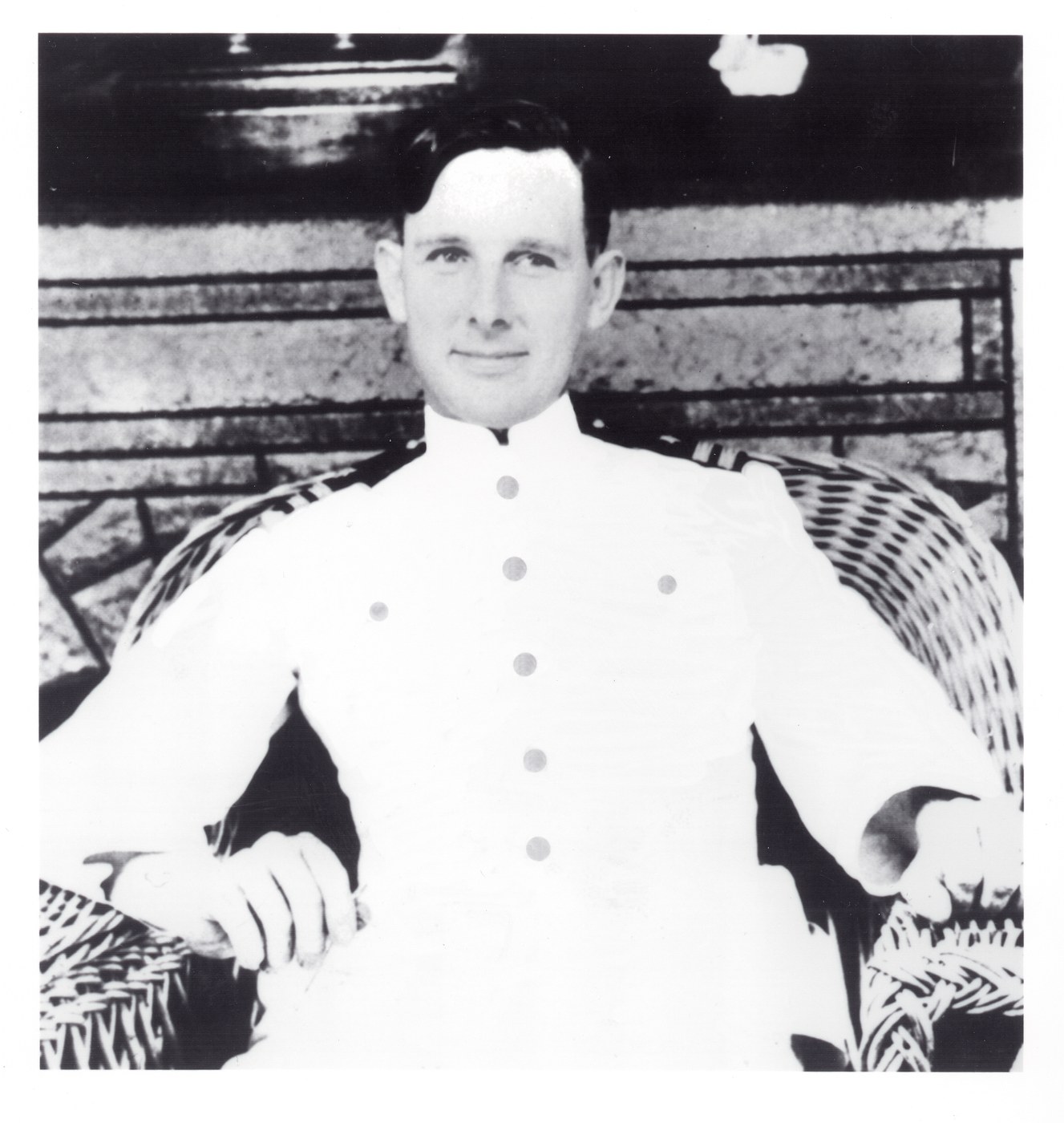
In early 1941 Safford sent him to Hawaii to command Station HYPO, the Pearl Harbor decrypting unit, because he combined three rare qualifications: “he was an expert Japanese linguist, an experienced and very talented intelligence analyst, and a trained cryptanalyst.” Safford gave him, the Hall of Honor says, “a blank check to obtain the very best Navy cryptanalysts”, and Rochefort hand-picked a team that included Dyer, Wright, Joseph Finnegan, Alva Lasswell, Thomas Huckins and Jack Williams. In the spring of 1942 HYPO read enough of JN-25 to give daily assessments of Japanese intentions; in the peak month of May 1942 Rochefort reviewed and reported on as many as 140 decrypted messages a day. The identification of the Japanese objective “AF” as Midway — confirmed by a ruse in which Midway reported a water shortage in plain language and Japanese traffic then reported that “AF” was short of water — is the most famous single episode in American naval intelligence.
Rochefort’s career shows both the strength of the Navy’s school and the weakness of its institutions. The strength was the combination of language, cryptanalysis and intelligence analysis in one person, deliberately cultivated over fifteen years. The weakness was that a decentralised organisation, with technical control in Washington and operational value in Hawaii, bred conflict. After Midway Rochefort was reassigned in a dispute with OP-20-G’s new leadership in Washington and spent the rest of the war away from codebreaking operations; his last post was at the head of the Pacific Strategic Intelligence Group in Washington. He died in 1976. In 1986 he was posthumously awarded the Navy Distinguished Service Medal for his support of the Battle of Midway, and in 2000 he was inducted into NSA’s Hall of Honor.
4.7 The Rivalry
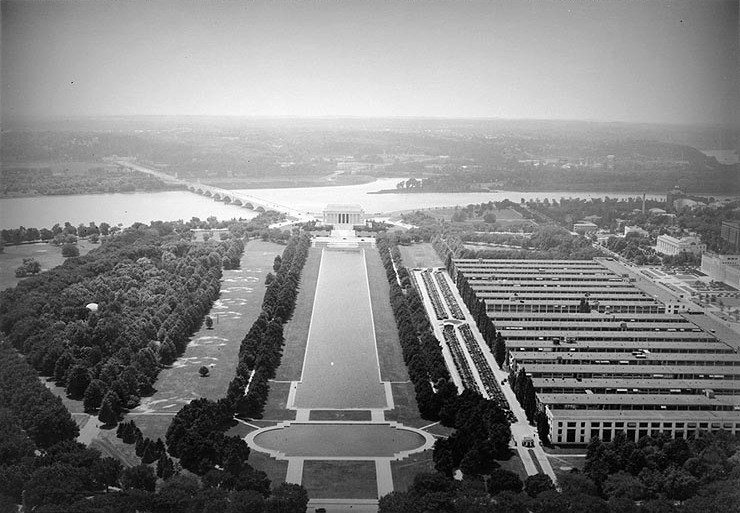
The two schools of Volumes 3 and 4 were neighbours: the Munitions Building and Main Navy stood side by side on the Mall, linked by a pedestrian bridge. Their relationship was a mixture of genuine personal friendship, especially between Friedman and Safford, and institutional suspicion.
4.7.1 A secret not to be shared
The suspicion had concrete causes. When Friedman’s secret analyses of the Hebern machine were printed by the Government Printing Office in 1934 and 1935, the Navy was not consulted, and, combined with “a serious mistrust of the Government Printing Office”, this led to an order from the Director of Naval Communications “that the Signal Corps was not to be shown the Mark I ECM or to learn any of its details”. The order, Safford wrote, “was not revoked until January 1940” and “was responsible for later misunderstandings” (Safford, history of the Mark II ECM, NSA REF ID A60492, p. 11; Library copy). Volume 9 shows what those misunderstandings were: for four years the Army did not know that the Navy was building SIGABA from Rowlett’s idea.
Safford’s own principle on sharing was blunt: “A secret divulged to a third party is no longer a secret.” Even when the two services cooperated on Japanese diplomatic traffic, “the Navy … withheld all details of its success with Japanese Naval systems from the Army; and in turn no inquiries” were made (SRH-149, p. 11). A draft cooperation agreement of 1932 went unsigned.
4.7.2 The diplomatic traffic
Both services read Japanese diplomatic traffic, for different reasons. The Navy had begun in 1924 “for the training of personnel, because such traffic was on hand”; during the gap between the closing of Yardley’s bureau and the founding of the SIS, Safford wrote, “the Navy was the only source of Japanese diplomatic COMINT”. The same New York safe that had yielded the naval codebook, he added, remained “a never-failing source of supply” of Japanese diplomatic codes and keys until 1938–39 — except for the RED and PURPLE machine systems (SRH-149, pp. 9–10).
When PURPLE fell to the Army in September 1940 and the White House became intensely interested in the decrypts, the SIS did not have enough translators, and was also under pressure to move people to German systems. “Therefore,” Safford wrote, “the Army requested the Navy to assist with the reading of Japanese diplomatic traffic on a 50-50 division of effort.” The arrangement eventually reached is the one usually remembered: the Army processed messages dated on even days of the month and the Navy those on odd days, and delivery of the results to the White House and the State Department alternated between the services. The order in which the arrangements were made, however, is told differently by the two principal sources.
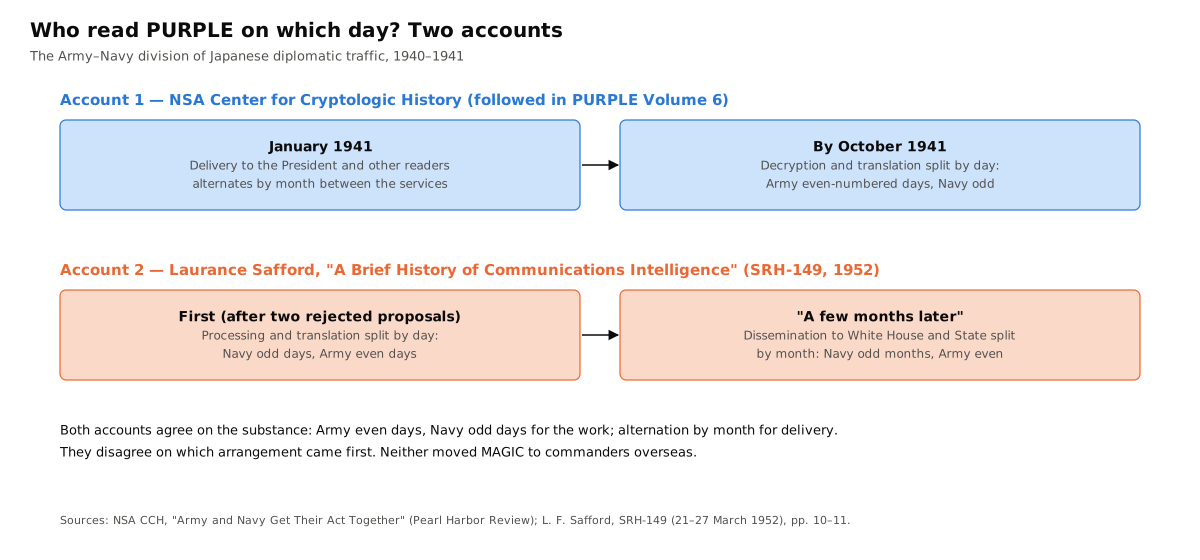
Whatever the order, the arrangement was a compromise of institutional pride, not a design for intelligence. It divided the work so that neither service would be beholden to the other, but it also meant that no single person read the whole flow of Japanese diplomatic messages, and that what reached the President depended on which service had the duty that month. The PURPLE unit’s Volume 7 shows how those seams looked on 6 and 7 December 1941.
4.7.3 Cooperation despite rivalry
The rivalry should not be overstated. The two services’ cryptanalysts consulted constantly on PURPLE; Safford put the Navy Yard’s radio-laboratory shop at the disposal of the SIS to build its first analog; and the Navy’s Lieutenant Joseph Wenger gave the Army the key hint about RED’s break wheel, from a machine Driscoll’s section had solved. The most consequential cooperation of all was SIGABA, an Army idea built by the Navy and adopted by both services on 1 August 1941 — “for the first time in the nation’s history,” the NSA historian Timothy Mucklow writes, “the Army and Navy enjoyed cryptographic interoperability” (Volume 9).
4.8 1942: The Navy’s School Breaks Up
The Navy’s school did not survive the war intact. In February 1942, shortly after his promotion to captain, Safford was removed as head of OP-20-G in a reorganisation under the new Director of Naval Communications, Rear Admiral Joseph Redman, after which the admiral’s brother, Commander John Redman, and Joseph Wenger headed the section. Safford spent the rest of the war on cryptographic security and development, away from codebreaking. Rochefort’s removal from HYPO later in 1942 grew out of the same conflict. Safford’s postwar testimony to the Congressional investigation of Pearl Harbor — including his insistence that a “winds execute” message had been received and later suppressed — made him a controversial figure for the rest of his life; the PURPLE unit’s Volume 7 sets his claims against the documentary record.
The organisation itself grew enormously: OP-20-G had 730 people at the time of Pearl Harbor, and in February 1943 it moved from Main Navy to the Mount Vernon Seminary on Nebraska Avenue, renamed the Naval Communications Annex, where by February 1944 nearly 3,000 WAVES worked (Wilcox, pp. 3, 7, 13). Its people — Wenger, Dyer, Wright, Driscoll and many others — went into the Armed Forces Security Agency in 1949 and the National Security Agency in 1952. Safford retired in 1953 and died in 1973. The Hall of Honor’s verdict is that he was “the father of U.S. Navy cryptology”; the Navy’s own cryptologic community calls Driscoll its “First Lady”.
4.9 What the Navy’s School Taught
Set beside Friedman’s, the Navy’s school had distinctive lessons.
It showed that puzzles and exercises find talent: the Communications Bulletin problems and the fleet exercises discovered and tested the officers who led the Navy’s wartime cryptology. It showed that interception is half the job: the On-the-Roof Gang and the Pacific stations were the reason HYPO had traffic to read in 1942. It produced, in Rochefort, the model of the combined linguist–cryptanalyst–analyst that later agencies tried to cultivate deliberately. And through Driscoll’s career it showed how a field that depended on teachers could still lose sight of them: the person who had trained most of the Navy’s wartime codebreakers was moved off the Japanese problem in 1940 and largely left out of the histories until the NSA’s own historian called her, in 2015, The Neglected Giant.
Next — Volume 5: The Purple Team — Grotjan, Rosen, Ferner, Rowlett and the Women of the SIS. The second generation of 1936–1939: a physicist from Ohio who co-directed the attack on PURPLE and was then forgotten, a mathematician from Buffalo who found the pattern and later broke into VENONA, an MIT engineer who built machines from telephone switches, the women who kept PURPLE readable for five years — and the lists, memos and photographs in which their credit was recorded, divided and lost.
Comments (0)