PURPLE · Volume 6
PURPLE — Volume 6 — MAGIC — Analogs, Translators and the Mission to Bletchley
What happened once the machine could be read: generals at the switchboard, copies built at the Navy Yard, a PURPLE analog carried to Bletchley Park on a new battleship in January 1941, the Army–Navy arrangements for who read what, the translators who were always too few, and the ten people allowed to see the result
6.1 About This Volume
Volume 5 ended with a working copy of a machine no American had seen and a team recovering the settings of its 120 indicators one by one. This volume follows what that capability became between the autumn of 1940 and the end of the war: a handful of hand-built analogs, distributed between the Army, the Navy, the Philippines and Britain; a production line of interception, decryption, translation and selection; a code word, MAGIC, and a short list of people allowed to read it; and a secret mission in January 1941 that carried a PURPLE analog across the Atlantic on a British battleship and helped begin the Anglo-American codebreaking partnership.
What MAGIC said before Pearl Harbor is the subject of Volume 7, and what it said from Berlin is Volume 8. This volume is about the machinery — mechanical and human — that made the reading possible.
6.2 Showing the Generals
The break was reported up the chain at once. Friedman and Colonel Spencer Akin briefed the Chief Signal Officer, Major General Joseph Mauborgne, who told the head of Army intelligence (G-2), Brigadier General Sherman Miles; Friedman told Commander Laurance Safford at OP-20-G. Some time afterwards Akin told Rowlett to prepare a demonstration for “an important official of the War Department”, without saying who. The visitor, Rowlett recalled, was the Army Chief of Staff, General George C. Marshall, who became so absorbed in the replica of the Japanese machine that he asked Rowlett to take off its cover so that he could see inside. About two weeks later came the Secretary of War, Henry L. Stimson — the man who as Secretary of State in 1929 had closed Yardley’s bureau (Volume 2) — with his aides John McCloy and Harvey Bundy. Stimson read through a decrypted message in which the Japanese ambassador reported to Tokyo on a meeting with Secretary of State Cordell Hull, read it aloud, and remarked that “our nation is indeed fortunate to have access to such important information, vital to the success of our diplomatic endeavors” (Sherman 2016, pp. 16–17). The NSA historian David Sherman places Marshall’s visit probably in early October 1940 and Stimson’s in the second half of the month.
6.3 Copies
The Army had designed the analog, but it had no machine shop worth the name. The NSA’s history records that SIS asked the Navy to build further PURPLE analogs in its facilities, and that the copies were made at the Washington Navy Yard to the Army’s wiring. Three were built at first: the Army kept one, the Navy kept one, and the third — originally intended for the Navy’s codebreaking station in Hawaii, Station HYPO — went instead to Britain (NSA, “Red and Purple”). Another went to the Navy’s station in the Philippines, Station CAST, at Cavite on Manila Bay and later in a tunnel on Corregidor; under a local agreement reached at a conference in Manila in May 1941, CAST concentrated on Japanese diplomatic traffic because it alone in the theatre had a PURPLE machine (Corregidor Historic Society). Hawaii never had one.
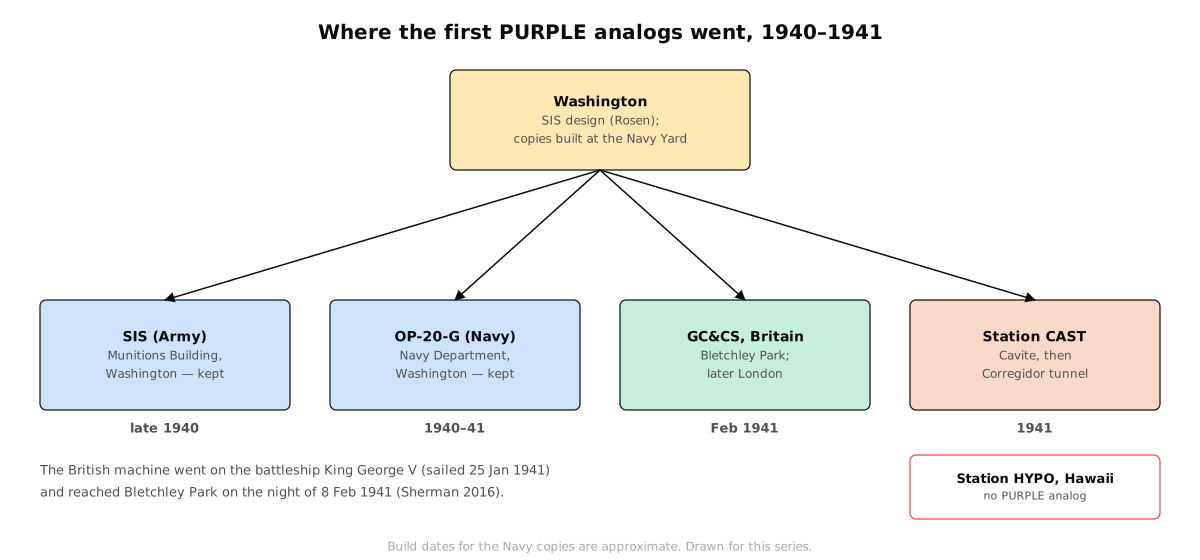
Secondary accounts number the early machines differently — one popular list counts six by the end of 1941, with a second machine reaching Britain and one of the British machines later moving to the Far East — and those details could not be confirmed from the primary documents consulted here. What is firmly documented is the first British machine, because the memorandum listing what was shipped survives, and it has settled a long-running argument. After the war Safford claimed that the Army had given Britain two PURPLE machines while leaving Hawaii without one; Ralph Erskine’s discovery of a December 1940 memorandum from Mauborgne listing the contents of the crates showed that one analog went, not two (Sherman 2016, note 62).
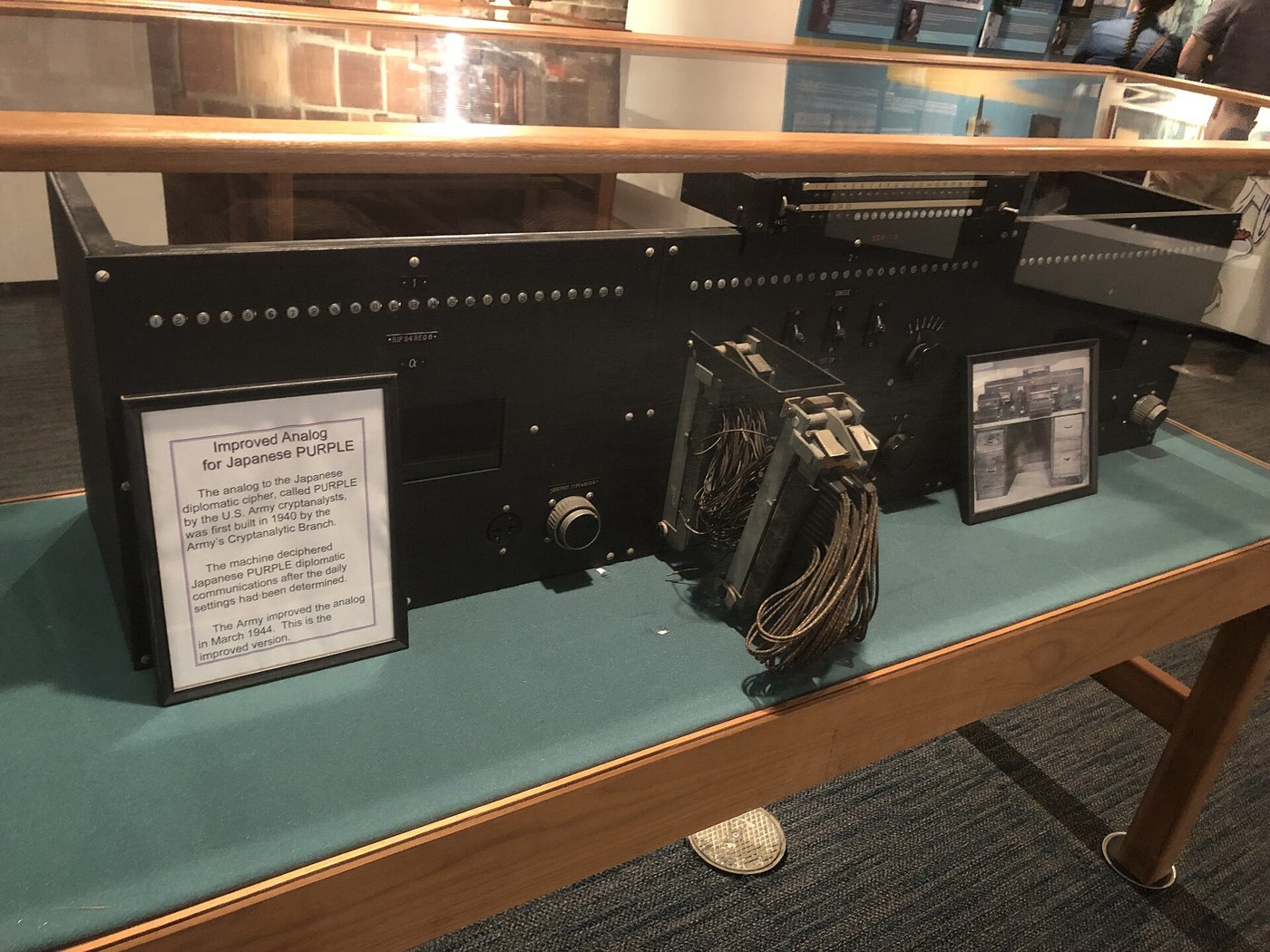
The Army kept improving its own machines. The analog now displayed at the National Cryptologic Museum is the improved version of March 1944. Secondary descriptions credit it with a six-position switch for selecting the stepping order of the twenties and an automatic arrangement for setting the switches to their starting positions — refinements of the procedure rather than of the cryptography, which had been right since 1940.
6.4 Who Reads What, and When
PURPLE traffic was intercepted by both services. The Army’s monitoring stations and the Navy’s fed copies to Washington, where SIS and OP-20-G both had analogs and both had linguists. Who should process the traffic, and who should take the results to whom, was a matter of institutional pride and of budgets, and the two services had never found it easy to share. A draft cooperation agreement of 1932 went unsigned; what cooperation there was in the 1930s owed much to the personal friendship between Friedman and Safford (NSA, “Army and Navy Get Their Act Together”).
By mid-1940 a committee of the two services’ cryptologic experts was dividing the work. Military traffic was simple: each service took its opposite numbers in Japan, Germany and Italy. Diplomatic traffic was not. The cryptologic sections first agreed that the Navy would handle Japanese diplomatic messages, but the Army General Staff ordered SIS to carry on with them regardless. The compromise, as the NSA’s historians describe it, came in stages. In January 1941 the services agreed to split the responsibility for distributing Japanese diplomatic decrypts to the President and other senior readers by month, the Army taking the first month and the services alternating thereafter. By October 1941, with traffic rising and delays growing, the arrangement was revised so that the Army decrypted and translated messages on even-numbered days and the Navy on odd. Other accounts date an odd–even division of the decryption work to late 1940; the sources disagree, and the NSA’s version is followed here.
The system had obvious seams. A message intercepted on one day might be processed by one service and delivered by the other; a backlog on one side did not automatically flow to the other; and a decrypt’s importance was judged by whichever duty officer happened to have it. Volume 7 describes how those seams looked on the weekend of 6–7 December 1941.
6.5 The Translators
Breaking a cipher produces romanised Japanese, often thick with the Foreign Ministry’s abbreviations, and someone has to turn it into usable English. That someone was the narrowest point in the whole chain. Friedman’s report of October 1940 complained that the section’s Japanese experts could give the B machine only “a small part of the time when the traffic for the daily ‘Bulletin’ permitted, which was quite seldom”. When the Sinkov mission reported on Britain’s work against Japan in 1941, the British said their cipher section in Singapore was “getting fairly good results but is handicapped by lack of competent Japanese translators”, and offered to hand over its results if the Americans would only supply some (Sherman 2016, p. 40).
The Army’s pioneers were John B. Hurt, who had joined SIS in 1930, and Paul S. Cate; the Navy relied on a few officers who had served as language students in Japan. Both services started schools in the autumn of 1941. The Navy Japanese Language School opened at Harvard and the University of California, Berkeley, and moved to Boulder, Colorado, in June 1942; the Army’s Military Intelligence Service Language School began its first class of sixty students, taught by four Nisei instructors, in an abandoned hangar at Crissy Field in the Presidio of San Francisco on 1 November 1941 (Densho Encyclopedia). Neither produced graduates in time for 1941. MAGIC in its most consequential year was translated by a few dozen people at most.
6.6 The Mission to Bletchley
In the summer of 1940, with Britain alone against Germany, the two governments began exchanging technical secrets. Brigadier General George Strong, on an Army mission to London, proposed in late August a full exchange of cryptanalytic information as well. When he did so SIS had not yet broken PURPLE; by the time the exchange was arranged, it had, and the United States had something remarkable to offer. Sherman’s history of the mission puts it bluntly: had SIS not delivered PURPLE, the American delegation “most likely would have sailed for Britain with precious little to offer” (Sherman 2016, p. 17).
6.6.1 Four men and six crates
The delegation was to be led by Friedman. In December 1940 he was hospitalised (Volume 5), and his travel orders were revoked on 24 January 1941. Leadership passed to Captain Abraham Sinkov, one of Friedman’s original three hires, with Lieutenant Leo Rosen, the analog’s builder, who came along in part so that the machine could be repaired if it failed at Bletchley. The Navy sent two officers, Robert Weeks and Prescott Currier — the latter one of the few officers in OP-20-G with hands-on cryptanalytic experience.
The Army packed six crates weighing 720 pounds. According to a memorandum of 21 December 1940 from Mauborgne to Rear Admiral Leigh Noyes, the Director of Naval Communications, the first two held the PURPLE analog and an instruction manual for it; the next two a RED analog with spare parts; the fifth documents on an Italian diplomatic system; and the sixth documents on a German diplomatic system the Americans called GEE, which neither side had broken. The Navy officers carried three boxes totalling 225 pounds, whose contents were not recorded. Unknown to the Americans, Bletchley Park had already broken RED itself (Sherman 2016, p. 21).
6.6.2 HMS King George V
Transport was a stroke of luck. Britain’s new ambassador to the United States, Lord Halifax, was crossing in the Royal Navy’s newest battleship, HMS King George V, which anchored in Chesapeake Bay off Annapolis on 24 January 1941; President Roosevelt sailed out in the presidential yacht Potomac, ostensibly to greet him, though in the end he did not go aboard. The four Americans, given diplomatic passports and a thin cover story as visiting Canadians, had to wait until Halifax had disembarked. The four Americans and their crates came aboard in heavy rain and were stowed in a compartment the British had prepared for them deep in the ship. King George V sailed on the morning of 25 January. South of the Grand Banks she joined a convoy from Bermuda and escorted it for five cold days at 11 knots, north of the 60th parallel; on 3 February, south-east of Iceland, she left it to destroyers and made for Scapa Flow, arriving in a snowstorm on the afternoon of 6 February.
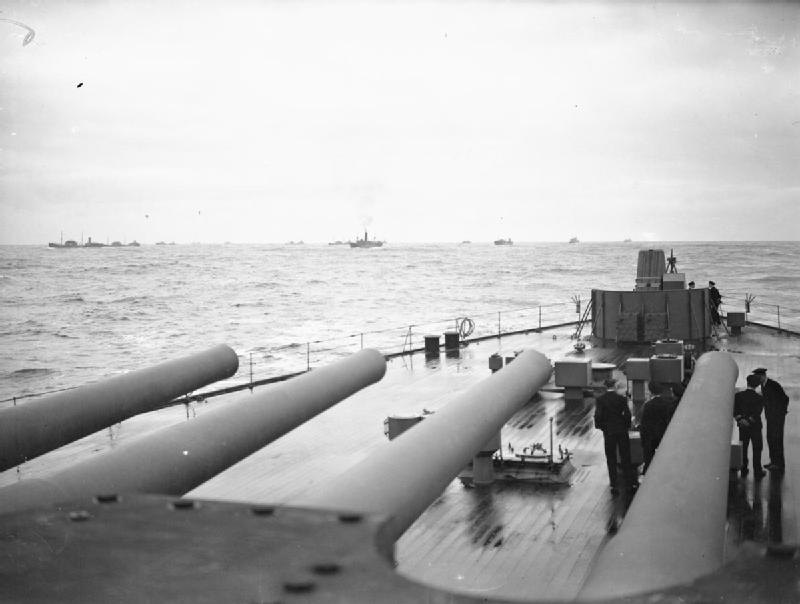
At Scapa the plan to fly them south by seaplane failed because the crates would not fit through the aircraft hatches, so men and crates were transferred to the cruiser HMS Neptune and lashed to her deck. The day after leaving Scapa, Neptune overtook a southbound convoy just as a German reconnaissance plane passed over, and some twenty minutes later German aircraft attacked — two near misses with bombs, then strafing runs. Currier, hearing bullets hit the deck “like a chain being dragged across the deck”, was certain the PURPLE analog had been destroyed. When he and Rosen came up they found that the rounds had burst on the outsides of the crates, leaving wood splinters and an intact machine.
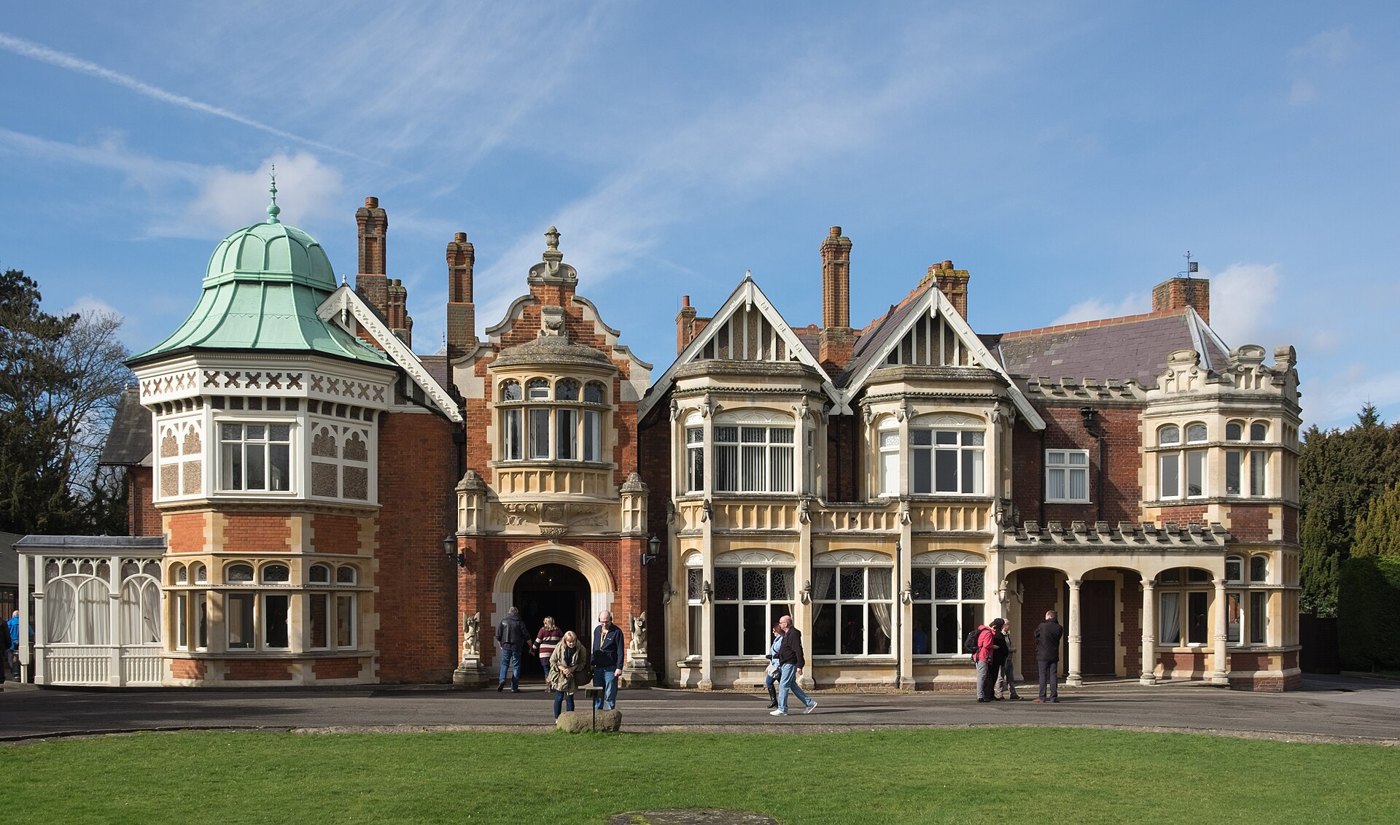
The four men came ashore on the evening of 8 February 1941 — the participants later remembered the landing place differently — and were driven through the blackout to Bletchley Park. Alastair Denniston, its head, had told his assistant Barbara Abernethy earlier that day: “There are going to be four Americans who are coming to see me at 12 o’clock tonight. I require you to come in with the sherry. You are not to tell anybody who they are.” Currier remembered arriving at ten or eleven at night, passing through two blackout curtains “into a rather brightly lit office, and there was John Tiltman … standing there in his regimentals with his hands behind his back, he and Travis and Denniston.” Everyone shook hands (Sherman 2016, pp. 24–25).
6.6.3 What each side gave
The Americans handed over the PURPLE analog, the RED analog and their documents. What the British should give in return was a delicate question: Churchill had at first opposed any discussion of cryptanalysis with the Americans, and London had decided to keep the Enigma out of the exchange. John Tiltman later suggested that the arrival of a working PURPLE machine caught Bletchley’s leaders unprepared; Sherman concludes that the gift “persuaded London to reverse its previous position of excluding the Enigma from discussion”. Over the following weeks the Americans were shown Bletchley’s work on German, Italian and other systems, its use of Hollerith punched-card machines and its Enigma bombes. Rosen spent much of his time with the engineers and claimed he understood the bombe well enough not to need notes; back home he worked on American bombe designs. Weeks brought home a sketch of the Enigma’s wiring, the “Paper Enigma”. The British did not hand over a bombe or a military Enigma, which caused grumbling in Washington — especially at OP-20-G, where Safford had opposed the trip — but Bletchley had few bombes and no spare captured machine to give.
Sinkov and Rosen’s official report was enthusiastic. The British “were enthusiastic about future cooperation along cryptographic lines and suggested definite plans for such cooperation including the possibility of a division of effort to avoid duplication”, and “the material which was furnished by the Army personnel will result in a saving of several years of labor on the part of a large staff.” Looking back in 1979, Sinkov judged that “if you leave out for a moment the Enigma then I think we were probably giving them cryptanalytically more than we were getting, because of Purple”, but that the Enigma information tipped the balance the other way. Rosen gave the mission a larger purpose: the transfer was “not only to get our info but also to ensure continuity in case Britain went under.” The delegation returned to the United States in April 1941.
In London the PURPLE analog was put to work. A daily exchange of keys developed between the American services and the Japanese Diplomatic Section of the Government Code and Cypher School, by then at Berkeley Street in London, so that neither side had to recover every day’s plugboard order independently (Freeman, Sullivan & Weierud 2003). The partnership the mission began grew through the 1942 and 1943 agreements on Japanese and German traffic into the BRUSA agreement of 1943, and from there into the post-war UKUSA arrangements.
6.7 MAGIC
The code word belongs to this period. Decrypts of Japanese diplomatic traffic, from PURPLE and from the lesser Japanese systems alike, were marked MAGIC to show that they needed extra protection. The NSA’s historians describe this as perhaps the first compartment for intelligence information in the U.S. government, and attribute the word to Friedman’s habit of calling his cryptanalysts “magicians”; Rowlett credited it to the Chief Signal Officer, Mauborgne, who used the same term. Either way, the name stuck, and by the middle of the war it had become the usual American term for intelligence from Japanese diplomatic codebreaking.
6.7.1 Ten readers
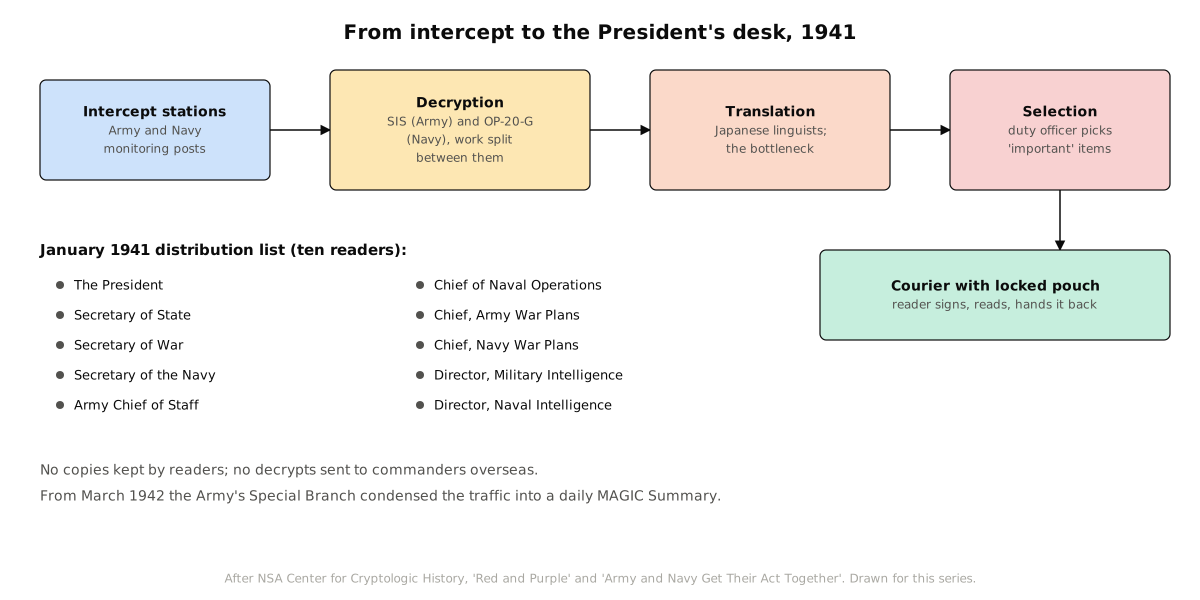
In January 1941, by agreement between the services, distribution of MAGIC translations was limited to ten people: the President; the Secretaries of State, War and the Navy; the Army Chief of Staff and the Chief of Naval Operations; the chiefs of the Army and Navy war-plans divisions; and the chiefs of Army and Navy intelligence. No decrypts were sent to commanders outside the continental United States (NSA, “Red and Purple”). The NSA’s description of the later odd–even arrangement adds the routine: OP-20-G and SIS showed the latest messages daily at 11 a.m. to the directors of naval communications and intelligence and their Army counterparts; a Navy officer carried messages of interest to the President’s naval aide, and an Army officer took them to the Secretary of State. Recipients read the decrypts in the courier’s presence and were not allowed to keep them.
The method protected the secret and cost understanding. Each reader saw individual messages, chosen by a duty officer, without analysis, context or the messages that had not been selected. Rowlett remembered that Roosevelt “later insisted on seeing the unedited English translations”. Nobody’s job in 1941 was to read the whole flow and say what it meant.
6.7.2 Did Japan notice?
In the spring of 1941 Germany warned Japan. On 3 May Ambassador Ōshima reported from Berlin that a “fairly reliable” German intelligence source had established that the U.S. government was reading Ambassador Nomura’s code messages. Tokyo passed the warning to Washington, in PURPLE, saying it appeared “almost certain” that the United States was reading Nomura’s codes, and asked whether he had any suspicions. Nomura replied later in May that he had discovered the United States was reading “some of our codes”, without knowing which, and promised details by courier. SIS and OP-20-G read the whole exchange. The Foreign Ministry did not abandon PURPLE, and the machine stayed in service to the end of the war.
6.7.3 After Pearl Harbor
The attack on Pearl Harbor changed the scale of everything. Five weeks later Stimson appointed a New York lawyer, Alfred McCormack, to organise a new branch of Military Intelligence to study and summarise the decrypts — the Special Branch. Its daily MAGIC Summary, issued in the name of the Army’s intelligence staff, began on 20 March 1942 and ran to 3 November 1945; from the summer of 1943, condensed versions reached selected commanders overseas through Special Security Officers (National Diet Library, The MAGIC Documents). In the middle of the war the Americans adopted the British word ULTRA for most high-grade decrypt intelligence, and MAGIC survived chiefly as the name of the diplomatic summaries.
PURPLE itself kept giving. The Japanese added indicators and rules — by July 1943 the Allies distinguished four kinds of PURPLE traffic, from routine messages to the “HIKAL” messages between Tokyo and Berlin with their specially modified settings — but all ran on the same hardware and all were read. New keying instructions were sent in the current system, so each change was compromised as it was made. In November 1944 the average time to decipher a PURPLE message, excluding a few garbled ones, was 42 minutes (Freeman, Sullivan & Weierud 2003).
6.7.4 The secret kept
MAGIC’s secrecy held through a presidential election. In September 1944 the Republican candidate, Thomas Dewey, learned that Japanese codes had been read before Pearl Harbor and considered making it a campaign issue. Marshall wrote to him privately, in letters he first asked Dewey not to read beyond the opening unless he agreed to keep their contents secret, explaining that the codebreaking was still producing intelligence of the first importance — “our main basis of information regarding Hitler’s intentions in Europe is obtained from Baron Oshima’s messages from Berlin” — and that it “would be wiped out in an instant if the least suspicion were aroused regarding it”. Dewey kept silent. The Japanese learned of PURPLE’s break only from the Congressional investigation of Pearl Harbor in 1945–46, after the war was over. Volume 8 follows the Ōshima reports Marshall was protecting.
Next — Volume 7: Pearl Harbor and the Fourteen-Part Message. Saturday 6 December 1941: thirteen parts of a long Japanese memorandum arrive, are deciphered on the analogs and are carried round Washington in locked pouches; the fourteenth part and a short instruction to deliver the whole at 1 p.m. follow on Sunday morning. What the decrypts said, who read them when, what they could not have said — and the revisionist claims that have grown up around them.
Comments (0)