M-209 · Volume 2
M-209 — Volume 2 — Boris Hagelin — From AB Cryptograph to the C-38
An engineer from the Nobel oil fields, a failing Stockholm cipher company, a six-month race against the Enigma, a coin changer turned into a cipher machine, and the voyage from Genoa that put a Swedish design into the hands of the US Army
2.1 About This Volume
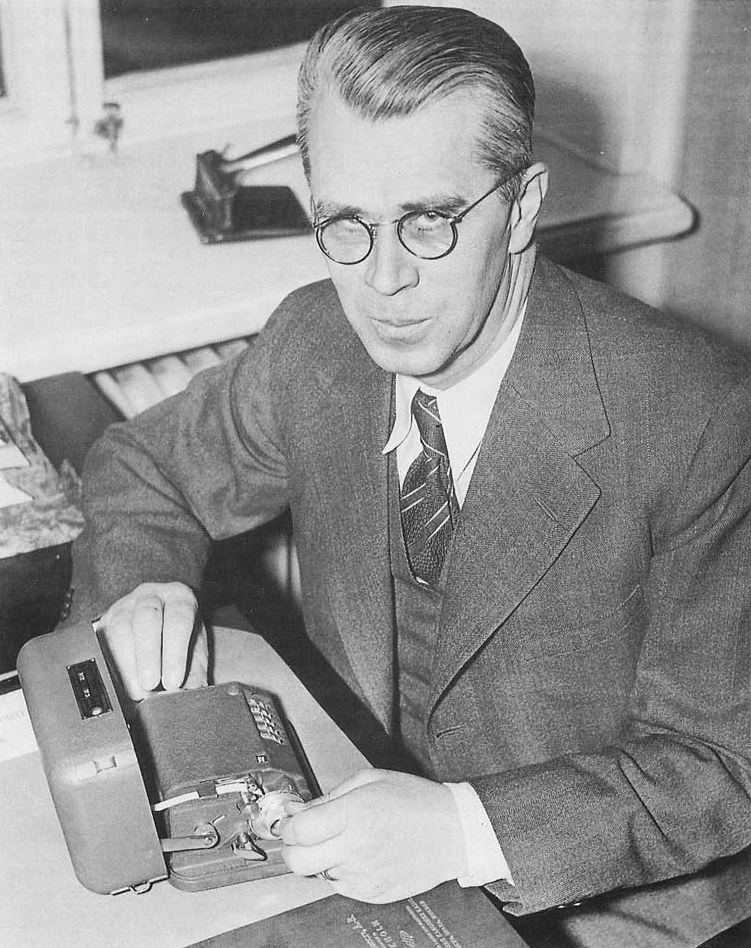
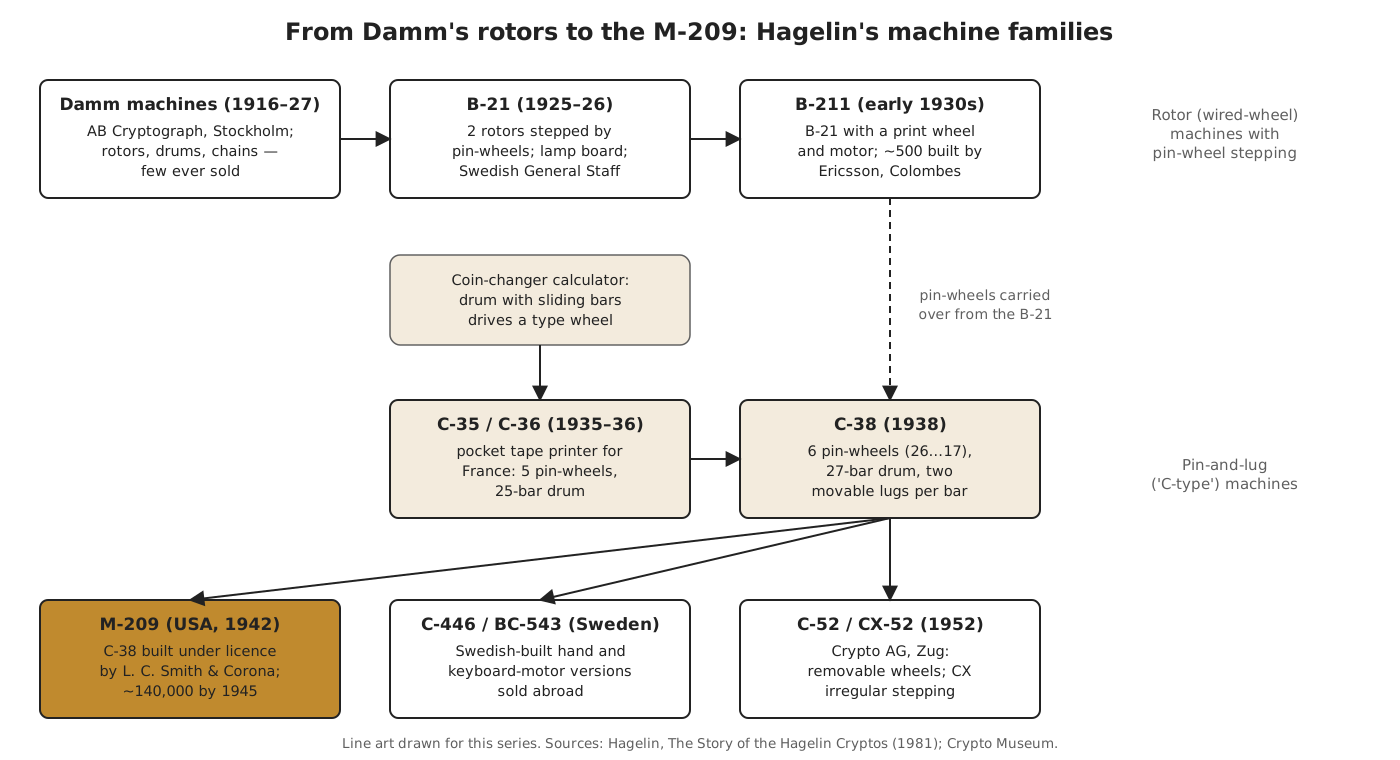
The M-209 was an American machine only by adoption. It was designed in Stockholm, by a Swedish engineer born in the Caucasus, for a French customer, and it reached the United States in his luggage in the spring of 1940. This volume tells the story of Boris Hagelin up to that moment: his upbringing in the world of the Nobel oil company, his accidental entry into cryptography as the guardian of a family investment, the company built around the inventions of Arvid Gerhard Damm, the rotor machines B-21 and B-211, and the moment of lateral thinking that produced the pin-and-lug C-35 — from which the C-36, the C-38 and the M-209 all descend.
The main source is Hagelin’s own memoir, The Story of the Hagelin Cryptos, written in Zug in the spring of 1981 and later published in English in Cryptologia (vol. 18, no. 3, July 1994), together with a shorter review he wrote in December 1961 and a declassified NSA history of his friendship with William F. Friedman. Where the sources disagree on dates — and they often do, by a year or two — the disagreement is stated rather than resolved. The postwar story, from Zug and Crypto AG to the CIA, belongs to Volume 6.
2.2 A Childhood in the Nobel Oil Fields
Hagelin opens his memoir with a counterfactual. “The Story of the Hagelin Cryptos could never have been written,” he writes, “if Russia after the revolution had become a democratic republic”; he would have stayed an employee of the Nobel Brothers Oil Production Company, “and there would have been no CRYPTO AG” (Hagelin 1981, p. 1).
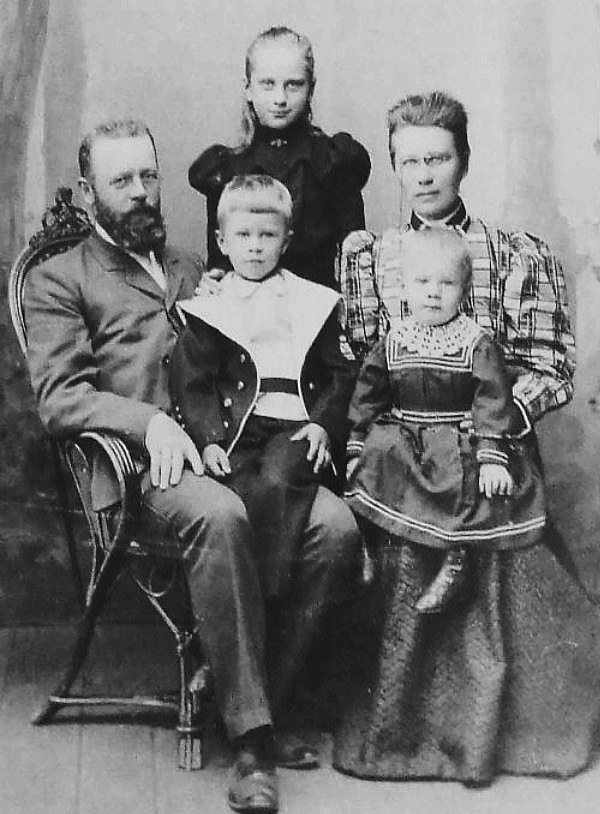
He was born Boris Caesar Wilhelm Hagelin on 2 July 1892 in Adschikent, which he describes as “a small summer resort in the Russian Aserbeidjan”. His father, Karl Wilhelm Hagelin, was a Swede born in St Petersburg in 1860 who had joined the Nobel oil company in 1879, the year it was founded by an older brother of Alfred Nobel, and who was by then manager of its oil fields and refineries at Baku. In 1899 the elder Hagelin became a director of the company and moved the family to St Petersburg. Boris went to a Russian school until 1904, when his father sent him to school in Sweden — Wikipedia names the boarding school as Lundsberg — and then to the Royal Institute of Technology (KTH) in Stockholm, where he graduated in mechanical engineering in 1914 (Hagelin 1981, pp. 1–2; Wikipedia).
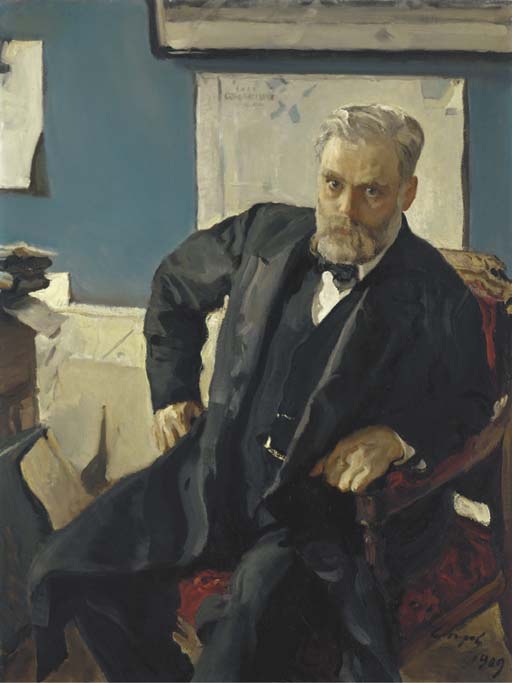
The career mapped out for him lay in Russia. His father had become “the closest friend of Emanuel Nobel”, head of the family, and Boris’s first job was to have been supervising the building of an electric power station on one of the Nobel oil fields at Baku. Because the equipment had been ordered from ASEA, the Swedish electrical firm at Västerås, he went to work in its departments to learn electrical engineering. Then came the revolution. The power station waited, and he stayed on at ASEA in its foreign department, since he “spoke five languages”. In 1920 the Nobels made an agreement with Standard Oil Company of New Jersey for future collaboration in Russia, and Hagelin was sent to the United States, where he worked in Standard’s general engineering department during 1921. By the end of that year it was clear that the Bolsheviks, who had confiscated all private enterprise including the Nobel works, were not going away. “I could have stayed with Standard Oil,” he wrote, “but I did not feel at home in America and wanted to get back to Sweden” (Hagelin 1981, pp. 1–2). An NSA history of his career summarises the same years as six years with ASEA and one with Standard Oil (NSA, Friedman Collection, REF ID A61628).
Back in Stockholm, Emanuel Nobel financed a small engineering office for him, and some inventions Hagelin had picked up in America made him, as he put it, financially independent. Then Nobel handed him a different job.
2.3 Arvid Damm and AB Cryptograph
AB Cryptograph (Aktiebolaget Cryptograph) was founded in Stockholm to develop and sell the cipher inventions of Arvid Gerhard Damm. The memoir gives the founding year as 1915; the Crypto Museum and most other histories give 21 July 1916 (Crypto Museum, Cryptograph). Damm had trained as a textile engineer. In Hagelin’s 1961 recollection, Damm and his brother, a mathematician, had invented a secret language to correspond in, and that had led them to cryptography in general (Hagelin, review of 11 December 1961, transcribed by Frode Weierud, from NSA Friedman Collection REF ID A2920126).
Hagelin was generous about the man. “He must justly be considered as the foremost pioneer of the ciphering machine industry,” he wrote in 1961, “and we have to thank him for most of the fundamental construction principles … including the ciphering commutator (‘rotor’), which became widely known through the German Enigma machine.” But he was also clear about what went wrong: “Damm’s tragedy was that he was a pioneer; he had to start from scratch with his constructions, he did not have a designer’s mind and had therefore difficulties in arriving at practical solutions. And what was still worse the market for ciphering machines was as yet practically non-existent” (Hagelin 1961). Damm’s first sound machine, the A-21, used a revolving drum carrying 26 alphabet strips and a reference alphabet that a chain of high and low links moved between two positions. A later scheme, a teleprinter cipher financed by Marconi, Telefunken, TSF and Western Union, produced four prototypes that were too slow and unreliable (Hagelin 1981, pp. 8–15).
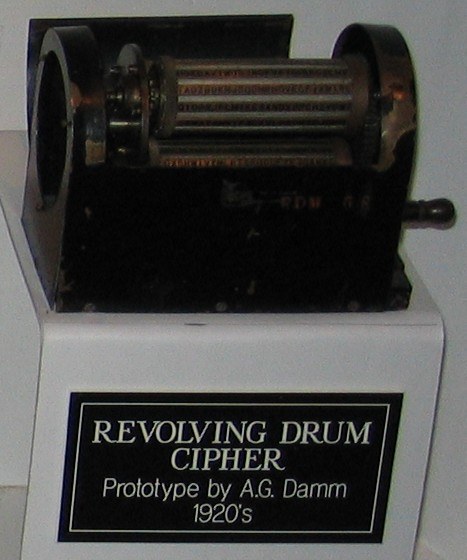
Very large sums were spent on prototypes. In 1921 or 1922 — the memoir says Nobel began financing the company in 1921, the 1961 review says 1922 — Emanuel Nobel and Karl Wilhelm Hagelin were persuaded to put money in, “and I was given the responsibility to act as observer” (Hagelin 1961). Boris Hagelin knew nothing of cryptography. “In 1925 I assumed the management of the company as well as the development of saleable products,” he wrote. “This was a fascinating task although I did not have any knowledge of cryptography” (Hagelin 1981, p. 2). Damm, whose health was failing, died in 1927 according to Hagelin, or on 7 November 1928 at Bayonne according to the Crypto Museum.
2.4 The B-21 — A Race Against the Enigma
Hagelin’s first contribution came, as he told it, from overhearing a piece of news. In 1925 he learned “that the Swedish General Staff had received an ‘ENIGMA’ machine for study”, and he “rushed to visit the officer concerned”. He told the officer that AB Cryptograph had ten years’ experience and could offer “something possibly superior to the ‘ENIGMA’”. The General Staff wanted a machine of the same size that worked the same way, and gave him six months. Emanuel Nobel allowed him 500 kronor for the prototype — “about $134.— (!)”, as Hagelin noted (Hagelin 1981, p. 16).
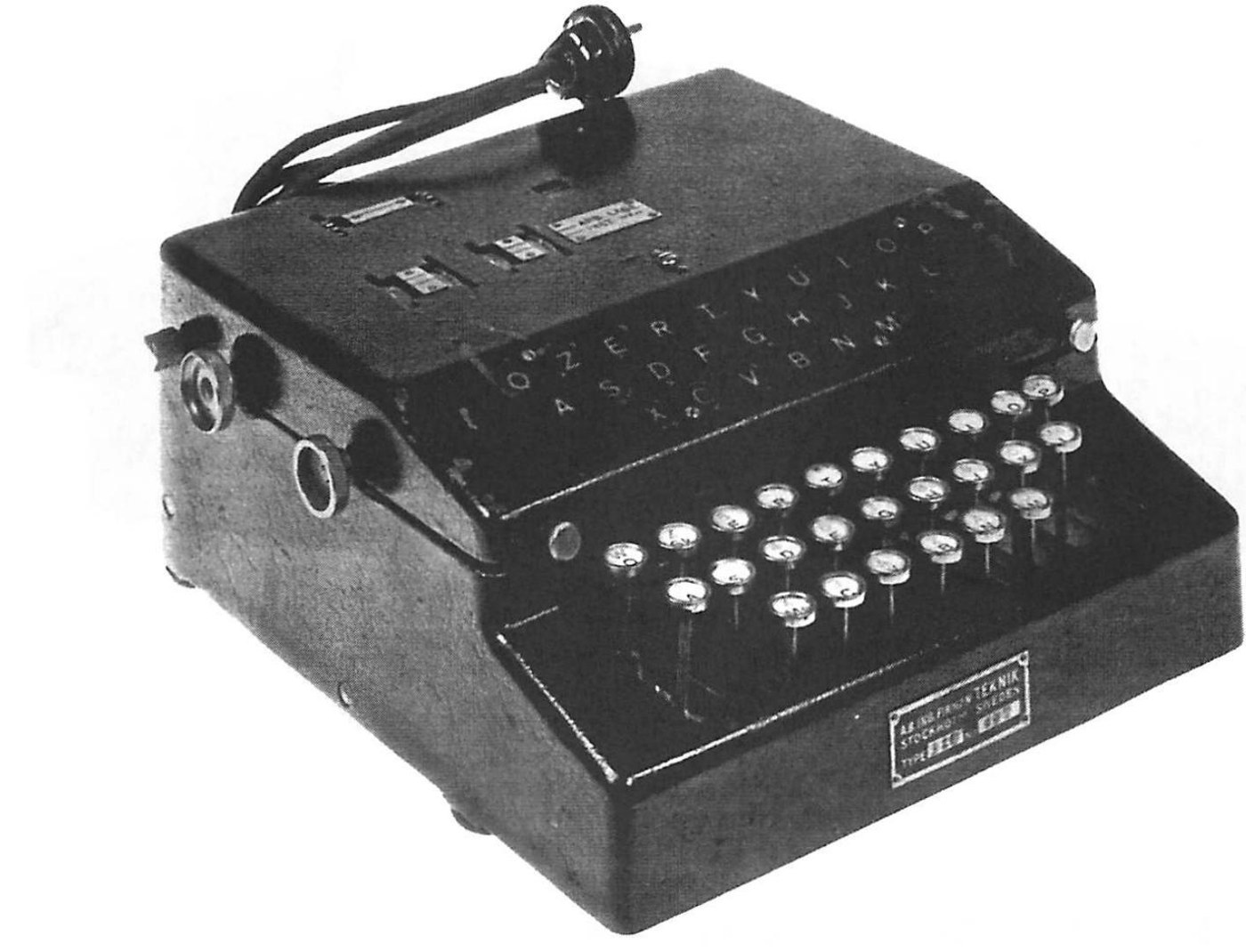
He built it on one of Damm’s last ideas, the “simplified rotor”, in which the alphabet was handled as a 5 × 5 grid: a key closed one contact in each of two groups of five, the current passed through two rotors and a relay system, and one of 25 lamps lit. (A 25-letter grid meant dropping a rare letter or doubling up, as with I and J.) Hagelin’s own addition was the control of the rotors’ stepping by pin-wheels, disks with movable pins around their edges, of 17, 19, 21 and 23 positions. Because those numbers share no common factor, the wheels together returned to their starting pattern only after their product of 156,009 steps. His description of the pin-wheel, written fifty years later, is the clearest short account of the part that would become the heart of the M-209:
It is a disk which carries on its periphery a number of axial holes or slots in which pins are located. These pins are movable and are so arranged that they can protrude on one side or the other of the pin wheel. One side of the wheel is the “active” side, i.e., pins which protrude on this side exert a controlling effect. The pin-wheels are stepped with each operation, each wheel moving one pin position during each operation. The cyclic length of the wheels have no common factors.
— Hagelin, The Story of the Hagelin Cryptos (1981), p. 18
The prototype “was analyzed by a mathematician, and approved instead of the ENIGMA for use by the General Staff”. The production B-21 looked very like an Enigma, with a keyboard, a lamp field, a mains-powered solenoid to step the rotors and a flashlight battery for the lamps; a version drove a Remington electric typewriter for busy offices. The prototype was still in Crypto AG’s possession when Hagelin wrote (Hagelin 1981, pp. 16–20). The NSA history says the Swedish Army placed “a sizeable order” in 1926; the Crypto Museum dates the General Staff order to 1928 (Crypto Museum, B-21). Either way it was, as Hagelin wrote in 1961, “the first type to be commercially produced by AB Cryptograph, more than ten years after the formation of that company”.
2.5 Alone with the Company — the B-211
Emanuel Nobel died in 1932, and his heirs “did not want to make any more funds available”. Hagelin had been working without pay. AB Cryptograph was liquidated — in 1932 by the memoir’s account, 1930 by others — and its rights passed to Hagelin’s own engineering firm, AB Ingeniörsfirman Teknik, which was later renamed AB Cryptoteknik (Hagelin 1981, pp. 2, 21; Crypto Museum, Cryptograph). “At this point,” Hagelin wrote in 1961, “I made a bold decision: I took on the work and the financial responsibility myself and was with much luck able to carry on.”
The rescue came from France. The French Army was interested in the B-21, but on two conditions: the machine must print its text, and it must be portable. Hagelin replaced the lamp field with a type-wheel printing mechanism and added an electromechanical drive, with a crank for use when power failed. The result, the B-211, was built for France by the French subsidiary of L. M. Ericsson at Colombes, just north-west of Paris; about 500 were delivered before the war and the French Army bought 100 more afterwards. His father, then living in Paris, financed the business, and when war broke out managed to move the profits to Sweden, where they paid for the company’s first proper workshop, dedicated on New Year’s Eve 1940 (Hagelin 1981, pp. 21–22).
Hagelin added one aside that would have interested later Western intelligence services. Before the war, the Russian Trade Commission in Stockholm placed an order for “two cipher machines”, and he sold it two B-211s from stock. “The machines were copied in Russia and used during World War II,” he wrote, with a 5 × 6 grid for a reduced Cyrillic alphabet (p. 22).
2.6 The C-35 — A Coin Changer in Disguise
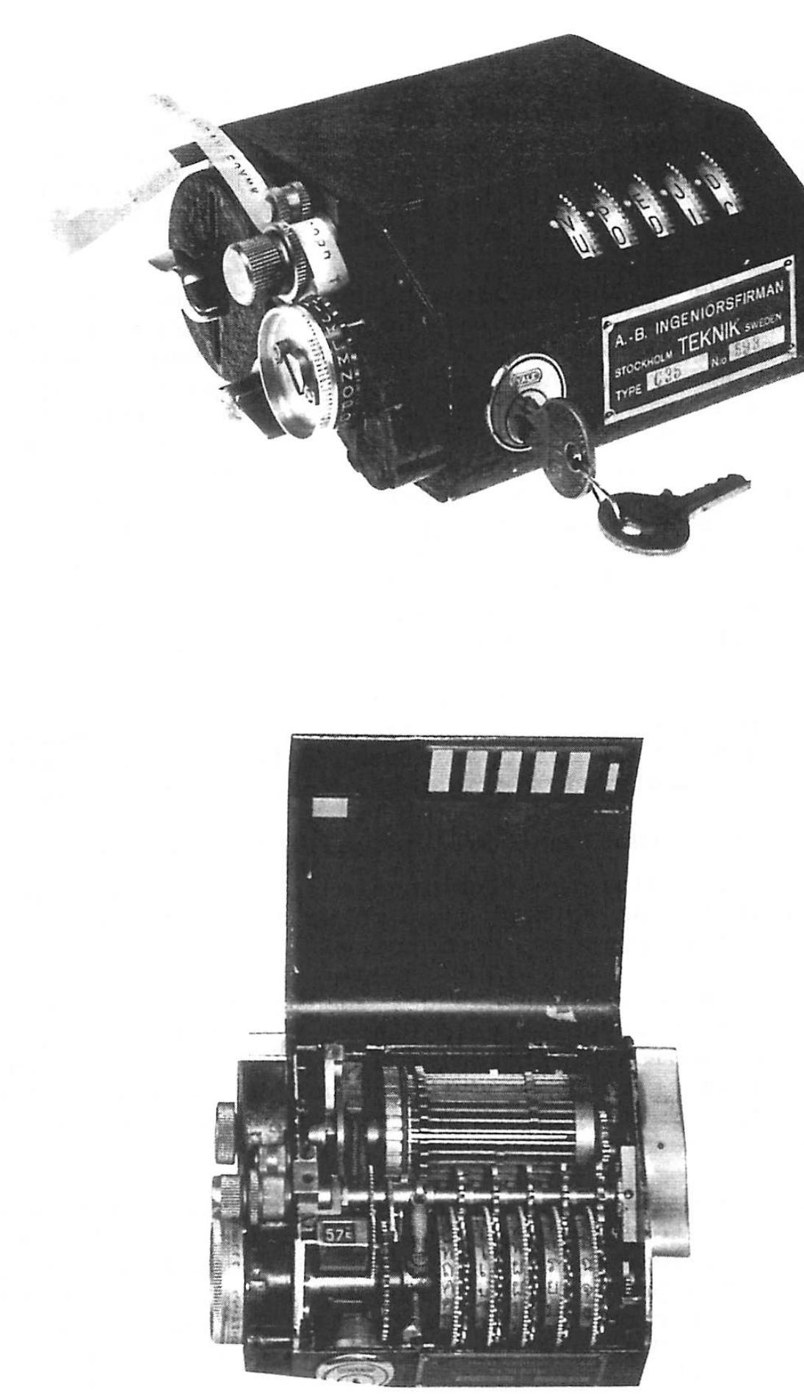
The decisive request came in 1934, from the French Deuxième Bureau: a cipher machine small enough to carry in a pocket. The NSA history adds the specification as it understood it — a machine that would print cipher text in five-letter groups and plain text in normal word lengths, at about 25 letters a minute (NSA, REF ID A61628).
What happened next is Hagelin’s favourite story about himself. A few years earlier, two Swedes had ordered from him a design for a coin-changing machine. He had built a working prototype and had an idea for a better one: insert any amount of coins, enter the price on a key, and get the change back. That machine “was equipped with a unique calculating mechanism”, but it was never built, because the customers did not pay for the development; the debt was cancelled and Hagelin kept the rights. Now, he wrote:
Trying to find a solution for the “pocket device” for the French, I got the idea to incorporate the calculating mechanism for the money changer into such a device. … The calculating mechanism of the money changer consisted of a drum with displaceable axial bars around its circumference which could be affected by operating the keys. Those bars which were affected in an operation were displaced to the left as the drum turned. A type wheel meshing with the drum was turned exactly the same number of steps as the number of bars moved to the left. I replaced the keys of the money changer with pin-wheels, and the type wheel carried letters now instead of numbers. In this way I obtained a cipher machine.
— Hagelin, The Story of the Hagelin Cryptos (1981), p. 24
To estimate the size he wanted, he “cut out a wooden block to fit snugly into the pocket of a jacket”. The first models had a drum of 25 bars and five pin-wheels like those of the B-21, with 17, 19, 21, 23 and 25 positions, giving a period of 3,900,225 letters, “a length which until then had not been achieved in any mechanical ciphering machine”. In this first version the bars carried fixed cams rather than movable lugs, in a pattern of one bar for the first wheel, two for the second, four for the third, eight for the fourth and the remaining ten for the fifth (pp. 24–25). The patent was filed in the United States on 23 August 1935 (US 2,089,603). Hagelin credited one collaborator by name: C. A. Lindmark, “who became indispensable to me when I developed my best known machine, the C-type, in 1934” (p. 3).
He was also candid that the mechanism had come to him by analogy rather than by cryptographic theory. “The art of invention — and I have mainly become known as an inventor — has for me been sudden ideas or the combination of existing designs for totally different purposes,” he wrote at the start of the memoir. In 1961 he called it “one of those improbable but not unique inventor’s chances, where designs, developed for a certain purpose, were found to suit … some utterly different purpose”.
2.6.1 From C-35 to C-38
The C-35 was a beginning, not an end. Hagelin made changes “in direct response to the steady progress in cryptanalysis, which included the significant work of the Swedish cryptologist Y. Gyldén”. The two main improvements were “increasing the number of pinwheels from five to six, and introducing rearrangeable lugs on the drum-bars instead of fixed cams” (p. 25). Once the lugs could be moved, the pattern by which the wheels drove the drum became part of the key, and the number of possible keys grew enormously. When production grew, a bottom plate and a protective cover were added, and the base was shaped so that the machine “could be used in the field strapped over the knee of the operator” — the arrangement the US manual would later illustrate. The model letters and numbers, Hagelin explained, originally gave the model year: C-36, then C-38.
The C-38 is the machine that became the M-209: six pin-wheels of 26, 25, 23, 21, 19 and 17 positions, and a drum of 27 bars each carrying two movable lugs (Volume 3). The French ordered more than 5,000 C-type machines, to be built by Ericsson at Colombes, but the order “could not be completed” before France fell. The Swedish armed forces, Hagelin’s customers since 1925, became the first large buyer (p. 26).
2.7 America, 1935–1940
Hagelin had been trying to sell to the United States for years. The NSA history says he began corresponding with American cryptologic authorities about the C-36 in 1935 and that Friedman offered suggestions for improving it. Hagelin went to Washington in 1937 and demonstrated the machine to Friedman and his colleagues. The Crypto Museum’s summary of the result is often quoted: Friedman “liked Hagelin, but disliked the machine” (Crypto Museum, M-209). What the Americans said they wanted, in Hagelin’s recollection, was “an electrically powered machine with a keyboard”, and in the summer of 1939 he took a prototype of such a machine, the BC type, to Washington. “Unfortunately the construction needed improvement,” he wrote, “and I returned to Sweden the same autumn after the outbreak of War with matters still unsettled” (p. 26).
2.8 The Voyage from Genoa
The German invasion of Denmark and Norway in April 1940 changed the calculation. Sweden was now surrounded, and a company that sold cipher machines abroad could find itself cut off from every customer. Hagelin decided, as the NSA history puts it, “that it would be in his best interest to come to the U.S.”
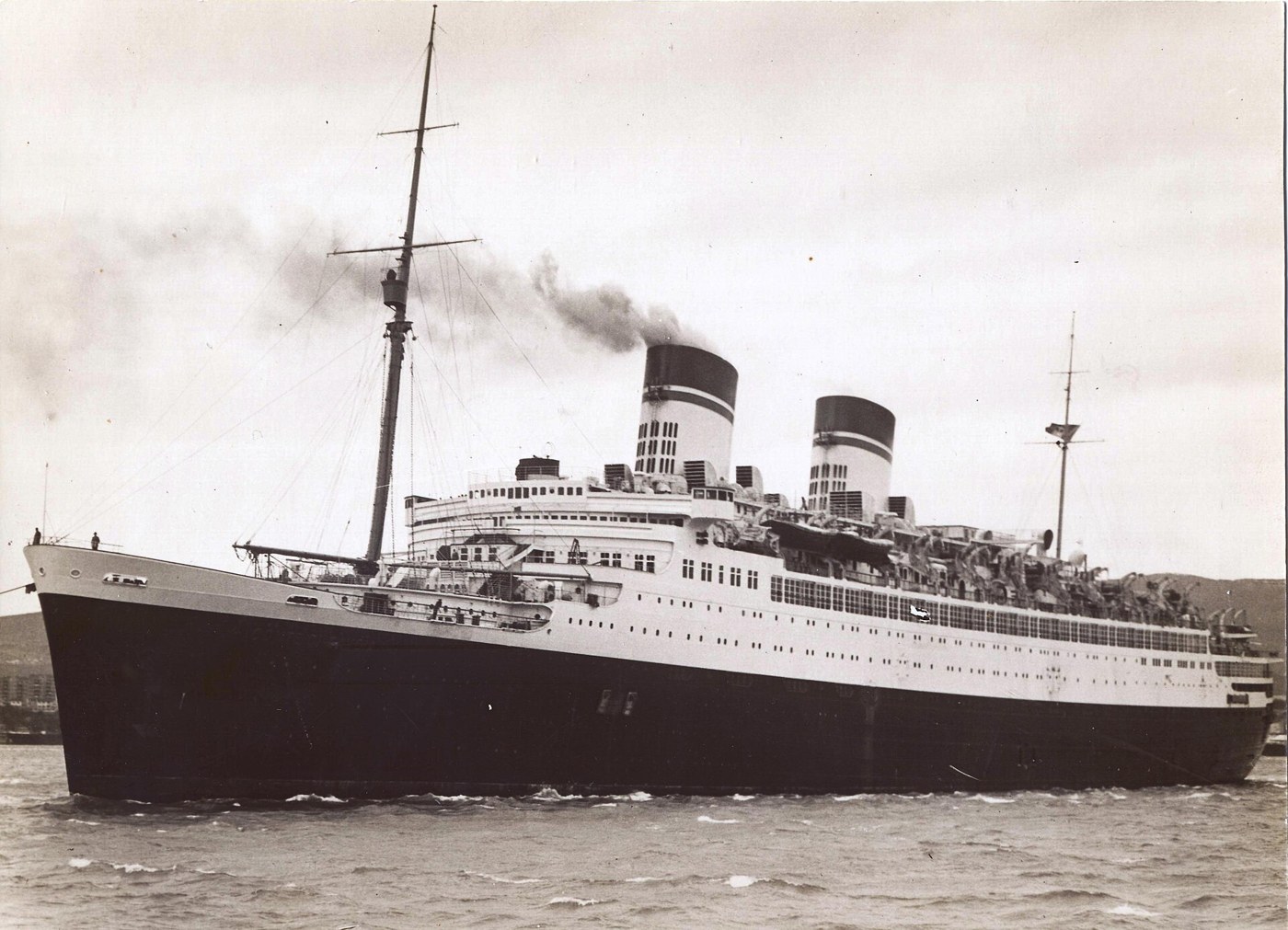
The journey itself is told slightly differently by every source, but its outline is consistent. Hagelin and his wife, Annie (the NSA history calls her Anne), travelled south across Germany, carrying — in the NSA’s account — “a couple of dismantled machines and a set of manufacturer’s blueprints” in a diplomatic courier bag. Hagelin says he “was able to leave on the last ship from Europe at Genoa on May 10, 1940 with two machines in my luggage before the Italians entered World War II” (p. 26). The Crypto Museum names the ship as the Italian liner Conte di Savoia and describes the cargo as two C-38 machines; other accounts say C-36s, and finished or unfinished. Italy declared war on 10 June 1940, a month after they sailed.
In New York, the Army wanted more machines for testing, and Hagelin arranged for fifty to be sent from Sweden. His memoir says they were “shipped airfreight from Sweden to Washington”; the NSA history says they were “smuggled out of Sweden”. After extensive testing, he wrote, “the machine was accepted. The Americans selected it for tactical use, as they did not have any comparable machine at that time” (p. 26).
2.8.1 Friedman’s objection
It was not a unanimous decision. The NSA history records that Friedman, then technical director of the Army’s Signal Intelligence Service, “turned in an unfavorable report on the machine, as he believed that although its cryptosecurity was theoretically quite good, it had a low degree of security if improperly used”. He was overruled because “neither the Signal Intelligence Service nor the Signal Corps Laboratories at Fort Monmouth had developed anything that was better than the Hagelin machine or even as good” (NSA, REF ID A61628). Friedman’s warning turned out to be exactly right, as Volume 5 shows. The same document claims that Hagelin incorporated Friedman’s suggestions and redesigned the C-36 into the M-209, and calls the M-209 “practically identical” to the improved C-36 that Hagelin sold commercially — the C-38.
The Army adopted the M-209 as its medium-level field cipher. The first edition of its manual, TM 11-380, is dated 27 April 1942 (Crypto Museum). It was manufactured, Hagelin wrote, “by the Corona plant of the L.C. Smith typewriter company, with a daily output of up to 500 units” (p. 26). Volume 4 tells that part of the story.
2.9 The War Years
Hagelin stayed in the United States until 1944. He mentions only that he “had a small shop in my home for servicing BC Machines which were used by an American organization during the war”, without naming it. When he was able to return to Sweden in 1944, “more than 50’000 machines had been built. By the end of the war over 140’000 units were made in America” (p. 26).
The money was large, though its exact amount is hard to pin down. The Crypto Museum, drawing on a declassified NSA file of patent and licence papers, states that the rights were sold to the US Government for “no less than US$ 8,614,790”, handled through two fiduciaries, a banker named James Paulding and a Wall Street broker, Stuart Hedden; the same page’s notes give Hagelin’s own gross proceeds as about $2.8 million, about $1.8 million after the 25 per cent US income tax he paid, and Smith-Corona’s profit as about $5 million (Crypto Museum, M-209). The two figures measure different things and are not reconciled in the sources. Whatever the total, the historian David Kahn’s judgement that Hagelin was the only cipher-machine maker ever to become a millionaire from the business is the one that stuck (Wikipedia, Boris Hagelin).
Meanwhile the Stockholm workshop “was kept busy with orders from several foreign countries”, and Hagelin told two wartime stories about where its machines went. One delivery “went by an extraordinary way to Japan”: the machines were smuggled out by the Japanese military attaché on a night boat and picked up by a U-boat off the Swedish coast, though “very few machines reached their intended destination”. And the Germans, who had shown no interest in the C machine before the war, began late in the war to manufacture a copy of his keyboard machine, the BC-543, at the Wanderer works in Chemnitz, “because the ‘ENIGMA’ machine had been broken by the British”. About 700 had been made when the Reich collapsed (pp. 26–30). Both stories rest on Hagelin’s word alone.
2.10 The Inventor and the Machine
Three things about Hagelin explain why it was his design, and not Damm’s or anyone else’s, that the US Army carried to war.
He was an engineer first. His stated rule, from the B-21 onwards, was “that to be a success, a ciphering machine should be as simple as possible, and rely on mechanical processes in the widest possible extent” (Hagelin 1961). The C-type was the purest expression of that: no electricity, no wiring, nothing that a soldier with a screwdriver could not set.
He was a salesman. He went to Washington in 1937 and again in 1939 and 1940 without being asked — “on my own initiative without any request from Washington”, as he said of the 1940 trip — and he made friends with the people who mattered. His friendship with William Friedman, begun in those years, lasted until Friedman’s death in 1969 and became one of the hinges of Volume 6.
And he was lucky in his timing. In 1940 the US Army needed a field cipher machine and had none. Friedman’s Signal Intelligence Service, which had designed the far stronger SIGABA for high-level traffic, had nothing small and cheap to offer. A Swedish pocket machine, already in production and already tested by European armies, filled the gap.
He was also, by his own account, a reluctant cryptographer. In 1961 he wrote that, with the end of the war in sight, “it became my belief that the call for ciphering machines would diminish, and I acquired other interests which took most of my time”. The demand did not diminish. The machine in the next volume, and the company in Volume 6, are the result.
Next — Volume 3: How the M-209 Works — Pins, Lugs, the Drum and the Print Wheel. The lid comes off. Six key wheels and their 131 pins, the guide arms that read them, a drum of 27 bars and 54 lugs that behaves like a gear with a variable number of teeth, a print wheel lettered backwards, a counter that makes five-letter groups — and one letter followed all the way through the machine.
Comments (0)